What will the new UK government bring for British Jewry? The jury is out



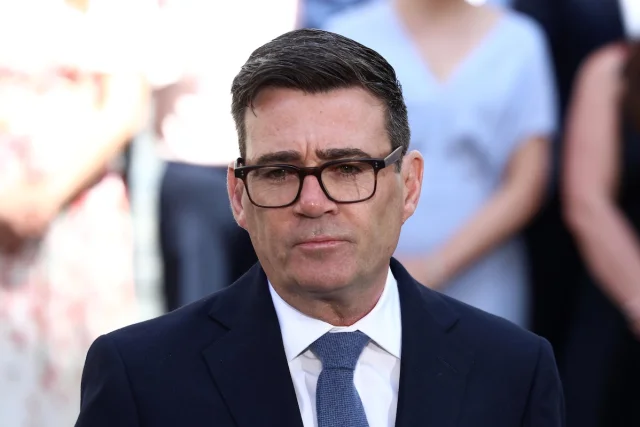
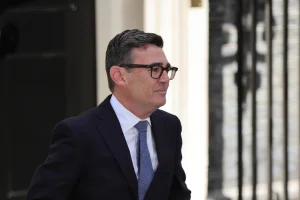
Following Keir Starmer’s resignation, news of Andy Burnham’s installation as the new prime minister of the United Kingdom has been met with caution from the Jewish community, as his words and actions seem to be sending mixed messages about his stance on Israel – a factor that has become increasingly inseparable from the rising antisemitism.
“Some of the initial comments are quite concerning,” said Michael Rowe, a politics graduate now working in defamation law in Birmingham, noting that one of Burnham’s first major interviews out of the gate was with Gary Lineker, a sports commentator who was fired from the BBC for posting an antisemitic image.
Statements that Israel had “made major mistakes” without mentioning the terrorist attack from Hamas have left Rowe and many others with the impression that Burnham was trying to win back some of the Muslim voters that the previous Labour government had lost since Oct. 7, 2023, while simultaneously trying to placate the Jewish community.
“For me, what we really need is strong allies in government, not people who are just trying to judge the mood music and go along with what works at the time,” said Rowe.
Burnham, who took office on July 20, has so far rejected the call to designate Israel’s war with Gaza as genocide or to impose sanctions against the Jewish state. In the past, he described the boycott, divestment and sanctions (BDS) movement as “spiteful,” and promised that Israel would be the first country he would visit as Labour leader, but many in the Jewish community remain cautious.
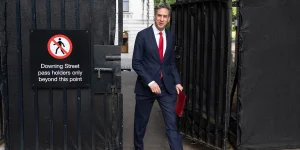
“He put Ed Miliband in as his foreign secretary. And again, some of the comments that Ed Miliband has made in regard to Israel, who are obviously fighting a war for survival and a war against terrorism, are really concerning,” he added.
In the UK, as in other diaspora countries, being Jewish does not necessarily equate with being Zionist, as Miliband has amply demonstrated. However, as the new government takes shape, both those for and against Israel have been hand-wringing at some of the appointments made by the new prime minister.
While there have been some appointments that have troubled Israel supporters, six Jewish parliamentarians have kept their jobs in Andy Burnham’s new Labour government and over a third, including himself, are connected with Labour Friends of Israel (LFI).
Rowe commended some of the steps taken by the previous Labour government, such as new funding for security and expressions of sympathy after attacks like the ones in Golders Green and in Manchester, but said that he wanted to see real support rather than platitudes and protection.
“Higher walls are not the solution,” he said, advocating education as the best way of tackling the root cause of the problem.
“You can educate people and change cultures. People are now unfortunately brought up with a culture of hate, where Jews, in some places, Zionism are seen as bad words, leading to a culture of hate. Once you start accepting these things, once you allow hate marches on the streets of Britain, it leads to that bubbling up of hatred and then I don't think we should be surprised when we see attacks,” he said.
Rowe was frustrated that the IRGC has still not yet been proscribed as a terror organization, but had only been designated as such. Even that had taken far too long, he said.
“The government should have gone all the way, but it also shouldn’t have taken them all these years,” he said, pointing out that the Muslim Brotherhood had still escaped any such ban.
“There are so many actions that the government could take that they haven’t done yet,” he added.
Rowe explained that in the UK antisemitism has become strongly linked with anti-Israel sentiment, and that anti-Zionism had become a form of antisemitism.
“If you're attacking the only Jewish state, then by nature you're attacking Jews, so that's, you know, antisemitism,” he asserted.
“Some have tried to make this distinction, but why are we seeing antisemitism on the streets now? It's because of Israel's actions,” he continued. “Obviously, that's not an excuse, but that's what is fueling the current rise in antisemitism, so therefore it's linking the world’s only Jewish state with the Jews of Britain and everywhere else across the world, and that's where it leads to.”
“You can't make excuses for these people, and you can't try and justify or rationalize what they're doing,” he said, adding that if it was any other form of racism, the picture would be very different.
“It’s like Jews are in a separate category, that therefore it's okay to say these things and commit these terrible actions… they feel like because they're complaining about Israel, they can do and say what they want.”
However, he also stressed that on the whole Britain was a tolerant country.
“People are very supportive in general, but obviously there is unfortunately a growing amount of extremism evident in all sorts of places in society,” he said, citing the Maccabi Tel Aviv football debacle in which he had been involved, and the antisemitism which has become prevalent in institutions like the National Health Service (NHS) as exposed by the Mann Report.
“You deal with it through education, telling people that some of the things that they're believing are incorrect. Some of these tropes that you're listening to are deeply troubling and completely wrong. But it's a process,” Rowe emphasized. “It's not an overnight solution, it’s a process.”
Ruth Jacobs, chair of the Jewish Representative Council of Birmingham and West Midlands, shared Rowe’s wait-and-see approach when it came to what the new government under Andy Burnham might bring for the Jewish community.
“Time will tell,” she said cautiously. “I'm not comfortable with a lot of these people's comments and their concept of what's going to make everything okay in the Middle East... They don't seem to have any sort of reality.”
However, she added that she did not see deliberate malice from the government in general.
“Ninety years ago when there was no social media or such in Europe and in Germany particularly, there was such a strong desire from the government downwards to vilify Jews and make us all feel as though we didn't have a place, whereas, I don't think that's the case in the government now, for sure.”
Reflecting on what can be done to stem the rise of antisemitism, Jacobs mentioned government plans for more education but said that social media was having a significant and detrimental impact.
“I think that basically this country, like most countries, is quite racist, but I think we all have that in us,” Jacobs said. “I think that we all have that in us and we have to work hard on ourselves as individuals and ourselves as communities to actually be able to control that and recognise that that is not a way forward to build relationships with people.”
You might also like to read this: