‘Doormats’: Israeli officials shocked at Europe’s lack of support as leaders tell Trump that Iran conflict is ‘not our war’
'They turned out to be weak states. That is something that will not be forgotten'



Israeli officials expressed their shock at the lack of support offered by Europe in the war against Iran, after several European leaders rebuffed a request by U.S. President Donald Trump to join a coalition aimed at keeping the strategic Hormuz Strait open for ship traffic.
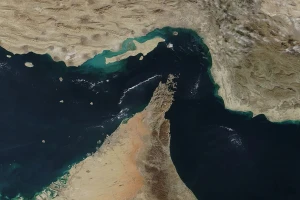
The Axios news outlet reported that the White House hopes to announce a “Hormuz Coalition” this week. The waterway carries around a fifth of global oil exports, with a senior official telling the outlet, “Most of this oil isn't our oil – it goes to other countries. So if they want it and they want the price to come down, they need to help out.”
Trump named China, Britain, France, Japan and South Korea in a social media post urging support for keeping the waterway open on Saturday. “Numerous countries have told me they’re on the way. Some are very enthusiastic about it… and some aren’t,” Trump said at a White House event.
However, several leaders strongly rebuffed Trump’s call for action on Monday.
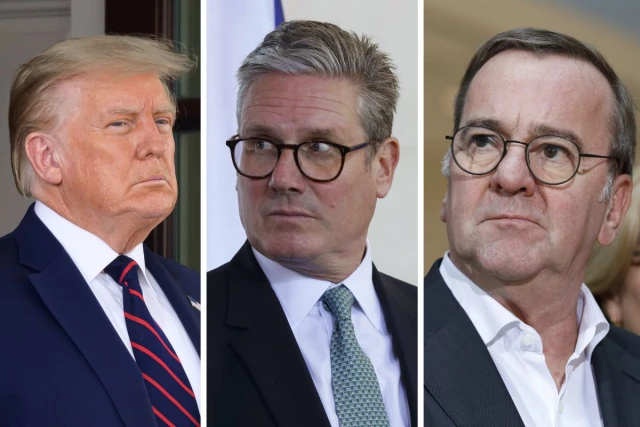
“This is not our war; we did not start it,” said German Defense Minister Boris Pistorius. “We want diplomatic solutions and a swift end to the conflict, but sending more warships to the region will likely not help achieve that,” he added.
UK Prime Minister Keir Starmer said his government was taking part in talks about a viable plan to reopen the waterway but noted Britain would not be “drawn into wider war.”
This stance has drawn puzzled and disappointed reactions in Israel. Senior officials told Ynet News on Monday that this was “undoubtedly Europe’s ugliest hour,” as the continent’s lax policy toward the regime is now “blowing up in the whole region’s face.”
“Not only did Europe not mobilize to help keep the shipping lanes in the Strait of Hormuz open, but it also did not assist in defending the Persian Gulf states from Iran’s attacks,” they said.
One official argued: “The current campaign indeed exposes most European countries in their full hypocrisy and ugliness, with the exception of a few ‘righteous individuals in Sodom,’ such as German Chancellor Friedrich Merz, who said publicly that Israel is doing the dirty work for everyone.”
Despite this, Merz is slowly changing his tune, criticizing Israel for its ground operation in Lebanon on Monday, while his spokesman reiterated that the Iran campaign is not “our war.”
One official told Ynet that Europe understands the threat posed by the regime, “but it is not willing to do anything except use diplomacy. Talk without a military option does not deter anyone, and unfortunately, there is no self-examination in Europe regarding the severity of the threat.”
Behind the scenes, the only significant support comes from the British intelligence agency MI6, which helps CIA and Mossad operations, the official added.
“The Europeans – Germany, France and Britain – pushed the U.S. to sign the nuclear deal that dealt only with the nuclear issue and ignored ballistic missiles and terrorism,” a senior Israeli official explained.
“That is what allowed Iran to lead the world by the nose and advance its nuclear and missile programs. France and Britain turned out to be doormats, also regarding the Strait of Hormuz – you do not see Europe mobilizing to defend it.”
He stressed that even Iran’s attacks on EU member Cyprus have not drawn a strong response. “Europe does nothing, and it also does not assist Israel in anything. It gives humanitarian aid to Lebanese residents fleeing from the Dahiya area, but gives us nothing.”
One reason for this is the European fear of retaliation via a terror group, the officials said. “They talk about sleeper cells that received orders from Iran to carry out attacks. The only country that increased security around the Israeli embassy and Jewish institutions is Germany – among the Germans, the response is unequivocal.”
“They turned out to be weak states. That is something that will not be forgotten.”
On Monday, Trump repeated his frustration with the lack of help from Europe, saying that his hesitancy to protect other countries in the past was caused by his concern that “if we ever needed help, they won’t be there for us.”
“The level of enthusiasm matters to me,” Trump explained, “We strongly encourage the other nations to get involved with us and get involved quickly, with great enthusiasm.”
Germany's government spokesman, Stefan Kornelius, had said earlier, “This war has nothing to do with NATO. It's not NATO’s war.”
“NATO is a defensive alliance, an alliance for the defense of its territory,” he added. “As long as this war continues, there will be no involvement, not even in an option to keep the Strait of Hormuz open by military means.”
However, Kornelius said he was not aware of any official request by the U.S. to join the Hormuz Coalition.
“I would also like to remind you that the U.S. and Israel did not consult us before the war, and that Washington explicitly stated at the start of the war that European assistance was neither necessary nor desired,” he noted.
So far, France is the only European nation to have pledged strong support for the U.S., ordering several naval ships and its nuclear aircraft carrier – amounting to over half of its battle fleet – to the region.
The UK vowed to send a destroyer to protect Cyprus; however, the deployment was delayed due to administrative and technical issues.
Italy also deployed a missile frigate to Cyprus, while Spain and the Netherlands sent a frigate each to accompany the French carrier.
However, most of these countries have rejected the idea of sending forces to the Strait of Hormuz.
You might also like to read this: