Commercial shipments into Gaza suspended amid Hamas tax dispute



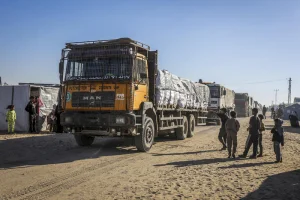
Commercial shipments into Gaza have been suspended amid a dispute between Gazan merchants and Hamas over taxes imposed on imported goods, according to Israeli authorities on Thursday.
The Hamas terrorist organization, which continues to rule much of the enclave, has denied imposing the fees, while Gazan importers have disputed Israel’s account of why shipments stopped. Hamas, which continues to rule much of the enclave, has denied imposing the fees, while Gazan importers have disputed Israel’s account of why shipments stopped.
“The merchants are not the ones who stopped the shipments,” said Nahed Sheheiber, head of Gaza’s private truckers union. “The Israeli coordinator is claiming that Gaza’s merchants are responsible, but the truth is that the Israelis are the ones who imposed the restrictions.”
However, Gaza’s private truckers union acknowledged that Hamas was demanding NIS 10,000 (approximately $3,240) per truck entering the Gaza Strip. Hamas has indirectly confirmed the levy, describing it as a “voluntary community initiative” and claiming the proceeds would go toward a “national fund.”
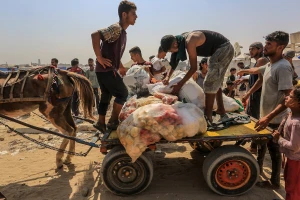
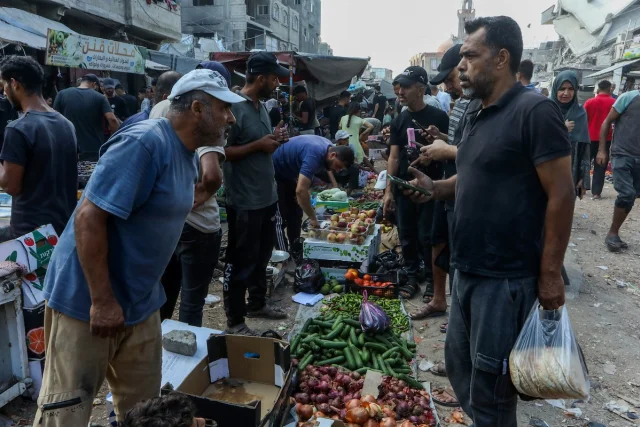
The temporary halt of commercial goods affects shipments of winter clothing, fruit and other supplies considered essential for Gaza's population during the colder months. Because Egypt has closed its border to southern Gaza, the enclave relies on supplies passing through Israeli border crossings.
Shaina Low, a spokesperson for the aid group Norwegian Refugee Council, expressed concerns about the disruption of supplies into Gaza.
“The humanitarian sector on its own cannot meet the needs of all the people,” Low said. “The markets need to be functioning.”
COGAT, the Israeli body coordinating humanitarian affairs in Gaza, said aid groups typically supply staples such as flour, while merchants import meat, fruit and other perishable foods. On Wednesday, COGAT confirmed the suspension of commercial shipments, with deputy spokesperson Lt. Daniel Kantorovich attributing it to a decision by Gazan merchants and stressing that it could be reversed.
“We were prepared to coordinate the entry of their trucks as usual, but the vendors informed us that they were cancelling the coordination due to Hamas’s taxation mechanism and threats against them,” Kantorovich said, adding, “The merchants don’t want to bring goods into Gaza.”
Meanwhile, the Integrated Food Security Phase Classification (IPC), a global initiative supported by UN agencies, reported earlier this year that food security in Gaza had improved since it controversially declared a “famine” in August 2025. Israel rejected the declaration as “fabricated to fit Hamas’ fake campaign.” However, the updated IPC report warned that food supplies remained insufficient and that “even small disruptions to humanitarian access could rapidly reverse recent gains.”
Following the latest disruption, Gaza’s private truckers union reportedly raised concerns with the Hamas-controlled Ministry of Economy, arguing that Israel was using Hamas’ fees as a pretext to block commercial shipments.
COGAT estimates that private-sector shipments account for about 50% of trucks entering Gaza weekly and warned that a prolonged suspension could jeopardize the U.S.-brokered ceasefire reached in October 2025.
You might also like to read this: