The unresolved situation with Iran and the importance of truth



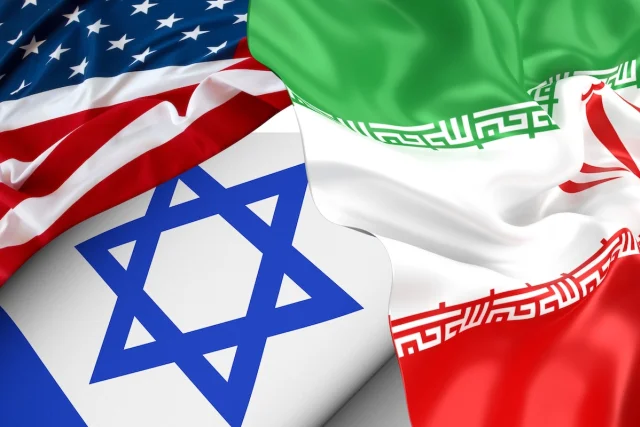
As the situation with Iran continues to be unresolved, remember the importance of truth, even if the truth is not necessarily what people want to hear. This is a Biblical principle, from the popularity of false prophets during Jeremiah’s day in the Old Testament to those with itching ears in 2 Timothy 4:3 of the New Testament. Truth is especially important, considering these times of conflicting interests, deception, and uncertainty. The question as to what is truth is best addressed by John 17:17, which simply says, “Thy word is truth.” Ascertaining the truth is done without political bias and with a Biblical perspective. There is a disparity between the claims and assertions that the U.S. administration has been making, with the reality of the situation. Beyond the nation of Israel directly, the situation extends to the broader Middle East, consistent with Luke 21:29 “the fig tree and all the trees”, indicating Israel and other nations in relation to Israel.
Oil Supply and Demand
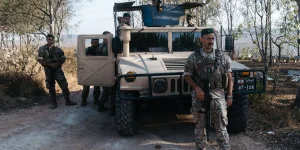
The closure of the Strait of Hormuz has caused oil production shut-ins among Arab Gulf nations and a large drawdown in global oil inventories. Consequently, exports of oil from the United States have risen to historically high levels because of high international demand [1]. In the outlook for oil, it is assumed that global oil trade will steadily return to pre-conflict levels [1], but Iran’s ambitions go beyond a short-term disruption [2]. It is acknowledged that U.S. military force in the region has been strained [3]. While it has been reported that the U.S. military has established a shipping corridor through the Strait of Hormuz near the coast of Oman [4], tanker ships have continued to be attacked in the strait.
Israel’s Northern Front
In the situation with Iran there have been repeating cycles, and it wasn’t long before revisiting the Lebanon issue, which has been described in the article The Lebanon / Hezbollah factor. Reportedly, the President of the United States has urged the Israeli Prime Minister to withdraw Israeli forces from Syria and Lebanon [5]. This came soon after the POTUS met with the transitional President of Syria at the NATO summit [6]. Since the fall of the former Syrian regime in December 2024, Israeli forces have occupied the UN Disengagement Observation Force (UNDOF) area between the Golan Heights and Syria, and some adjacent Syrian territory, as a defensive buffer zone [7]. Israel is apprehensive with the new Syrian government because of its former ties with Al Qaeda and the Islamic State, and military cooperation with Turkey [7]. Israel’s historical experience as a nation has been that the elimination of one adversarial group leaves a vacuum for another such group. Also, the President of Lebanon is pushing for Israeli forces to withdraw out of Lebanese territory, where Hezbollah has been a threat to Israel for years [7].
The Nation of Oman
On August 26th, the IRGC claimed that Iran and Oman have come to an agreement on cooperation over the Strait of Hormuz [8], and claimed that the US had been obstructing negotiations between the two countries [9]. Analysts have warned about a bilateral agreement between Iran and Oman [2]. Oman has had normal relations with Iran and is congenial toward Iran in its pragmatic foreign policy [10]. Despite assuming neutrality in the situation with Iran, Oman has experienced numerous Iranian attacks. The attacks likely were to deter cooperation with US forces and to exert regional dominance. On July 12th, drones were used to attack Port of Duqm, which has support and refueling platforms for US aircraft carriers [11]. Also regarding Oman, it is reported that weapons and weapons components from Iran have been smuggled through the country to the Houthis [10]. Weapons components have been found on shipments from Iran to Oman that were likely intended for the Houthis [12].
Houthi Attacks
The Bab el-Mandeb Strait, an alternate route for Saudi Arabia’s oil exports, is threatened by the Houthis [1]. The Houthis have launched ballistic missiles at the Yemeni port of Mocha, causing extensive damage and halting port operations [13]. The Houthis claimed to have attacked a Saudi Arabian military ship along with four escort vessels [13]. The Houthis have also claimed drone attacks on Saudi Arabian oil refineries in Najran [13] and Jazan [14]. The Houthis have been at civil war with the internationally recognized government of Yemen, of which Saudi Arabia is principal supporter [15]. In July, the airport at Houthi-controlled Sana’a was attacked following arrival of flights from Iran. In response, the Houthis announced they would attack Saudi Arabian-linked ships in the Red Sea [15]. On August 24th the Houthis claimed to attack the Saudi oil tanker Amzan [16], which coincided with an attack reported west of Yanbu in the Red Sea [17].
Recent Statements
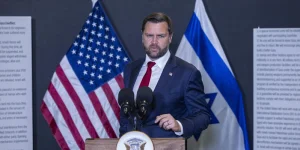
The U.S. defense secretary said that the U.S. can indefinitely maintain a naval blockade on Iran [18]. That is untenable, and contradicts assurances made by the administration that the conflict would soon be over. The U.S. vice president said that keeping gasoline cheap for Americans is the number one goal in the conflict with Iran [19]. That statement indicates conflict of interest and concedes leverage to the IRGC. The U.S. president said that he would declare the Strait of Hormuz a territory of the United States [20], without elaborating. That statement would need elaboration, considering that the strait is a body of water. While the U.S. Constitution does not address the process for acquiring territory, the historical precedent is that Congress be involved legislatively [21]. Perhaps the U.S. president was alluding to aspirations in Oman, considering the apparent power struggle for influential dominance there.
Truth and Prophecy
In keeping with the theme of truth regarding current events and outlook, is prophecy as a subject matter. Prophecy can be defined simply as the inevitable told in advance, with Biblical basis for that definition being a combination of Proverbs 30:5 and Matthew 24:25: “Every word of God proves true…see, I have told you in advance”. Accordingly, the phrase “keep watch” occurs in both Matthew 24:42 and Matthew 25:13. That phrase means what it says; in the Greek it means to be vigilant, be watchful. That is the imperative, and the subject matter is the prophetic word. The connection is made in 2 Peter 1:19, which says “We have the sure word of prophecy, to which you do well to take heed.”
References
[1] August 2026 Short-Term Energy Outlook. U.S. Energy Information Administration.
[2] Raydan, N. and F. Nadimi. 2026, August 05. Reaching Viable Management Arrangements in the Strait of Hormuz. The Washington Institute for Near East Policy.
[3] Cicurel, A. and S. Havdala. 2026, July 29. Preventing Iran’s Weaponization of the Bab el-Mandeb Strait. The Jewish Institute for National Security of America.
[4] Tobin, Y., J. Brody, and S. Havdala. Iran War Update: August 20-21, 2026. The Jewish Institute for National Security of America.
[5] Levaton, S. 2026, June 15. Trump said to urge Netanyahu to withdraw IDF troops from Syria, Lebanon in recent call. The Times of Israel.
[6] Bob, J. and G. Katz. 2026, July 14. ‘They don’t want you there’: Trump tells Netanyahu to pull IDF troops from Syria, Lebanon – report. The Jerusalem Post.
[7] Blanchard, C. M. 2026, February 26. Syria: Transition and U.S. Policy, Document RL33487. Congressional Research Service.
[8] Tobin, Y., J. Brody, S. Havdala, and R. Gabber.. Iran War Update: August 25-26, 2026. The Jewish Institute for National Security of America.
[9] Reuters. 2026, August 26. Iran and Oman reach agreements on share of Hormuz and its revenues, IRGC says. The Times of Israel.
[10] Sharp, J. M. 2025, November 25. Oman: Politics, Security, and U.S. Policy, Document RS21534. U.S. Congressional Research Service.
[11] Rezaei, B., K. Campa, N. Morrison, B. Schmida, and B. Carter. Iran Update Special Report, July 12, 2026. Institute for the Study of War.
[12] Paes, W-C, E. Beales, F. Hinz, A. Vidal. 2024, December. Navigating Troubled Waters: The Houthis’ Campaign in the Red Sea and the Gulf of Aden. International Institute for Strategic Studies.
[13] Tobin, Y., J. Brody, S. Havdala, and R. Gabber. Iran War Update: August 15-17, 2026. The Jewish Institute for National Security of America.
[14] AFP. 2026, August 18. Live Update: Houthi media says rebels launched drones at Saudi oil refinery on Red Sea coast. The Times of Israel.
[15] Blanchard, C. M. 2026, July 21. Yemen: Conflict, Red Sea Security, and U.S. Policy, Document IF12581. U.S. Congressional Research Service.
[16] Wells, K., N. Morrison, W. Doran, P. Hempel, R. Reddy, and B. Carter. Iran Update, August 24, 2026. Institute for the Study of War.
[17] Attack UKMTO #119. United Kingdom Maritime Trade Operations.
[18] Reuters. 2026, August 13. Live Update: U.S. can keep naval blockade on Iranian ports ‘indefinitely,’ Hegseth says. The Times of Israel.
[19] Agencies and TOI Staff. 2026, August 14. Vance: Preventing nuclear Iran is the ‘number two’ US goal, after ensuring cheap oil. The Times of Israel.
[20] Agencies and TOI Staff. 2026, August 15. Trump says he’ll hit Iran hard economically, will soon declare Hormuz ‘US territory’. The Times of Israel.
[21] Trout, M. D. 2026, January 29. U.S. Territorial Expansion: The Constitutional Roles of Congress and the President, Document IF13163. U.S. Congressional Research Service.
You might also like to read this: