The occupation that never was


There is a version of the Arab Israeli conflict that has dominated international discourse for decades — one in which Israel is cast as the aggressor, the occupier, and the obstacle to peace. That version is not merely incomplete. It is, in its central claims, demonstrably false. What follows is the case for Israel — legally, historically, and morally — presented as it should be: without apology.
I. The Land Was Given to the Jewish People by International Law
The modern legal claim of the Jewish people to the land of Israel does not begin in 1948. It begins in 1917, with the Balfour Declaration, and was codified in binding international law in 1920 at San Remo and in 1922 by the League of Nations Mandate for Palestine.
That mandate was not a vague expression of sympathy. It was a legally binding instrument that recognized "the historical connection of the Jewish people with Palestine" and called upon Britain, as mandatory power, to "encourage... close settlement by Jews on the land, including State lands and waste lands not required for public purposes."
The Mandate did not create a "Palestinian" national home. It created a Jewish one. The rights of the existing Arab population were protected — but the national home was Jewish. This is not interpretation. It is the text.
II. The Arabs Rejected Every Offer and Chose War
The historical record is unambiguous. In 1937, the Peel Commission offered the Arabs roughly 80 percent of Mandate Palestine. They refused. In 1947, the United Nations proposed partition into two states — one Jewish, one Arab. The Jews accepted. The Arabs rejected it and launched a war of annihilation.
That rejection was not a negotiating position. It was a declaration of intent. The Arab Higher Committee threatened to "drench the soil of the Holy Land with the last drop of our blood" rather than accept a Jewish state. Seven Arab armies invaded. UN Secretary-General Trygve Lie called it "the first armed aggression which the world had seen since the end of the Second World War."
The pattern repeated itself for the next seven decades. In 2000, Prime Minister Ehud Barak offered Yasser Arafat a Palestinian state in nearly all of Gaza and the vast majority of the West Bank, with a capital in East Jerusalem. Arafat refused — and launched the Second Intifada. In 2008, Prime Minister Ehud Olmert made an even more generous offer. Mahmoud Abbas walked away.
Israel has offered. The Arabs have refused. That is the record.
III. The 1967 Lines Are Not Borders
A central falsehood in this debate is the invocation of "the 1967 borders." There are no such borders.
The lines of 1949 are armistice lines — ceasefire lines where the fighting stopped. The armistice agreements themselves stated they were not political or territorial boundaries. They were temporary, signed "exclusively by military considerations."
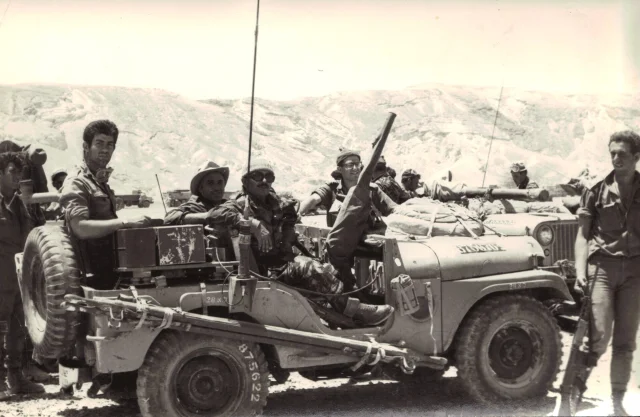
When Israel captured the West Bank and Gaza in 1967, it did so in a defensive war. Egypt had expelled UN peacekeepers, blockaded the Straits of Tiran, and massed troops on Israel's border. Syria shelled Israeli settlements. Jordan signed a mutual defense pact with Egypt and joined the attack. Israel struck first — but it struck in self-defense.
Even so, a defensive war does not transfer sovereignty. Israel has not annexed the West Bank. It has not applied its law there. It has left the final status to negotiation — precisely as UN Security Council Resolution 242 envisioned when it called for "secure and recognized boundaries," not the armistice lines.
IV. There Is No Occupation in the Legal Sense
The claim that Israel is an "occupying power" collapses under legal scrutiny.
Occupation law applies when a state takes control of the sovereign territory of another state. But when Israel took control of the West Bank in 1967, there was no legitimate sovereign. Jordan's annexation of the West Bank in 1950 was recognized by only two countries — Britain and Pakistan. Egypt never claimed sovereignty over Gaza, treating it as occupied military territory.
This is the "missing reversioner" problem. There was no sovereign to revert to. The territory was disputed, not occupied.
Israel's legal scholars — including Eugene Rostow, former dean of Yale Law School, and Dore Gold — have made this case for decades. The territory is disputed. Its final status must be determined by negotiation, not by unilateral declaration.
V. Gaza Proved the Intent
In 2005, Israel did something no nation has ever done: it voluntarily withdrew from territory it controlled, dismantling every settlement and removing every soldier and citizen from Gaza. It left behind greenhouses and infrastructure that could have formed the basis of a thriving economy.
What happened next? Hamas took control in 2007, destroyed the greenhouses, and turned Gaza into a launchpad for thousands of rockets. In 2023, Hamas launched the worst massacre of Jews since the Holocaust — 1,200 killed, 250 taken hostage, entire communities destroyed.
The lesson is inescapable. Israel left Gaza. Gaza did not become peaceful. It became a base for war.
VI. The Doctrine Behind the Conflict
The root of the conflict is not territory. It is theology.
Classical Islamic jurisprudence divides the world into Dar al-Islam and Dar al-Harb. Territory once conquered by Muslims — including the land of Israel in 637 CE — is considered forever Islamic. Any non-Muslim sovereignty over it is viewed as a temporary aberration to be reversed.
This doctrine is why Arab states insisted the 1949 lines be called "armistice lines" rather than borders. Recognizing Jewish sovereignty over even one inch of what they consider Islamic territory is, to them, theologically unacceptable.
It is why Iran calls Israel the "Little Satan" and the United States the "Great Satan" — framing the conflict not as geopolitics, but as cosmic struggle.
It is why Iran's parliament introduced a bill in 2021 mandating the "elimination of Israel by March 2041," codifying Khamenei's declaration that Israel would not exist in 25 years.
It is why Hamas's 1988 charter called for Israel's destruction, and why its 2017 document — falsely described as moderate — still declared "there shall be no recognition of the legitimacy of the Zionist entity" and defined Palestine as extending "from the River Jordan in the east to the Mediterranean Sea in the west."
These are not negotiating positions. They are statements of intent.
VII. The World Stands Against Israel — and It Is Wrong
The United Nations General Assembly adopted 173 resolutions targeting Israel between 2015 and 2024, compared to 80 against all other countries combined. The UN Human Rights Council has a permanent agenda item — Item 7 — dedicated solely to Israel. No other country has one.
This is not scrutiny. It is obsession. It is the same impulse that led the League of Nations to strip Transjordan from the Jewish national home in 1922 — 80 percent of the original mandate territory — and hand it to an Arab emir.
The international community has consistently applied a different standard to Israel than to any other nation. That standard is not law. It is prejudice.
VIII. The Path Forward
Israel is not bound by the partition plan. It is not bound by Oslo, which the Palestinians abandoned through terrorism and the Second Intifada. It is not bound by the armistice lines, which were never borders.
What Israel is bound by is the same principle that produced peace with Egypt in 1979 and Jordan in 1994: direct negotiations, border line agreements, and enforcement by the parties themselves.
Those treaties have held for decades. They prove that peace is possible when the other side accepts Israel's existence.
Israel remains open to such agreements. It has demonstrated this repeatedly — in 2000, in 2008, and in the Abraham Accords of 2020, when four Arab states normalized relations without waiting for a Palestinian state.
The obstacle is not Israel. The obstacle is the refusal — rooted in theology, reinforced by rejectionist education, and expressed through terror — to accept a Jewish state in the land of Israel.
Until that changes, Israel will do what it has always done: defend itself, build its future, and wait for the day when its neighbors choose peace over destruction.
That day may come. But it will not come because Israel surrendered. It will come because Israel stood firm.
You might also like to read this: