Iran is rising: Israel has acted—Now America faces a defining biblical moment
As Iran’s regime cracks from within and Israel strikes from without, Scripture and history converge on Washington


When Israeli Prime Minister Benjamin Netanyahu stood before the United States Congress and declared, “We must bring the war to the mullahs of Tehran,” it was not rhetorical excess. It was a warning.
Shortly thereafter, he stepped down from the podium and authorized the strike that killed Hassan Nasrallah—cleric, political leader, and head of Hezbollah, Iran’s most prized regional militia. Nasrallah was, in many respects, a smaller reflection of Iran’s Supreme Leader himself. His elimination carried an unmistakable message: the center of gravity was shifting, and the warning was directed at Tehran.
In time, the war did reach Iran.
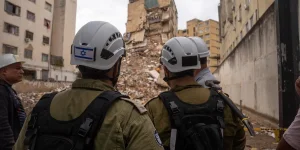
For twelve days, Israel conducted a highly targeted military campaign that stripped the Islamic Republic of its cultivated aura of invincibility. Senior commanders of the Islamic Revolutionary Guard Corps (IRGC), responsible for ballistic missile operations, were eliminated. Missile launch sites, weapons factories, and storage facilities were struck with precision.
In the final days of the campaign, Israel expanded its focus. The Israeli Air Force targeted the machinery of regime control itself. The state broadcasting authority was struck. The intelligence ministry responsible for domestic surveillance was hit. On the final day, a key Basij center—the paramilitary force tasked with suppressing internal dissent—was destroyed.
It was only after these blows to regime infrastructure, rather than Israel’s immediate security needs, that talk of a ceasefire emerged. At the time, the war appeared unfinished.
That perception changed two weeks later.
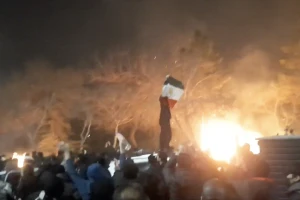
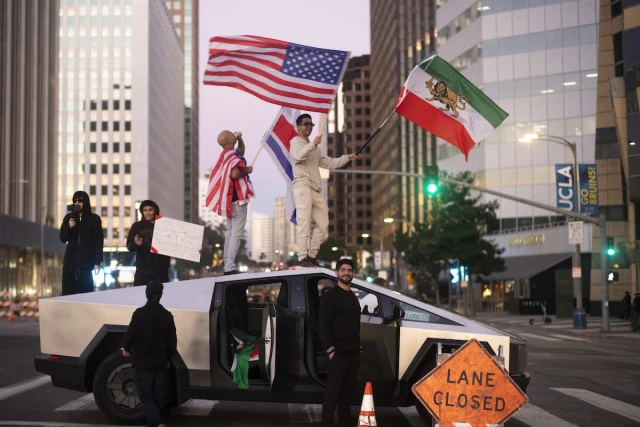
Across Iran, unprecedented national demonstrations erupted. The boldness of Israel’s actions, combined with the decisive posture of the United States under a president willing to strike Iran’s nuclear facilities—the symbolic heart of Shiite power—emboldened a population long ruled by fear.
As this is written, major cities across Iran are witnessing nightly protests. The regime has responded with familiar tactics: internet blackouts, electricity cuts, and violence carried out under cover of darkness. Families collect the bodies of loved ones by morning. Yet each night, the demonstrations resume.
At funerals, mourners are no longer silent. Chants ring out, vowing accountability for those killed. Far from intimidating the population, repression has hardened resolve. Sacrifice, many believe, must now mean something.
Persia and Judea: An Ancient Relationship
Iran and Israel were not always adversaries. Before the rise of Islam, Persia stood as a protector of the Jewish people.
The bond between Persians and Judeans is ancient and biblical. Cyrus the Great authorized the return of Jewish captives and the rebuilding of the Temple. Another Persian king supported Nehemiah in rebuilding Jerusalem’s walls. Still another stood with Esther and Mordecai against Haman.
This pattern of blessing is not incidental. Scripture records it as covenantal.
Years ago, I once gave a rabbi a ride. When he learned that I was Iranian, he asked a question that has stayed with me ever since: why did every empire that cursed Israel collapse, while Persia retained centralized rule for more than two millennia?
His answer was simple. Persia blessed the Jewish people.
A Debt Remembered
In 2003, I listened to a Persian-language radio broadcast from Jerusalem. The guest was Shaul Mofaz, Israel’s Minister of Defense, who had made aliyah from Iran as a child and was fluent in Persian.
When the phone lines were opened, a woman from Iran called in. “You owe us a debt,” she said. “When you were captive, we freed you. Now it is your turn to help us.”
That moment never left me.
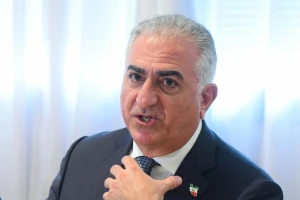
Two decades later, in April 2023, Israel’s Minister of Intelligence, Gila Gamliel, invited Iran’s Crown Prince to attend the Holocaust Memorial. He also met with Prime Minister Netanyahu. Minister Gamliel later shared that while praying at the Western Wall with the Crown Prince, she felt a clear conviction: Israel owed the Persian people a debt—and was being called to help them reclaim their freedom.
Separated by years and circumstances, both moments reflected the same biblical pattern.
Cold War Choices and Long Shadows
During the Cold War, the United States viewed political Islam as a potential barrier against Soviet expansion. Under President Jimmy Carter, this logic contributed to policies that facilitated the rise of Ayatollah Khomeini.
The result was the establishment of an Islamic Republic that fused Shiite theocracy with Marxist revolutionary ideology—an alliance defined by hostility toward the West and toward Jerusalem in particular.
Over time, however, this ideological structure began to fracture. Persian-language Bibles, underground churches, and a growing rejection of enforced belief eroded the regime’s spiritual legitimacy from within. Long before missiles struck, faith had already begun to loosen the regime’s grip.
A Nation Transformed
What is unfolding in Iran today is not merely political. It is spiritual.
Christianity is growing rapidly underground. Zoroastrianism is resurging. Atheism and agnosticism are widespread. Many Iranians no longer identify with Islam and do not share their rulers’ religious war against Israel.
The majority of Iran’s population is under forty, born after the Iran–Iraq War. Their grandparents ushered in the Islamic Republic. Their grandchildren are now rejecting it. Secularism has become the unifying language of opposition, allowing Iranians of diverse beliefs to stand together.
At the heart of the unrest lies a simple demand: freedom of conscience—absent in a system where the Supreme Leader is constitutionally declared the representative of the Mahdi until his return.
America’s Moment
Should the regime fall, it would not usher in a perfect society, nor would it erase every hostile ideology. Marxism would remain. Radical Islamism would persist among a minority. Antisemitism and anti-Zionism would not vanish. Scripture makes clear that history moves toward conflict before redemption, not away from it.
Yet Scripture also teaches that between oppression and final judgment, God grants seasons of respite.
The ancient biblical principle still holds: those who bless will be blessed, and those who curse will be cursed. This is not conjecture, but covenant—spoken by God to Abraham and written into history.
Israel has acted decisively and continues to operate; the decisive choice now rests with the United States.
If Iran is liberated, what follows will not be utopia, but something no less significant: a sabbath window. A season in which fear recedes, coercion loosens, and light can move more freely. A time in which ideas compete openly, a free marketplace of thought emerges, and society becomes influenceable rather than enforced.
In such an environment, biblical truth can be proclaimed without the power of the state enforcing false religion. The gospel can circulate more openly. Families, communities, and institutions can be shaped by persuasion rather than terror. History shows that it is in such contested windows— never permanent, always fragile—that spiritual renewal often advances most powerfully.
Prophetic conflict still lies ahead. That reality does not negate the responsibility of nations to act righteously within history while that future unfolds.
Israel may now be repaying a biblical debt.
What the people of Iran do with a season of freedom will be their choice.
What America does next will determine whether it helps open that sabbath window—or stands aside as the opportunity passes.
You might also like to read this: