As protests shake the regime, is Iran too weak to attack Israel, or too dangerous not to?
.jpg "Maayan Hoffman")




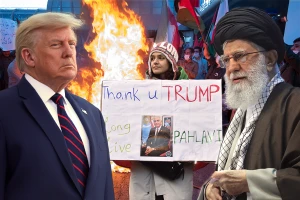
As Iran’s streets fill with protesters and the Islamic regime faces one of its most serious internal challenges in years, analysts say the greater danger may not be an Iranian missile strike on Israel but a preemptive move by the United States against Tehran.
U.S. President Donald Trump, they argue, is more likely to attack Iran before the Islamic Republic fires at Israel.
“I don’t think they will attack Israel because after the 12-day war, they realized they cannot do anything against Israel,” Catherine Perez-Shakdam, a French journalist and political analyst who has met and interviewed senior Iranian officials, told All Israel News.
She said Iran understands the strength of Israel’s air defenses after the June war and knows it cannot win.
“Iranians have this habit of attacking if they can guarantee success. They have seen what we have done, disassembling Iran’s total air defense system, and all Iran could do was watch. They won’t try to do anything. They understand one more humiliation would be one too many,” said Perez-Shakdam, who is also the executive director of We Believe in Israel.
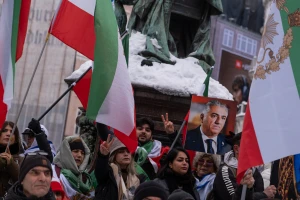
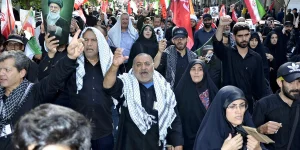
She spoke to AIN on Saturday night, as hundreds of thousands, if not millions, of Iranian citizens took to the streets across the country to protest the Islamic regime. Many believe the demonstrations are intensifying to the point that they could threaten the government’s survival. However, with internet access largely cut off and only sporadic reports emerging from inside Iran, the accurate scale of the unrest remains unclear.
At the same time, analysts are trying to assess just how desperate Supreme Leader Ayatollah Ali Khamenei and the Islamic Revolutionary Guard Corps have become.
Eric Mandel, founder and director of the Middle East Political and Information Network, said Israel is on its highest level of alert. He noted that if the regime becomes desperate enough, it could attempt to deflect attention from domestic unrest by attacking Israel.
However, Mandel said that while such an attack could be dangerous and deadly, Iran has not rebuilt its capabilities enough in the seven months since the 12-day war to launch an assault on the same scale.
“It would not be insignificant,” he said, “but it would not be what we saw before.”
One possible strategy, Mandel explained, would be limited missile fire toward Israel to distract attention while the regime cracks down on protesters at home. Israelis could find themselves in bomb shelters as a result, he said. More likely, however, Iran would turn to its proxies, Hamas, Hezbollah, or the Houthis, to do its dirty work.
Still, Mandel cautioned that both Hezbollah and Hamas have been severely weakened by Israel Defense Forces operations over the past two years. Some analysts are now questioning whether either group would even follow orders from Tehran at this point.
“The people perceive the Iranian regime as vulnerable because they were told they were invulnerable, and look at what the Israelis did to them,” Mandel said. “Israel showed the Iranian people that their regime was, to a large degree, a paper tiger, and that has given energy to the rebellion that wants to overthrow them.”
That does not mean, he stressed, that the people will necessarily prevail.
“These are fanatics,” Mandel said. “These are jihadists. What would the world’s leading state sponsor of terror do to survive? Maybe almost anything.”
Gedaliah Blum, who runs the popular MossadIL account on 𝕏 and co-founded the Heartland Foundation, expressed similar concerns. He told AIN that if the Iranian regime has its back against the wall and nothing to lose, the situation becomes “much more dangerous in the short term. When someone has their back against the wall, they don’t act pragmatically.”
Over Shabbat, graphic messages began circulating online showing a night sky filled with incoming projectiles, accompanied by the warning, “Look up at the sky at midnight.” Similar messages were also sent via text to Israeli phones. The messages were interpreted as a threat of ballistic missile fire toward Israel, as well as a psychological cyber tactic designed to frighten the public.
During the June war, Iranian ballistic missiles killed 28 people, including 27 civilians, underscoring the seriousness of such threats. However, Blum said that while this moment would theoretically be the time to strike, the regime still has one overriding concern.
“Yes, the threat is dangerous,” he wrote on 𝕏. “But the bluff is also revealing. Because if they cross that line, they are done.”
Blum added that the regime is still desperately trying to preserve its own survival.
“The second a missile is launched at Israel, that calculation ends. There is no walking it back. No ambiguity. No proxies to hide behind,” he said.
Mandel suggested that if Israel were to strike Iran now, it would likely avoid missile launchers or nuclear facilities. Instead, he said, Israel would target elements of the security apparatus, including IRGC headquarters or locations tied to Khamenei himself, actions that could further inflame protests inside Iran.
Blum noted that even limited action by Israel or the United States, such as flyovers or strikes on a few IRGC bases, could give momentum to the protesters and signal that they have support from above. No boots on the ground would be required, he said.
Over the weekend, the British Telegraph reported that Iran has raised its alert level even higher than during the war with Israel six months ago, adding that “underground missile cities are also ready to deal with external threats.”
The warning came amid fears in Tehran that Israel could exploit the internal instability, as well as explicit threats from Trump to intervene if regime forces kill protesters.
In an interview with The Economist, Prime Minister Benjamin Netanyahu said Israel’s goal was not regime change, though he acknowledged it could be a “consequence of the war.” He stressed that “revolutions are done from within” and said Israel had no plans to intervene directly, though it was closely monitoring developments.
“If Iran attacks us, which they might, then there will be horrible consequences for Iran,” Netanyahu told the magazine.
Trump, however, has continued to raise the possibility of involvement. He posted on Truth Social as recently as Saturday night, warning that the United States would act if protesters were killed, even as reports suggest hundreds have already died.
If Khamenei and the IRGC decide to suppress the protests entirely, analysts warn that the result could be a bloodbath. Some believe the only thing holding them back so far has been Trump’s public threats.
The question now is how many images of Iranians dying must surface before the president decides to act.
Trump wrote on Saturday night, “Iran is looking at FREEDOM, perhaps like never before. The USA stands ready to help!!!”
Initial reports say Trump has not yet made a final decision but is seriously considering approving a strike in response to the regime’s crackdown. Several options were reportedly presented.
“If Trump wanted to do something beyond clandestine, it would be striking targets to empower the people,” Mandel said. “Either they [the regime] look vulnerable, or American strikes weapon sites so that the rebels can go and arm themselves. If regime change is going to happen, you want there to be an economy they can take over. So, I see it as striking security elements.”
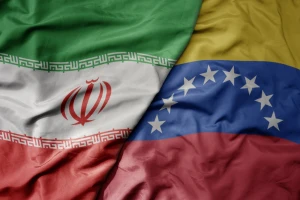
Mandel added that after Trump’s actions in Venezuela earlier this month, the world should understand that if the U.S. president believes “this is a historical moment for him and he believes in his morality that this is what should be done, I think he could act.” Anyone who says Trump would not act here, Mandel said, “did not watch B-2 bombers striking Iran in June 2025 or last week in Venezuela.”
The assessment in Jerusalem is that there is now a tangible chance of regime collapse, Israeli media reported. Mandel cautioned, however, that a regime collapse should not be confused with a positive regime change that reflects the will of the majority of the Iranian people.
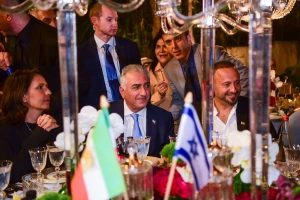
“We all get excited because we want to see this, but there is not one unified figure that is an internal opposition leader, and there is no real external leader,” Mandel stressed.
The future, he said, is “fraught with all kinds of possibilities and repercussions” that could affect the entire Middle East, and not all of them would be positive.
Perez-Shakdam agreed. She said Khamenei created the IRGC to protect the regime, not the people. If Khamenei believes the regime is on the verge of collapse, she warned, he may unleash the IRGC to defend it, regardless of Trump’s threats. In that scenario, she said, the situation could get much worse before it gets better.
Another possibility, Perez-Shakdam said, is that the regime could attempt to reinvent itself along the lines of North Korea or expand IRGC operations abroad to assassinate Iranian dissidents and sow fear.
“These are not rational actors,” Perez-Shakdam warned. “It is about power. They will do whatever they need to to retain their power. These people are sadistic, and the West does not realize how far these people will go… I think the Nazis look like choir boys next to them.”
She added that, as Mandel noted, because there is no clear leader to take over, Iran could fracture along ethnic and religious lines. Competing factions could fight for control of territory, creating multiple centers of power.
“That would mean Israel would not be facing one monster, but potentially 10,” she said.
“There is no real candidate to replace anyone,” Perez-Shakdam stressed. “This is happening so quickly, and no one planned for the day after.”
So, as protests grow and pressure mounts from within and without, Iran’s future remains dangerously unresolved. This leaves Israel preparing for possible outcomes that could range from a celebrated and historic change to another round of missile attacks and broader regional instability.
You might also like to read this: