After 44 years, Israel’s final missing soldier from First Lebanon War battle comes home




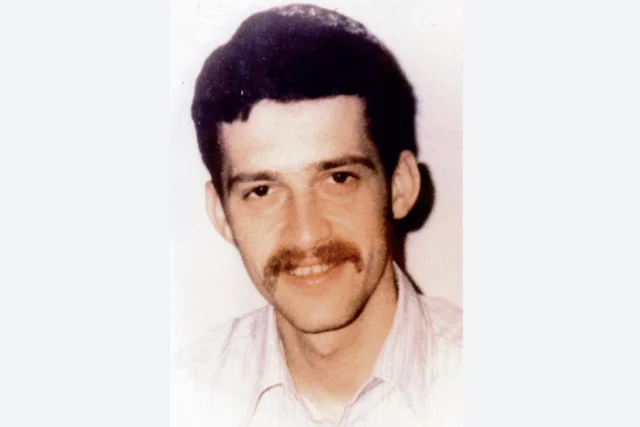
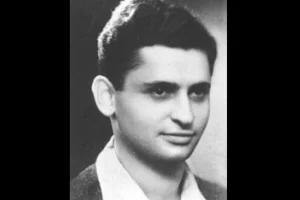
After more than four decades of uncertainty, the remains of Sgt. First Class Yehuda Katz are finally coming home.
The IDF announced on Tuesday that it had located and recovered Katz’s remains, making him the last soldier missing from the June 1982 Battle of Sultan Yacoub to be recovered.
The battle, fought during the first week of Operation Peace for Galilee, later known as the First Lebanon War, left six IDF soldiers missing in action and became one of the most painful unresolved episodes in the military’s history.
The remains of Sgt. First Class Zachary Baumel were recovered and brought back to Israel for burial in 2019, while the remains of Sgt. First Class Zvi Feldman were recovered in May 2025 following a special operation in Syria.
With Katz’s remains now recovered and returned to Israel for burial, the fate of the three soldiers whose whereabouts remained unknown for decades has finally been resolved.
The Battle of Sultan Yacoub lasted approximately eight hours on June 11, 1982, six days into the First Lebanon War. The IDF’s objective was a strategic crossroads code-named the Tublano Triangle near the village of Sultan Yacoub in southeastern Lebanon, about seven kilometers from the Syrian border.
The operation was ordered despite the expectation that a ceasefire with Syrian forces could be reached in the near future.
Three armored brigades and an infantry brigade were sent into the area without knowing that heavy Syrian forces had taken positions on high ground near the village. The Syrian forces ambushed the Israeli troops, catching them by surprise and subjecting them to heavy fire before they could organize a defense.
According to several accounts, the IDF forces struggled to respond to the ambush, and several incidents of friendly fire resulted in additional Israeli casualties.
After eight hours of heavy fighting, the IDF forces withdrew under the cover of a heavy artillery barrage. Eight Israeli tanks and other damaged vehicles had to be abandoned, and 20 IDF soldiers were killed in the battle. Many more were wounded, while six soldiers were initially listed as missing in action.
An unknown number of Syrian soldiers were also killed, wounded or reported missing.
In the years following the battle, the remains of Zohar Lifshitz, who was killed during the fighting and buried in Syria, were returned to Israel. Two other soldiers, Arik Lieberman and Hezi Shai, were later determined to have been captured during the battle – Lieberman by Syrian forces and Shai by a terrorist organization led by Ahmed Jibril.
Lieberman was released to Israel in 1984, while Shai was released in 1985 as part of prisoner exchanges connected to the aftermath of the war.
The fate of the remaining missing soldiers, however, remained an open wound for their families and Israeli society for decades.
With the recovery of Katz’s remains this week, the last unresolved case from the Battle of Sultan Yacoub has finally been brought to a close.
But the legacy of the battle had long been etched into Israel’s national and military history.
The heavy casualties, the failure to share intelligence about the Syrian forces with commanders on the ground in time to prevent the ambush, and the decades-long uncertainty surrounding the missing soldiers haunted the IDF and the commanders of the units involved.
Several of those officers, including Ehud Barak and Amram Mitzna, later entered politics after retiring from the military, and the battle’s outcome became an issue in some of their political campaigns.
You might also like to read this: