US giving Iran ‘last chance before decapitation,’ Trump says, as Iranian leaders deny discussions
Iranian, Israeli leaders assess Trump does not want to resume fighting, looking for leverage in talks






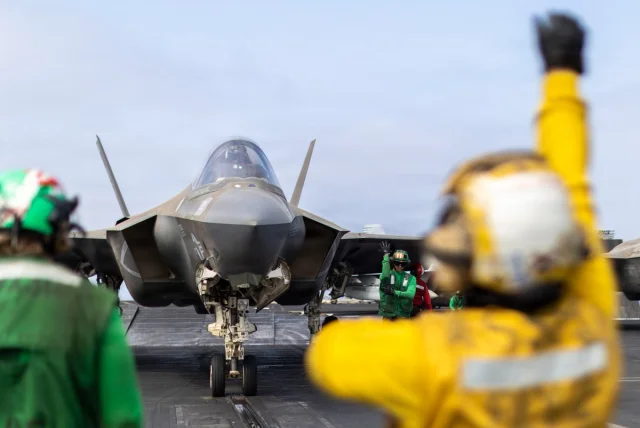
President Donald Trump said the U.S. is in talks with Iran, while warning of a “last chance” for the regime leadership to make a deal.
“We are talking right now,” President Trump said on Monday in response to a question by reporters. “We’re talking, and we’re talking at the request of Iran.”
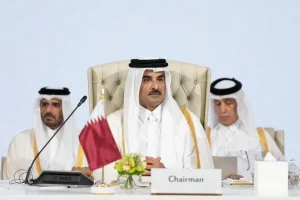
He again claimed that the talks were being supported by regional nations, saying the talks are “backed by Saudi Arabia, backed by UAE, and backed by Qatar in particular, but others also.”
Trump said the countries wanted to give the Iran deal another chance.
“They all wanted to give this a last chance,” he said. “And this is the last chance.”
“This is a last chance for them to sign a good document,” Trump stated. “I think we're going to maybe get something, but I want to give them every last chance before decapitation.”
Trump: "This is their last chance to make a deal before decapitation." pic.twitter.com/PIZx41MbaG
— Open Source Intel (@Osint613) August 3, 2026
However, Trump’s claims of ongoing negotiations were disputed by Iranian authorities.
Foreign Ministry spokesman Esmaeil Baghaei had previously stated that the Iranian government is not holding discussions with the United States.
Baghaei claimed Iran is only in talks with Oman, to open the Strait of Hormuz.
“Our negotiations are with Oman to secure passage through the Strait of Hormuz,” Baghaei said.
In a post to his Truth Social account, Trump called the Iranian leadership “unbelievably duplicitous,” saying the regime asked for discussions, while publicly denying such negotiations.
“Iranian Leadership is unbelievably duplicitous! They ask for a meeting, some would say ‘beg,’ talks begin, with more scheduled in the immediate future, and they say, openly and proudly, that they’re not having any discussions, that nothing is being talked about, and they’re only dealing with ‘Oman,’” Trump wrote.
He said the U.S. blockade of Iranian vessels is ongoing, calling it “The United States Wall of Steel.”
“Nothing gets through to Iran, unless we want it to, and nothing will get through, unless a Deal, or Total Surrender, is accomplished,” he added.
Meanwhile, shipping through the Strait of Hormuz and Bab el-Mandeb Strait is largely unchanged from the previous week, according to shipping tracking websites. Hormuz traffic was only in the single digits on Monday, with six vessels making the transit with their tracking transponders turned on.
Iranian Foreign Ministry spokesman Baghaei said a deal with Oman is close, which will respect "the sovereign rights of both sides.”
“We are now going to reach an understanding on a route acceptable to both sides – neither the northern route nor the southern route – but one that respects the sovereign rights of both sides and safeguards our national interests and security,” Baghaei claimed.
On Tuesday morning, a vessel was "hit by an unknown projectile” off the coast of Oman, the United Kingdom Maritime Trade Operations (UKMTO) said.
The Islamic Republic regime estimates that Trump does not want to return to hostilities, despite his frequent threats, CBS News reported on Monday evening.
Citing “sources inside Iran,” CBS said the frequent threats, followed by unilateral statements of de-escalation, indicate that the U.S. president does not wish to return to fighting, and is only using the threats for leverage in negotiations.
The regime believes that Trump’s delaying of strikes benefits them, and that the economic pressure created by the near total closure of Hormuz, will strengthen their position in negotiations.
The senior military adviser to Iran's Supreme Leader Ayatollah Seyyed Mojtaba Khamenei, Mohsen Rezaee, said on Monday that Iran will not permit any traffic through Hormuz that does not use its designated route. He also accused the U.S. of violating the previous Memorandum of Understanding.
“The U.S. had accepted Iran's arrangements for the Strait of Hormuz under the (Islamabad) MoU, but later violated the agreement,” Rezaee said in statements on Iran’s Press TV. “The U.S. not only breached the MoU but also launched attacks without first referring the dispute to the designated dispute resolution panel.”
“We made it clear to the US that we have both missiles and the capability to defend ourselves. Even if the US sends warships through an unauthorized route into the Strait of Hormuz, we will target them. We will not allow any route other than Iran's designated route to be established in the Strait of Hormuz,” Rezaee was quoted as saying by Press TV.
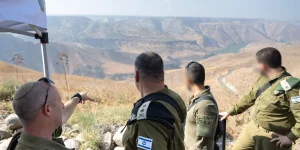
The Israeli leadership also assesses that President Trump does not wish to resume fighting. The IDF was on high alert over the weekend, prepared for a planned joint strike by U.S. and Israeli forces in multiple locations across Iran, when Trump surprised them by announcing a halt to further strikes via social media.
According to reports in Hebrew media, IDF and political leaders were caught off guard by the announcement, as Israel had forces standing by to launch the attack. According to a report in Walla News, the sudden cancellation of the strikes is not the first time that the U.S. military has coordinated planned strikes with Israel, only to have President Trump halt the operations.
The assessment was echoed by former senior Israeli security official Avner Vilan in an interview with 103FM on Monday.
“The Iranians have a sense of victory,” Vilan said. “They control the Strait of Hormuz, and nobody has done anything to them. Their strategy is working.”
Vilan said that from the regime's perspective, as long as it survives the conflict, it can accept destruction of infrastructure and severe economic decline.
You might also like to read this: