








ANALYSIS Trump’s Board of Peace may test power more than it delivers peace
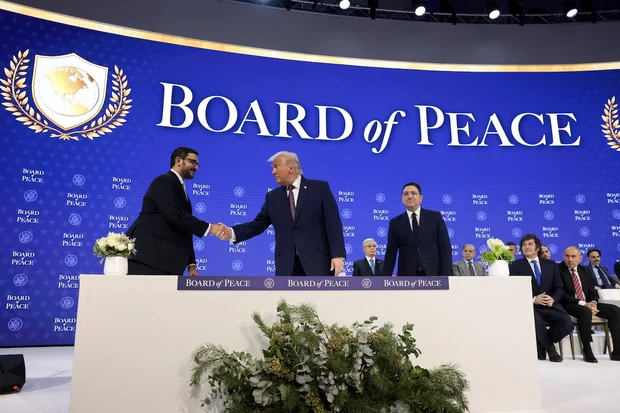
U.S. President Donald Trump may promote his new Board of Peace this week at the World Economic Forum in Davos. Still, critics say the initiative’s sweeping ambition may far outpace its chances of success.
A high-profile board with big names and a stated goal of replacing what the president has called a corrupt United Nations does not necessarily mean tangible results or long-term impact, although it could.
“There is a big gap between formulating the principle and executing it with a wide international agreement,” explained Major General (ret.) Amos Yadlin. “I don’t believe the organization will go forward. The chances are not high. I think we are far away.”
According to Yadlin, the challenge is not vision but follow-through. He said the president is not a “details man,” and that too many fundamental questions remain unanswered for such a body to function effectively.
Others echoed that skepticism, questioning whether Trump can translate bold rhetoric into durable international cooperation.
“Trump wants to solve the problems of the world,” Professor Efraim Inbar, former head of the Jerusalem Institute for Strategy and Security, told ALL ISRAEL NEWS. “If he is going to have money and buy everyone, it may work. But there will likely be enough states that don’t like the idea of being subordinate to Trump. I doubt it will achieve its goals.”
Inbar acknowledged the appeal of Trump’s approach, describing the president as “an impressive guy” and “charismatic,” and said he understands the desire to replace what he called a “morally bankrupt” United Nations with a less corrupt international body. Still, he remained unconvinced.
“I am not sure it will work,” Inbar said.
The concept sounds appealing on paper, according to Inbar, but he said it is driven less by a realistic pathway to global peace and more by Trump’s personal ambitions. He suggested the initiative may function more as a vehicle for Trump securing a Nobel Peace Prize than as a practical mechanism for resolving international conflicts.
“We will just have to see what comes out of it and who plays ball with him,” Inbar said.
The charter for the Board of Peace was leaked by several media outlets over the weekend, revealing that although the body was initially conceived as a means to monitor and promote peace in the Gaza Strip after two years of war, the U.S. president appears to have significantly expanded its mandate.
According to the charter, the Board of Peace is intended to be “an international organization that seeks to promote stability, restore dependable and lawful governance, and secure enduring peace in areas affected or threatened by conflict. The Board of Peace shall undertake such peace-building functions in accordance with international law and as may be approved in accordance with this charter, including the development and dissemination of best practices capable of being applied by all nations and communities seeking peace.”
However, the board's structure raises questions about how truly independent or representative it can be. Members are “invited to participate by the chairman,” who is Trump, and there is no other mechanism for joining. While decisions are to be made “by a majority of the member states present and voting,” all outcomes remain “subject to the approval of the chairman, who may also cast a vote in his capacity as chairman in the event of a tie.”
As a result, Trump, who will also serve as the United States’ inaugural representative, could effectively wield two votes.
The charter further states that the chairman “shall at all times designate a successor for the role of chairman,” and that replacement may occur only following voluntary resignation or incapacity. The Board of Peace may also be dissolved solely at the chairman’s discretion if he deems it “necessary or appropriate,” or at the end of any odd-numbered calendar year, unless renewed by the chairman.
These provisions have already fueled divisions among potential participants. Several Western European countries have declined to join, while others, including Russian President Vladimir Putin and blocs of Muslim-majority states, have agreed to participate. European governments have cited concerns that the board’s expanded vision could undermine the authority of the United Nations.
When asked by a reporter on Tuesday whether the board would replace the UN, Trump replied, “It might.”
“It is not a bad thing to challenge the UN, but it depends on what the rules of the game will be,” Yadlin told ALL ISRAEL NEWS.
France, Norway, and Sweden are among the countries that have publicly declined to participate.
“Yes to implementing the peace plan presented by the president of the United States, which we wholeheartedly support, but no to creating an organization as it has been presented, which would replace the United Nations,” said French Foreign Minister Jean-Noel Barrot.
By contrast, Egypt, Indonesia, Jordan, Pakistan, Qatar, Saudi Arabia, and the United Arab Emirates have all agreed to join.
Notably, Israel’s Prime Minister Benjamin Netanyahu also agreed to participate, despite previously complaining about Turkey and Qatar's inclusion on the Board of Peace executive committee. This decision came even though the current framework bears little resemblance to the mandate approved by Israel’s Security Cabinet in November, which limited the initiative to Gaza and set an end date of 2027.
Inbar said Israel, as a small state, is eager to remain in Trump’s good graces. If joining the board carries little cost, he said, it is logical that Netanyahu would agree, adding, “It is a nice show.”
Prof. Kobi Michael, a senior researcher at both the Misgav Institute for National Security and the Institute for National Security Studies, said the board could help expand the Abraham Accords, which he believes would benefit Israel. He said one of the board’s primary strategic goals is to draw countries such as Indonesia, Pakistan, and Malaysia closer to the accords while weakening their ties to China.
According to Michael, this effort reflects close coordination behind the scenes between Trump and Netanyahu.
When asked about concerns that each member state seeking lifetime membership would be required to contribute $1 billion in cash, a structure that could give wealthy states such as Qatar disproportionate influence over smaller but more aligned countries, Michael was not troubled. He said this dynamic already exists at the United Nations and in the international system more broadly. As an example, he noted that Qatar today wields more influence than the United Kingdom.
Michael agreed that the board’s long-term impact is likely to be limited. However, he said the next few years could bring meaningful shifts in the international order if Trump succeeds in advancing the initiative while still in office. In his view, Trump has the political will to push parts of the plan through, at least in the short term.
“As long as Trump is in power, he might succeed in doing some parts of the plan, although I am not sure [what would happen] after his term as president,” Michael said.
The next U.S. presidential election is scheduled for 2028.
Michael said that if a figure such as U.S. Senator Marco Rubio were to run for president and win, elements of the broader vision could continue. If a Democrat were elected, however, he believes the initiative would likely fade.
“I think we are witnessing a very turbulent and dramatic change in the entire international system, and the international order we used to know is going to be changed dramatically,” Michael concluded.
He jokingly referred to the moment as “Pax-Trumpism,” suggesting that while the Middle East may serve as the starting point for these shifts, their effects will not remain confined to the region.
The Board of Peace is unlikely to replace the United Nations, despite Trump’s statement. Still, it may significantly disrupt the existing global order before, as most expect, it ultimately dissolves.
How far that disruption goes, and who will emerge with the greater influence? This may depend less on formal charters than on who is invited to sit around the table while it lasts.
Popular article:
interview Easter message of resurrection hope amid war at Jerusalem's Garden Tomb

biblical commentary Let my people go: a Passover message for today
4 IDF soldiers killed, 2 wounded in fighting in southern Lebanon, as Israel eliminates dozens of Hezbollah terrorists

Receive latest news & updates
A message from All Israel News
Help us educate Christians on a daily basis about what is happening in Israel & the Middle East and why it matters.
For as little as $10, you can support ALL ISRAEL NEWS, a non-profit media organization that is supported by readers like you.
Latest articles:
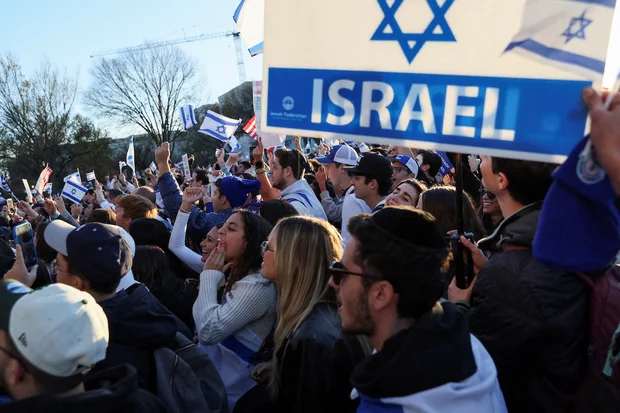
ANALYSIS North American Jewish organizations to recruit 100 professionals to combat antisemitism
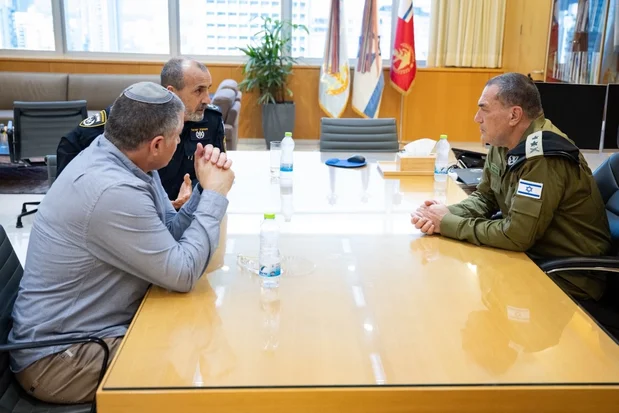
ANALYSIS ‘No need’ for pre-election Iran strike, IDF chief says as gov’t, opposition trade blame for potential escalation – report
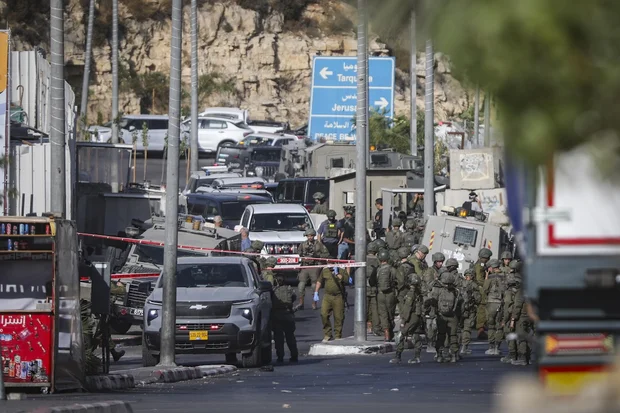
terror attack 2 Israeli soldiers killed, 2 terrorists eliminated in Hebron shooting; IDF says much larger attack was prevented
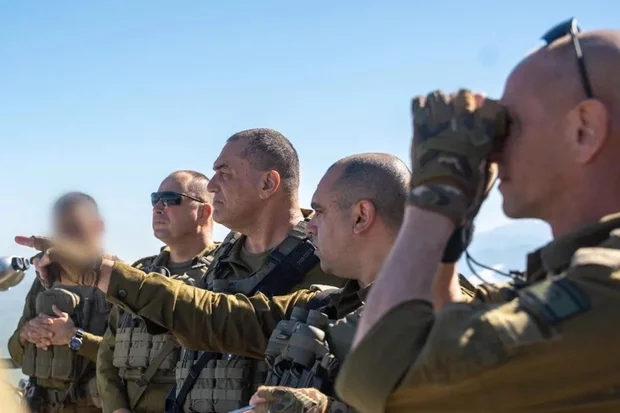
analysis A people dwelling securely? Israel’s strategic standing, 3 years after Oct 7
ANALYSIS Hamas on wheels: What I found in Dearborn reveals a troubling history and a battle over Israel