








What are the mission, roles, and responsibilities of President Trump’s ‘Board of Peace’? Here’s the full text – no mention of Gaza and it costs $US1 billion to join
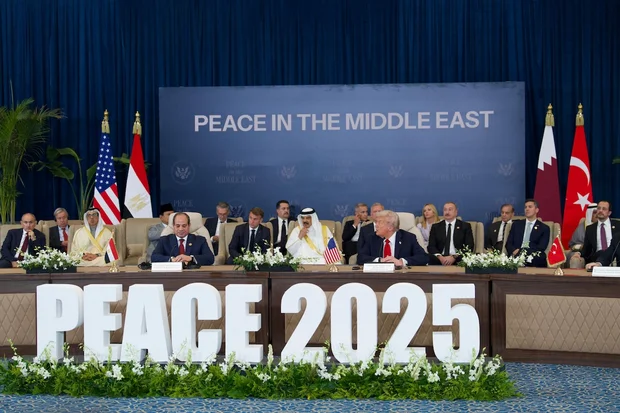
U.S. President Donald Trump has now unveiled the details of his much-discussed and quite controversial “Board of Peace.”
Yesterday, ALL ISRAEL NEWS and ALL ARAB NEWS reported on its initial executive leadership structure.
Today, we share its charter, explaining the organization’s mission, structure, roles and responsibilities.
A few things worth noting:
President Trump will serve as chairman and wield considerable overall control.
Though originally announced as the international body created to oversee the rebuilding and initial governance of Gaza, the document curiously never mentions Gaza. Why not? Does Trump envision this as the beginnings of an alternative or replacement to the United Nations?
The price tag for a nation state being a member is $US1 billion.
An estimated 60 world leaders have been invited to join. The inclusion of the leaders of Turkey and Qatar has been highly controversial and has outraged the Israeli government.
Here is the full text of the charter, first reported by the Times of Israel.
CHARTER OF THE BOARD OF PEACE: Full Text
PREAMBLE
Declaring that durable peace requires pragmatic judgment, common-sense solutions, and the courage to depart from approaches and institutions that have too often failed;
Recognizing that lasting peace takes root when people are empowered to take ownership and responsibility over their future;
Affirming that only sustained, results-oriented partnership, grounded in shared burdens and commitments, can secure peace in places where it has for too long proven elusive;
Lamenting that too many approaches to peace-building foster perpetual dependency, and institutionalize crisis rather than leading people beyond it;
Emphasizing the need for a more nimble and effective international peace-building body; and
Resolving to assemble a coalition of willing States committed to practical cooperation and effective action,
Judgment guided and justice honored, the Parties hereby adopt the Charter for the Board of Peace.
Article 1: Mission
CHAPTER I – PURPOSES AND FUNCTIONS
The Board of Peace is an international organization that seeks to promote stability, restore dependable and lawful governance, and secure enduring peace in areas affected or threatened by conflict.
The Board of Peace shall undertake such peace-building functions in accordance with international law and as may be approved in accordance with this Charter, including the development and dissemination of best practices capable of being applied by all nations and communities seeking peace.
(c) Each Member State shall serve a term of no more than three years from this Charter’s entry into force, subject to renewal by the Chairman.
The three-year membership term shall not apply to Member States that contribute more than USD $1,000,000,000 in cash funds to the Board of Peace within the first year of the Charter’s entry into force.
Article 2.3: Termination of Membership
Membership shall terminate upon the earlier of:
(i) expiration of a three-year term, subject to Article 2.2(c) and renewal by the Chairman;
(ii) withdrawal, consistent with Article 2.4;
(iii) a removal decision by the Chairman, subject to a veto by a two-thirds majority of Member States: or
(iv) dissolution of the Board of Peace pursuant to Chapter X. A Member State whose membership terminates shall also cease to be a Party to the Charter, but such State may be invited again to become a Member State, in accordance with Article 2.1.
Article 2.4: Withdrawal
Any Member State may withdraw from the Board of Peace with immediate effect by providing written notice to the Chairman.
CHAPTER III – GOVERNANCE
Article 3.1: The Board of Peace
(a) The Board of Peace consists of its Member States.
(b) The Board of Peace shall vote on all proposals on its agenda, including with respect to the annual budgets, the establishment of subsidiary entities, the appointment of senior executive officers, and major policy determinations, such as the approval of international agreements and the pursuit of new peace-building initiatives.
(c) The Board of Peace shall convene voting meetings at least annually and at such additional times and locations as the Chairman deems appropriate. The agenda at such meetings shall be set by the Executive Board, subject to notice and comment by Member States and approval by the Chairman.
(d) Each Member State shall have one vote on the Board of Peace.
(e) Decisions shall be made by a majority of the Member States present and voting, subject to the approval of the Chairman, who may also cast a vote in his capacity as Chairman in the event of a tie.
(f) The Board of Peace shall also hold regular non-voting meetings with its Executive Board at which Member States may submit recommendations and guidance with respect to the Executive Board’s activities, and at which the Executive Board shall report to the Board of Peace on the Executive Board’s operations and decisions.
Such meetings shall be convened on at least a quarterly basis, with the time and place of said meetings determined by the Chief Executive of the Executive Board.
(g) Member States may elect to be represented by an alternate high-ranking official at all meetings, subject to approval by the Chairman.
(h) The Chairman may issue invitations to relevant regional economic integration organizations to participate in the proceedings of the Board of Peace under such terms and conditions as he deems appropriate.
Article 3.2: Chairman
(a) Donald J. Trump shall serve as inaugural Chairman of the Board of Peace, and he shall separately serve as inaugural representative of the United States of America, subject only to the provisions of Chapter III.
(b) The Chairman shall have exclusive authority to create, modify, or dissolve subsidiary entities as necessary or appropriate to fulfill the Board of Peace’s mission.
Article 3.3: Succession and Replacement
The Chairman shall at all times designate a successor for the role of Chairman.
Replacement of the Chairman may occur only following voluntary resignation or as a result of incapacity, as determined by a unanimous vote of the Executive Board, at which time the Chairman’s designated successor shall immediately assume the position of the Chairman and all associated duties and authorities of the Chairman.
Article 3.4: Subcommittees
The Chairman may establish subcommittees as necessary or appropriate and shall set the mandate, structure, and governance rules for each such subcommittee.
CHAPTER IV – EXECUTIVE BOARD
Article 4.1: Executive Board Composition and Representation
(a) The Executive Board shall be selected by the Chairman and consist of leaders of global stature.
(b) Members of the Executive Board shall serve two-year terms, subject to removal by the Chairman and renewable at his discretion.
(c) The Executive Board shall be led by a Chief Executive nominated by the Chairman and confirmed by a majority vote of the Executive Board.
(d) The Chief Executive shall convene the Executive Board every two weeks for the first three months following its establishment and on a monthly basis thereafter, with additional meetings convened as the Chief Executive deems appropriate.
(e) Decisions of the Executive Board shall be made by a majority of its members present and voting, including the Chief Executive. Such decisions shall go into effect immediately, subject to veto by the Chairman at any time thereafter.
(f) The Executive Board shall determine its own rules of procedure.
Article 4.2: Executive Board Mandate
The Executive Board shall:
(a) Exercise powers necessary and appropriate to implement the Board of Peace’s mission, consistent with this Charter;
(b) Report to the Board of Peace on its activities and decisions on a quarterly basis, consistent with Article 3.1(f), and at additional times as the Chairman may determine.
Article 5.1: Expenses
CHAPTER V – FINANCIAL PROVISIONS
Funding for the expenses of the Board of Peace shall be through voluntary funding from Member States, other States, organizations, or other sources.
Article 5.2: Accounts
The Board of Peace may authorize the establishment of accounts as necessary to carry out its mission.
The Executive Board shall authorize the institution of controls and oversight mechanisms with respect to budgets, financial accounts, and disbursements, as necessary or appropriate to ensure their integrity.
CHAPTER VI – LEGAL STATUS
Article 6
(a) The Board of Peace and its subsidiary entities possess international legal personality.
They shall have such legal capacity as may be necessary to the pursuit of their mission (including, but not limited to, the capacity to enter into contracts, acquire and dispose of immovable and movable property, institute legal proceedings, open bank accounts, receive and disburse private and public funds, and employ staff).
(b) The Board of Peace shall ensure the provision of such privileges and immunities as are necessary for the exercise of the functions of the Board of Peace and its subsidiary entities and personnel, to be established in agreements with the States in which the Board of Peace and its subsidiary entities operate or through such other measures as may be taken by those States consistent with their domestic legal requirements. The Board may delegate authority to negotiate and conclude such agreements or arrangements to designated officials within the Board of Peace and/or its subsidiary entities.
Article 7
CHAPTER VII – INTERPRETATION AND DISPUTE RESOLUTION
Internal disputes between and among Board of Peace Members, entities, and personnel with respect to matters related to the Board of Peace should be resolved through amicable collaboration, consistent with the organizational authorities established by the Charter, and for such purposes, the Chairman is the final authority regarding the meaning, interpretation, and application of this Charter.
CHAPTER VIII – CHARTER AMENDMENTS
Article 8
Amendments to the Charter may be proposed by the Executive Board or at least one-third of the Member States of the Board of Peace acting together.
Proposed amendments shall be circulated to all Member States at least thirty (30) days before being voted on.
Such amendments shall be adopted upon approval by a two-thirds majority of the Board of Peace and confirmation by the Chairman. Amendments to Chapters II, III, IV, V, VIII, and X require unanimous approval of the Board of Peace and confirmation by the Chairman.
Upon satisfaction of the relevant requirements, amendments shall enter into force on such date as specified in the amendment resolution or immediately if no date is specified.
Article 9
CHAPTER IX – RESOLUTIONS OR OTHER DIRECTIVES
The Chairman, acting on behalf of the Board of Peace, is authorized to adopt resolutions or other directives, consistent with this Charter, to implement the Board of Peace’s mission.
CHAPTER X – DURATION, DISSOLUTION AND TRANSITION
Article 10.1: Duration
The Board of Peace continues until dissolved in accordance with this Chapter, at which time this Charter will also terminate.
Article 10.2: Conditions for Dissolution
The Board of Peace shall dissolve at such time as the Chairman considers necessary or appropriate, or at the end of every odd-numbered calendar year, unless renewed by the Chairman no later than November 21 of such odd-numbered calendar year.
The Executive Board shall provide for the rules and procedures with respect to the settling of all assets, liabilities, and obligations upon dissolution.
CHAPTER XI – ENTRY INTO FORCE
Article 11.1: Entry into Force and Provisional Application
(a) This Charter shall enter into force upon expression of consent to be bound by three States.
(b) States required to ratify, accept, or approve this Charter through domestic procedures agree to provisionally apply the terms of this Charter, unless such States have informed the Chairman at the time of their signature that they are unable to do so. Such States that do not provisionally apply this Charter may participate as Non-Voting Members in Board of Peace proceedings pending ratification, acceptance, or approval of the Charter consistent with their domestic legal requirements, subject to approval by the Chairman.
Article 11.2: Depositary
The original text of this Charter, and any amendment thereto shall be deposited with the United States of America, which is hereby designated as the Depositary of this Charter.
The Depositary shall promptly provide a certified copy of the original text of this Charter, and any amendment or additional protocols thereto, to all signatories to this Charter.
CHAPTER XII – RESERVATIONS
Article 12
No reservations may be made to this Charter.
CHAPTER XIII – GENERAL PROVISIONS
Article 13.1: Official Language
The official language of the Board of Peace shall be English
Article 13.2: Headquarters
The Board of Peace and its subsidiary entities may, in accordance with the Charter, establish a headquarters and field offices. The Board of Peace will negotiate a headquarters agreement and agreements governing field offices with the host State or States, as necessary.
Article 13.3: Seal
The Board of Peace will have an official seal, which shall be approved by the Chairman.
IN WITNESS WHEREOF, the undersigned, being duly authorized, have signed this Charter.
Help more people find our reporting from Israel! Leave a quick Google review of our website HERE .
Popular article:

interview Easter message of resurrection hope amid war at Jerusalem's Garden Tomb

biblical commentary Let my people go: a Passover message for today
4 IDF soldiers killed, 2 wounded in fighting in southern Lebanon, as Israel eliminates dozens of Hezbollah terrorists

Receive latest news & updates
A message from All Israel News
Help us educate Christians on a daily basis about what is happening in Israel & the Middle East and why it matters.
For as little as $10, you can support ALL ISRAEL NEWS, a non-profit media organization that is supported by readers like you.
Latest articles:
North American Jewish organizations to recruit 100 professionals to combat antisemitism
‘No need’ for pre-election Iran strike, IDF chief says as gov’t, opposition trade blame for potential escalation – report
terror attack 2 Israelis critically wounded, 2 terrorists killed in Hebron shooting; IDF says larger attack was prevented
analysis A people dwelling securely? Israel’s strategic standing, 3 years after Oct 7
Hamas on wheels: What I found in Dearborn reveals a troubling history and a battle over Israel