Top Israeli defense industry official warns of ongoing missile interceptor shortage amid prolonged war



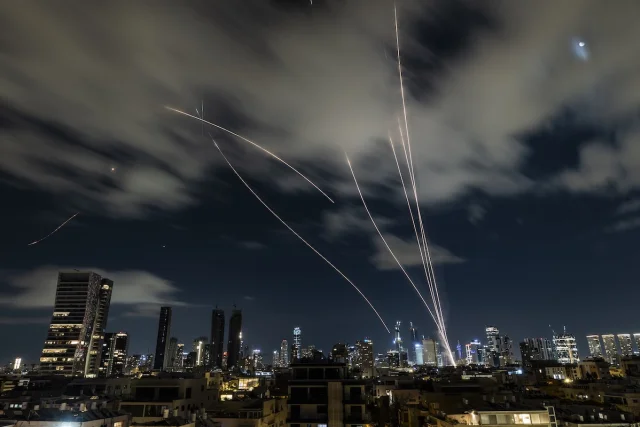
Israel’s interceptor stockpiles remain under pressure as prolonged missile warfare increases demand for advanced air-defense systems, according to a senior Israeli defense industry official.
Israel Aerospace Industries (IAI) Chairman Boaz Levy warned in an interview with Ynet News at the MEAD Middle East Summit in Washington, D.C., that he will “never sleep soundly” when it comes to Israel’s interceptor stockpiles.
“I will never sleep soundly when it comes to interceptor stockpiles, because there will always be a need for more. Our job at IAI is to provide them as quickly and efficiently as possible, but these are highly sophisticated systems, and their production time is not negligible,” Levy stated.
Israel and the United States operate some of the world’s most advanced air-defense systems. However, prolonged missile warfare is placing continued pressure on interceptor supplies.
“There are Israeli constraints and there are American constraints,” Levy noted, adding, “There will always be a shortage because the war is asymmetric.”
Looking ahead, Levy emphasized that the solution to the interceptor shortage is an infusion of more defense funds.
“If you want more interceptors, you need bigger budgets, and the blanket is too short,” he assessed. Levy argued that Israeli decision-makers are aware of the security challenges, while noting that the Finance Ministry in Jerusalem ultimately determines the available defense budget.
The MEAD conference reportedly provided an opportunity for behind-the-scenes meetings with officials from countries that do not have official diplomatic relations with Israel. Levy, who has served as IAI’s chairman since 2020, has played a key role in the development of Israel’s Arrow missile-defense and Barak 8 systems. He highlighted how Israel’s advanced defense technologies can strengthen the country’s security while also creating opportunities for new export markets and closer ties with countries across the Middle East.
“This conference is a good platform,” Levy argued. “IAI is both a defense and civilian company. It is a national company, and it has responsibilities that go beyond supplying systems to the security forces.”
Levy also said that the IAI production line is operating 24/7 to supply critical military platforms to both Israel and foreign clients, including Germany.
Established in 1953 by Shimon Peres and Al Schwimmer, Israel Aerospace Industries has emerged as a global defense company with 16,000 employees, including 8,000 engineers. Levy said that the company employs around 50,000 households in Israel.
“There is nothing like this anywhere else,” Levy argued, adding that “the boundary between civilian and military is becoming blurred.”
Looking ahead, he assessed that AI is dramatically impacting the global defense industry.
“If you can generate insights from that, you can sell them, share them and create alliances with countries. It’s a win-win,” Levy said.
He emphasized the need for deeper cooperation between Israel and moderate Arab states against the Islamic Republic of Iran and its regional terror proxies.
“When a missile is headed toward Israel, or toward any other country in such an alliance, it passes through other countries,” he explained. “If you advance cooperation, you increase your ability to respond. That is what Israel should aspire to.”
“Today it is clear to every citizen in the world that Israel is the leading air-defense power in the world,” Levy concluded.
You might also like to read this: