Israel's Finance Ministry warns of dire economic consequences of mobilizing IDF reservists





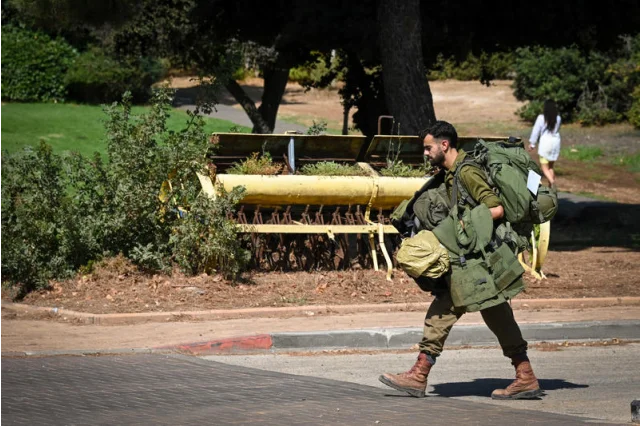
The average economic cost of keeping an Israeli reservist mobilized for a month has risen to approximately NIS 53,000 ($17,790), according to a new Finance Ministry report warning of the mounting economic burden of prolonged reserve duty.
The report, released on Tuesday, said the latest estimate represents a significant increase from the previous estimate of around NIS 48,000 included in a 2024 report. The new calculation accounts for reservists’ actual employment characteristics and wages, rather than using the average salary across the workforce as a baseline.
The estimated monthly cost includes the economic value of the work a reservist might otherwise generate, as well as the IDF’s costs of feeding, housing, equipping and fueling the soldier.
The report found that the burden of reserve duty is borne disproportionately by non-Haredi Jewish men between the ages of 25 and 44, who earn an average monthly salary of NIS 19,000. This group accounted for about 75% of employed reservists who were absent from work during the second quarter of 2026, despite making up only about 43% of the workforce.
The report also outlined the broader strain the war has placed on Israel’s public finances. The direct cost of the war is estimated at around NIS 250 billion ($84 billion), with roughly one-third attributed to the mobilization of hundreds of thousands of reservists for extended periods, keeping them away from their jobs, studies, families and communities.
The report did not estimate the costs of second- and third-order effects, such as the massive rise in cases of PTSD among veterans, as well as increasing rates of divorce, domestic violence, crime, narcotics abuse and other social problems.
The report is likely to add urgency to the ongoing debate over efforts by the outgoing Knesset coalition to enshrine into law the status quo under which most ultra-Orthodox young men are exempted from military service.
The IDF has said it needs around 12,000 more soldiers than it currently has in the active-duty army, while an estimated 72,000 or more young Haredi men are considered fit for service but have not enlisted.
“Non-Haredi Jewish men on reserve duty aren’t from within the lowest socioeconomic strata, and their salaries are high, which is a very heavy burden for the Israeli economy,” Shlomit Ravitsky Tur-Paz, Director of Israel Democracy Institute’s Joan and Irwin Jacobs Center for Shared Society, told The Times of Israel.
“But there is an alternative, which is to enlist young ultra-Orthodox men to mandatory military service, who are supposed to join the army,” she said.
Ravitsky Tur-Paz argued that the economic pressure is likely to grow as Israel continues to face security threats on multiple fronts.
“We know the costs of security are only getting higher as Israel is facing conflicts on multiple fronts. This is not sustainable and will come at a heavy price for social services including health, welfare and education,” she explained.
She said the Haredi enlistment issue therefore extends beyond questions of fairness or military manpower, arguing that it could ultimately affect the country's ability to sustain its economy.
“The problem that Haredim are not joining the army is not only about fairness and the fact that it’s not egalitarian. It’s not only about military manpower and whether we will be able to meet our defense challenges but it’s also about whether Israel’s economy will be able to shoulder the high costs in the coming years.”
You might also like to read this: