The Mecca Pact: Is Saudi Arabia turning away from Israel?
Inside the Epicenter Podcast



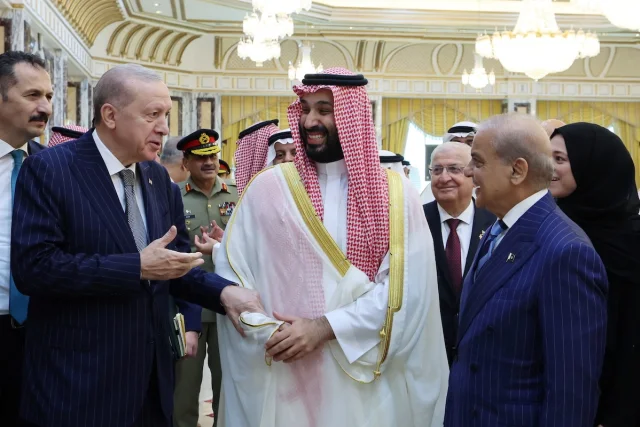
In this episode of Inside The Epicenter, podcast hosts Joel and Lynn Rosenberg examine the new Saudi, Turkish and Pakistani defense alliance.
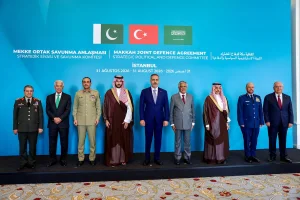
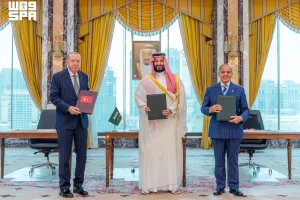
When Saudi Arabia, Turkey and Pakistan signed a joint defense agreement in Mecca on Aug. 7, the news barely registered in American media. In Israel, it landed with a jolt. The Saudi Kingdom, widely seen as the next great partner in the Abraham Accords, had bound itself to a nuclear power that once harbored Osama bin Laden and to a Turkish government openly hostile to the Jewish state.
“That was the initial feeling here in Israel, like, whoa, I thought the Saudis were heading towards us,” Joel Rosenberg said.
Under the pact, an attack on one member is treated as an attack on all, a structure Rosenberg called “an Islamic NATO.” Lynn noted the combined weight behind it: roughly 1.4 million active troops, 3,400 aircraft, 6,000 tanks and defense budgets exceeding $124 billion.
Yet, after weeks of study, Joel cautioned against reading the agreement as a Saudi pivot. When Houthi forces backed by Iran struck Saudi Arabia in recent days, he observed, the new allies stayed home. “Turkey’s not sending any air forces or troops to get involved against the Houthis, and neither is Pakistan,” he said. Regional pacts must be taken seriously, he added, but “sometimes it’s not worth the paper it’s written on.”
The Rosenbergs have met with senior Saudi officials, including as recently as this summer. “We are not getting any signals that the Saudis don’t want to make peace,” Joel said. “They’re talking about when and how.”
The deeper concern, he argued, is Ankara. “Turkey hates Israel. That’s not the case of the Saudi leadership.” Turkish President Recep Tayyip Erdoğan has likened Israeli leaders to Nazis, threatened to invade Israel and declared that Jerusalem belongs to Turkey. Rosenberg said Erdoğan sees himself as the sultan of a revived Ottoman Empire, determined to lead radical Sunni Islamism.
Scripture, the Rosenbergs believe, offers an important perspective. Ezekiel 38 and 39 describe a future alliance against Israel led by Magog, Persia and Gomer, which Rosenberg identifies as Russia, Iran and Turkey. Sheba and Dedan, ancient names tied to the Arabian Peninsula, appear in the passage not as invaders but as nations questioning the attack.
“The leaders of the end times alliance against Israel, they’re not Arabs,” Joel said. For that reason he leans strongly against viewing the Mecca Pact as prophetic fulfillment, though he does not rule it out, calling it “a little bit of a pebble in the shoe.”
Lynn pointed listeners to Daniel 2, where God raises rulers and brings them down. “It’s not insignificant,” she said, “but it’s also not surprising” to the Lord.
Joel summed up the posture he urges believers to adopt as they watch developments in the region: “We should be watchful, we should be wary, we should be prayerful, but we shouldn’t panic.”
Closing with Daniel 7, Lynn prayed for the people of Turkey, Pakistan and Saudi Arabia to place their hope not in shifting alliances but in the One whose “kingdom is one that will never be destroyed.”
You might also like to read this: