The critical battlefield on the edge of the desert: Why the Saudi-Houthi fighting matters to the whole region

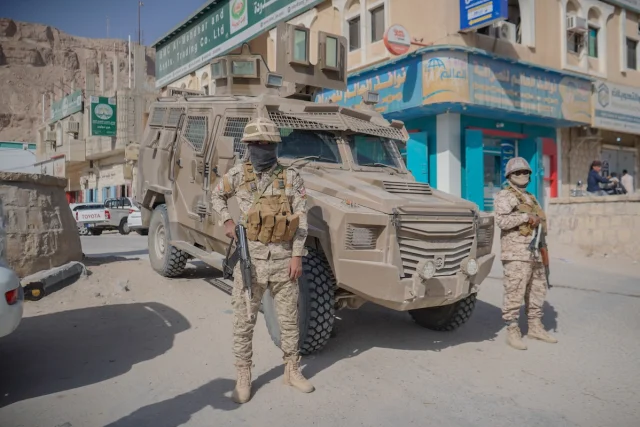
On Sept. 10, the Houthi terrorists captured the Yemeni port of al-Mokha and several islands in the Bab el-Mandeb Strait in the Red Sea, giving them near-complete control of one of the world’s most important waterways.
Almost exactly a month later, the internationally recognized Yemeni government and its Saudi backers have launched a “strategic” counteroffensive they said aims to liberate the capital Sanaa from the Houthis and end their decade-long rebellion.
Despite the area’s location thousands of kilometers from the Middle East’s centers of power, population and attention, developments in this arena should be followed closely, being a secondary battlefield to the region's larger conflict between the U.S., Israel and Saudi Arabia against Iran and its proxies.
This fight has the potential to shape the future of Saudi Arabia, particularly its position in the regional web of alliances and a possible normalization with Israel; alter the balance of power in the war between the U.S. and Iran; and, through its harm to global energy supply and the world economy, have political fallout across various countries in Europe.
Saudi failures shake kingdom's image
The latest round of this conflict and the way the Houthis overran the defensive lines of the Saudi-backed forces put a serious dent in the image of the Saudi kingdom, which claims a leadership role for the entire Muslim world. It shone a particular spotlight on the brittleness of Saudi military power as well as the limits of the kingdom’s diplomatic influence.
After the years-long ceasefire had broken down a few months ago, initial reports first suggested that Saudi-backed troops held the upper hand in several skirmishes. But at the start of September, the Houthis launched a broad offensive that shattered defensive lines along the Red Sea coast and left many asking what had happened to the Saudi-backed military with its modern hardware and seemingly endless supply of cash.
Alongside the “usual” corruption among military officers, several experts pointed out that the Saudi-backed forces, an alliance of various militias and military forces headed by a Saudi general, were still in disarray after the latest major diplomatic shakeup.
NEW: The Houthis captured the key supply route between Taiz and Aden cities on October 4, which is part of the Houthi campaign to seize Taiz City. Other Key Takeaways: The Yemeni government announced an offensive operation across all fronts against the Houthis, but ISW-CTP has not yet observed any offensive action.
— Institute for the Study of War (@TheStudyofWar) October 4, 2026
Troops loyal to and funded by the United Arab Emirates (UAE) had originally been a core component of the anti-Houthi coalition. However, Saudi Arabia completely ousted the UAE from the Yemeni arena several months ago, hoping that a centralization of command-and-control would make the military coalition more effective.
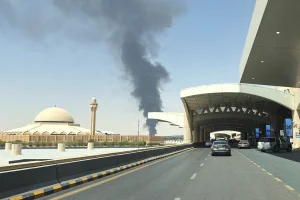
This hope was dashed mercilessly as Houthi troops raced down the coast, capturing Mokha, and perhaps even more shockingly, Perim (also known as Mayyun) and several other small islands that control the entry and exit of ships through the strait. They also launched ballistic missiles and drones at Saudi population centers, military bases, and even worse—its precious oil facilities.
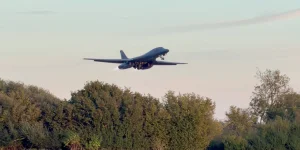
The failure of Saudi airpower was among the most surprising and embarrassing reasons for this. The Saudi Air Force had been the single most important factor in opposing the Houthi troops for the past few years.
Aimen Dean, a Saudi-British former Al Qaeda terrorist turned MI6 double agent, and expert on terrorism, said that initially, the Saudi aircraft were “pounding the Houthi positions.”
As Dean explained on a recent episode of his “Conflicted” podcast, this worried the Houthis’ Iranian patrons, who are trying to lock down the Hormuz Strait and maintain the leverage to harm the world economy, one of the regime’s last remaining cards in the struggle against the U.S.
Saudi Arabia has been looking to alternative routes—chief among them, the East-West oil pipeline which ends at the port of Yanbu. Tehran saw clearly that “Riyadh would be able to export oil easily through the Red Sea and further reduce Iran's leverage over the Strait of Hormuz, which had been diminished in the preceding month because of the U.S. blockade.”
But then, the Saudi Air Force stopped bombing the Houthis for almost two days. This, according to Dean, was the outcome of an Iranian “diplomatic deception on a strategic scale.”
“They were sending message after message to the Saudis telling them, ‘stop, stop, stop right there, we are going to fix this problem for you’.” According to Dean, the kingdom’s diplomatic service was deceived into thinking this was a genuine offer and pushed for the Air Force to stop its strikes—a crucial break which the Houthis exploited ruthlessly.
The embarrassing performance of the Saudi military has been well noted in Iran, but also in Israel, where multiple voices have urged the Israeli government to seize the chance and offer assistance in exchange for a renewal of normalization talks.
While Saudi sources have rejected compromising in exchange for support, a further deterioration might eventually soften this position. Another embarrassing aspect is that the kingdom only recently signed a mutual defense agreement with Turkey and Pakistan, but now looks completely unable to defend itself, much less its allies.
The Houthis - nothing but Iranian proxies?
The Iranian regime is the most crucial outside actor in this conflict. The Houthis are generally seen as an Iranian proxy, giving Tehran influence over a second strategic waterway in the Middle East and incentivizing them to push the Houthis to continue fighting.
It can exploit this situation by shutting down traffic, or even just threatening to do it. In addition, closing Bab el-Mandeb makes Saudi Arabia even more dependent on the East-West oil pipeline, which has just been reactivated after being damaged by other Iranian proxies in Iraq.
Tehran has generally tried to pressure the U.S. through threatening raising global energy prices, as well as by damaging Saudi energy and civilian infrastructure, continuing its strategy of harming U.S. allies in the hope they in turn pressure the White House to stop the war.
In addition, every day that goes by without U.S. military support for its supposed greatest ally in the region, even “only” out of the fear of an escalation ahead of the midterm elections, damages the American standing in the region.
But despite this, as well as reports suggesting that IRGC personnel was on the ground and assisted the Houthi forces during the offensive, several experts have noted that the Houthis, unlike Hezbollah, are not “complete” Iranian proxies.
They do follow their own interests—meaning that they could potentially be convinced, or coerced, into a separate ceasefire.
Speaking to the Qatari New Arab, Ryan Bohl, a senior analyst at the risk intelligence company RANE, assessed that the Houthis’ offensive “will continue to advance so long as there is military opportunism. They can always trade away territory for a final settlement since there is the suggestion that they may only be interested in controlling those Zaydi[-populated] portions of Yemen.”
Zineb Riboua, research fellow at the Hudson Institute, noted on the Will Chamberlain Podcast that Iran’s attempts to see oil prices explode didn’t succeed before the Saudis managed to repair the pipeline.
She also noted: “Houthi behavior already points toward greater concern over relying exclusively on Iran. They have expanded contacts across the Gulf of Aden, including coordinating with the Somali terrorist group al-Shabaab on weapons smuggling, training, and drone expertise.”
The Houthis’ last gasp?
The Houthis’ own messaging affirms this possibility: Their official statements have stressed that their offensive was targeted at Saudi Arabia, rather than their religious enemies, the U.S. or even Israel, leaving them a way to a negotiated end of this round of conflict.
From @PresidentRashad With God’s blessing, Operation “Dawn of Yemen” has begun to restore state institutions, liberate the capital, Sana’a, and end the coup by the Houthi terrorist militia. With God’s help, the will of our people, the courage of our armed forces and all military formations, and the support of our brothers and friends, Yemen will move toward a new dawn of freedom, peace and stability.
— Basha باشا (@BashaReport) October 5, 2026
Despite stunning successes, the Houthis’s offensive at this already fraught time carries significant risk, and further raising the stakes could quickly become an “all or nothing” gamble for the terror group.
This was demonstrated by the outrage across the Muslim world over the ostensible drone attack on the Muslim holy city of Mecca on Sept. 16.
“They cannot afford to be perceived as threatening the two holiest places in Islam, Mecca and Medina. Harming or attempting to harm the holy city could transform the struggle from a conflict between Saudi Arabia and the Houthis into an issue concerning all Muslims,” Yoni Ben Menachem, a Middle East analyst, wrote in Epoch.
“The Houthis are trying to present themselves as part of a broader regional struggle against Israel, the United States, and their allies,” he wrote, which has allowed them to recruit large numbers of new fighters in recent months, while also giving them a justification for why they are involved in other arenas, like Israel or Iraq.
On the other hand, their reported assurance to the U.S. that only Saudi ships will be targeted “could be used by their rivals to challenge the Houthis’ claim that they are acting first and foremost in the name of resistance to Israel,” Ben Menachem added.
As Riboua noted, “everything around the Houthis has changed. Iran is weaker; its finances are under heavier pressure; its military institutions have suffered damage; and the networks that supplied the Houthis face greater scrutiny. Tehran also finds its hands increasingly tied elsewhere.”
With the Saudi/Yemeni counteroffensive now being accompanied by dozens of airstrikes, as well as support from the Pakistani military, Riyadh appears determined to use this opportunity to end the Houthi insurrection once and for all.
“Since 2015 the Houthis could count on their opponents tiring before the system behind them did. That calculation rested on an Iran capable of replenishing weapons, protecting allied militias, and sustaining several theaters simultaneously. For the first time, the Houthis can no longer make that assumption,” Riboua concluded.
You might also like to read this: