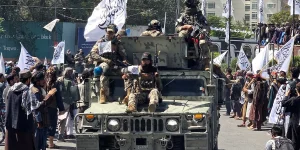
As Yemeni Houthis continue lightning advance, Trump confirms Iran likely behind attack on key Saudi pipeline
Shock, increasing scrutiny of Saudi-backed forces that allowed terrorists' advance



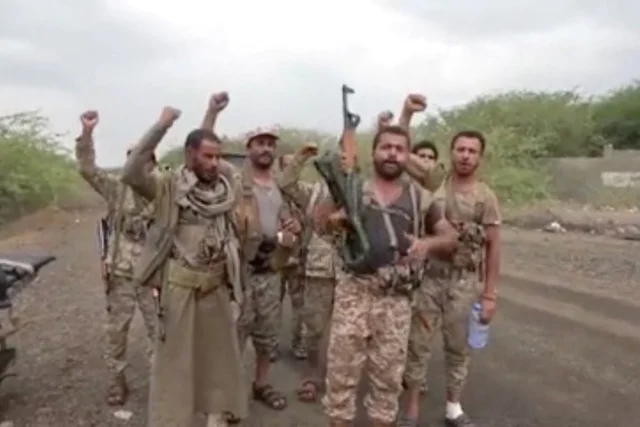
The situation in Yemen has been spiraling out of control over the past few weeks, as the Houthi terrorists have scored success after success, while forces of the Saudi-backed government and the kingdom’s own troops have apparently collapsed.
Meanwhile, Saudi Arabia’s regional allies have not lifted a finger to help, and even U.S. President Donald Trump has reportedly declined to help with airstrikes while claiming the Houthis told him they don’t want to fight the United States.
All of this has now allowed the Houthis to establish full control over the Bab el-Mandeb Strait, giving them, as well as their patrons in Iran, leverage over one of the world’s most important waterways.
NEW: Houthi fighters are reportedly fighting Yemeni government-aligned forces along the al Madaribah wa al Arah District border in western Lahij Governorate, which could indicate Houthi intentions to continue their advance further east.
— Institute for the Study of War (@TheStudyofWar) September 12, 2026
Yemeni media reported that the Yemeni… pic.twitter.com/rAZS3DG4NL
But even worse, the regime in Tehran this week also struck the East-West oil pipeline that Saudi Arabia has used to circumvent the blockade of the other major waterway in the Middle East – the Strait of Hormuz.
Against the backdrop of the ongoing deadlock in negotiations with the U.S., several reports have suggested that Tehran had been pushing the Houthis to renew their fighting against Saudi Arabia and attempt to capture the strait.
This is reportedly crushing the Saudi economy while giving Tehran significant leverage vis-à-vis the U.S. by enabling it to further threaten the world economy by shutting down another major waterway.
Trump: "The Houthis called us. They don't want to fight with us. They let us know they don't want to fight with us. They don't want us to go after them. They would much prefer not having us involved, and they are letting most ships go through. There's just one country they're not… pic.twitter.com/munm8N0Gys
— Aaron Rupar (@atrupar) September 12, 2026
The Saudi Foreign Ministry said on Friday that its crucial East-West oil pipeline was closed after being struck in a drone attack launched from Iraq, highlighting the ongoing cooperation between the Iranian proxy militias across the region, despite their losses from U.S. and Israeli strikes in recent years.
In recent months, Saudi exports from its oil-producing areas near the Persian Gulf were rerouted via the East-West pipeline for 750 miles across the country to the Red Sea port of Yanbu. The pipeline has a capacity of up to 7 million barrels of crude a day, allowing the kingdom to mitigate its losses caused by the closure of Hormuz.
Oil prices have already been skyrocketing as the Houthis captured the Red Sea coast and several islands in the Bab el-Mandeb Strait, with Brent crude trading above $104 a barrel on Friday.
Asked whether Iran was behind the strike that shut down the pipeline, President Trump told reporters on Saturday, “I think they are, probably they are.”
Iraqi Prime Minister Ali al-Zaidi had announced a plan to disarm the Iranian-backed militias in his country during a July meeting with Trump, giving them a deadline until Sept. 30, which now looks highly unlikely to be met.
NEW: The Houthis are setting conditions to establish the Bab al Mandeb Strait as an Axis of Resistance-controlled body of water as part of the Axis of Resistance’s effort to assert control over regional oil exports. Allowing the Houthis to consolidate control over the Bab al… pic.twitter.com/0AZD9wf9Qb
— Institute for the Study of War (@TheStudyofWar) September 12, 2026
Al-Zaidi, who came to power after the U.S. vetoed a more pro-Iranian candidate, vowed that his administration would investigate the attack and hold those responsible accountable.
Trump also told reporters on Saturday that the Houthis “called us, and they don’t want to fight with us. They don’t want us to go after them,” adding that “everything’s gonna work out fine and dandy” in the region.
According to the news outlet Axios, Saudi Crown Prince Mohammed bin Salman called Trump twice on Thursday to urgently request U.S. strikes against the Houthis, but his requests were rebuffed.
“They would much prefer not having us involved, and they’re letting most ships go through. There’s just one country that they’re not too happy with, and we’ll get that straightened out,” Trump said.
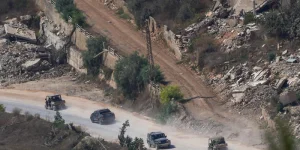
Meanwhile, fighting continued on the ground, with the effects spilling over into Saudi Arabia. More than 500 people have already been killed during the past few days, according to sources on both sides. In addition, about 46,000 people have been displaced, according to the UN migration agency.
On Sunday, Saudi authorities reported that a Houthi projectile wounded two people near its border, causing “material damage to a mosque, several buildings, and vehicles.” The Houthis also claimed to have attacked a military base in the kingdom.
🇾🇪 The fall of Mocha is beginning to look less like an overwhelming Houthi victory, and more like an extraordinary collapse of the forces that were supposed to stop them.
— The Tectonic (@thetect0nic) September 13, 2026
CNN has reconstructed what happened: When the Houthis entered Mocha on Thursday, some Saudi-backed Yemeni…
Against the backdrop of the collapse of the Saudi-backed forces, their performance on the battlefield has come under increasing scrutiny. A senior military official with Yemen’s internationally recognized government told the Associated Press that they were surprised the Saudi air force did not attempt to prevent the capture of the key port of Mokha, speculating that it may not have received U.S. approval for a large-scale air campaign.
The official also lamented the “lack of coordination” between the Saudi-backed alliance, which includes the Saudi military, Yemen's government troops and multiple allied militias.
According to a CNN report on Saturday, Yemen's troops in Mokha were unprepared to defend the city, partly because the units’ rosters were filled with “ghost names” of soldiers who did not actually exist, with their salaries instead going to commanders.
Troop strength was only around 20% of the reported figure, a Western source told CNN.
A regional source also said that the fall of Mokha was “a Saudi-American f**k up of epic proportions.
“There was not one airstrike throughout the day yesterday, although there were minute-by-minute updates,” the source said.
Another senior Yemeni official said the U.S. Central Command (CENTCOM) had received repeated warnings “that the situation was becoming critical,” but only responded that the U.S. was “watching the situation closely and that Saudi air support was coming.”
The situation has also seen scrutiny in Israel, though Ynet News reported that the military is not expected to intervene unless Israel itself comes under direct attack.
Officials are reportedly also questioning how military deterrence in the area could have collapsed so suddenly. The Saudi military is among the largest and best-equipped in the region, with advanced U.S.-made weaponry and modern fighter jets.
For now, the IDF has updated its readiness posture, raising the alert level, particularly in the Navy, which is tasked with safeguarding Israel’s freedom of navigation.
You might also like to read this: