Praying for Jerusalem, putting America first: Ben Shapiro confronts the Israel loyalty question
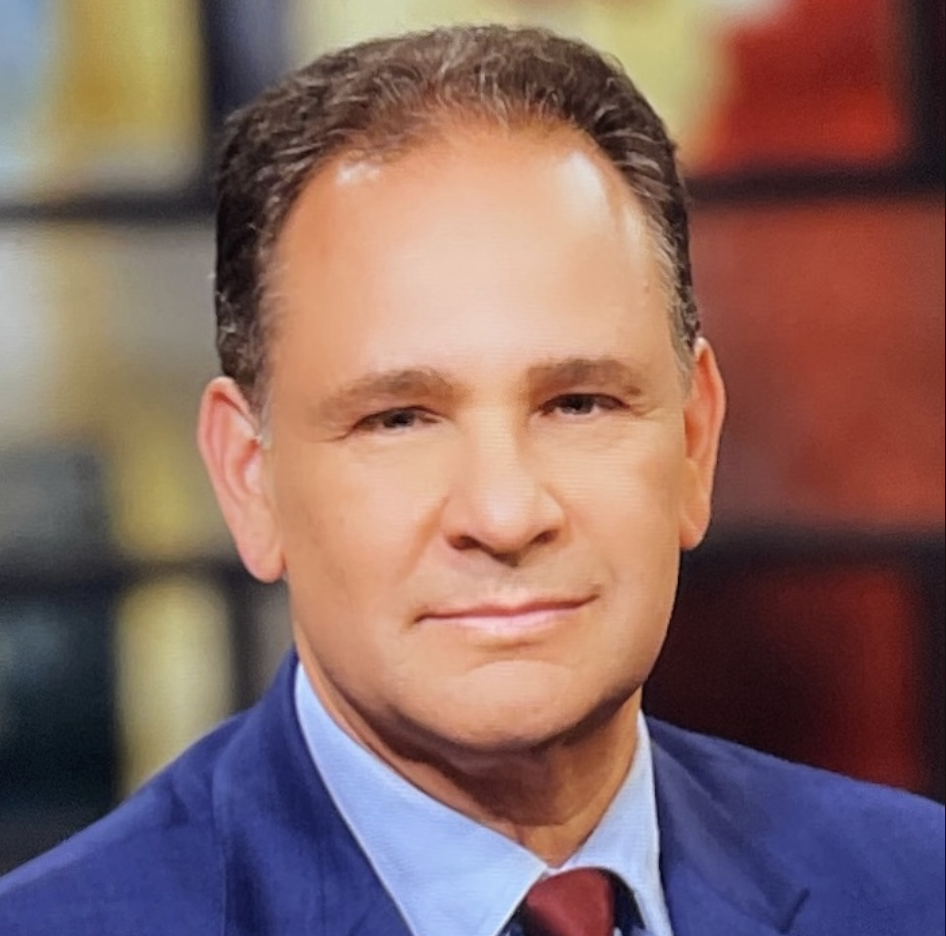


Ben Shapiro makes no secret about his deep attachment to Israel. He is an Orthodox Jew, an outspoken Zionist and one of the most prominent pro-Israel voices in American conservative media. During my recent interview with the Daily Wire co-founder, I posed a question that gets directly to the heart of his worldview: If Shapiro weren’t Jewish, would he support Israel just as fervently?
“As a Jewish believer and somebody who prays three times daily for the restoration of Jerusalem on a spiritual level, I take Israel very seriously,” Shapiro told me.
But he insists that his support for the Jewish state isn’t based simply on his Judaism. His broader argument is that Israel is a democratic American ally confronting forces he believes threaten both Israeli and American interests.
“Would I be supportive of Israel? Yes. I’m supportive of Ukraine as well,” Shapiro said. “When it comes to democratic allies of the United States resisting tyrannical forms of fascism, I’m very much in favor of that happening. And when you’re looking at Israel, what you have is a democratic ally of the United States that literally to this day has planes flying alongside [those of] the United States, sharing military technology, sharing intelligence in the region, fighting back on pretty much all fronts Islamic fascism.”
The military relationship between the countries is indeed extensive. The State Department has described decades of joint military exercises, weapons development, and security cooperation, and we know about the intelligence sharing between both countries as well.
For Shapiro, that makes some of the hostility toward Israel on the political right difficult to understand. “You have people taking the other side of that,” he said. “I find that absolutely bewildering in the extreme right.”
Shapiro sees some similarities between that phenomenon and the strand of conservative opinion that became more sympathetic toward Russia as Moscow’s conflict with Ukraine intensified. Asked why that happened, Shapiro pointed partly to domestic American politics.
“I think that some of it had to do, again, with sort of a reactionary politics in which the left had accused President Trump of being a Russian stooge for so long that the right sort of [said], ‘Well, no, Russia can’t be that bad.’ And of course, that wasn’t true. I think there’s also obviously been a longstanding strain of isolationism in the Republican Party that sort of reared its head.”
Shapiro also blamed Russian propaganda and singled out Tucker Carlson, while stopping short of claiming that Carlson is acting on Moscow’s behalf. “I think there was a real propaganda effort on the part of the Russians, acting through people like Tucker Carlson,” Shapiro said. “I’m not accusing him of being paid, but he certainly mirrors pretty much every position the Russian government has ever taken on everything.”
Shapiro went on to dispute several arguments he says have circulated about Ukraine and Russia, including claims portraying Ukraine as systematically anti-Christian and Russia as a defender of Christianity.
The larger point is part of a recurring theme for Shapiro. He says foreign-policy questions should be judged according to facts and American interests, rather than tribal loyalty to one political faction or another.
That led me to another criticism frequently aimed directly at Shapiro: that his devotion to Israel exceeds his devotion to America. He rejects that charge.
“I was puzzled by that because you’d have to show me where I have somehow betrayed American interests,” Shapiro told me. “Why don’t you start with that? Forget about motivations. I really try to stay away from [talking about] motivation. Particularly, I try to argue that, for example, I will say that Tucker traffics in antisemitism. I won’t say he’s an antisemite. I can’t get inside [his head]. So I really try to stay away from motivation.”
Instead, Shapiro says critics should look at his actual policy positions. “Let’s look at the overt objective indicators of my behavior,” he said. “What is the time when I said that something that is not in America’s interest is a thing that America should do because it’s in Israel’s interest?”
That is Shapiro’s central answer to the dual-loyalty charge. Yes, he supports Israel. Yes, his Judaism matters profoundly to him. But he argues that when he discusses what the United States government should actually do, the filter is supposed to be America’s national interest.
JUST IN: Would Ben Shapiro support Israel if he wasn't Jewish? He says as, " somebody who who prays three times daily for the restoration of Jerusalem on a spiritual level, I take Israel very seriously. But with that said, would I be supportive of Israel? Yes..." Also, he… pic.twitter.com/lnBRofONiH
— David Brody (@DBrodyReports) September 16, 2026
He pointed specifically to Iran as an example where he believes Israel’s preferred course could potentially diverge from what the United States should do.
“At the outset of the Iran war, it would have been in Israel’s interest for the United States to engage in a full-scale ground invasion of Iran,” Shapiro said. “I’ve been steadfastly against American boots on the ground in Iran since the beginning of this conflict. I was very much in favor of what the president did, but I thought that if we were going to use boots, those ground forces should come from regional groups rather than American troops.”
For Shapiro, it’s ok for allies to share strategic interests without having identical interests. “There are a wide variety of areas in which I think that the United States’ interests diverge from those of Israel,” Shapiro told me. “And in those cases, I’ll take the United States’ side because I’m an American.”
Shapiro makes no effort to downplay his love for Israel or the religious connection he feels toward Jerusalem. In fact, he talks openly about both. But he argues that his personal attachment to Israel and his view of American foreign policy are two separate questions.
“So the whole accusation is pretty obviously a facet of the idea that it’s an attempt to avoid the arguments that I’m making,” Shapiro said, “by attributing motivation that doesn’t exist.”
In other words, Shapiro’s challenge to his critics is straightforward: Don’t tell him where his loyalties supposedly lie. Show him the policy where he put Israel’s interests ahead of America’s. He says that’s an argument he’s ready to have.

Please take a moment to join believers worldwide praying for Israel right now. Add your light to the live prayer map—and show the world one more watchman praying for the peace of Jerusalem.
You might also like to read this: