





Netanyahu to advance partial reconstruction in Gaza in exchange for Trump endorsement - Israeli report
Board of Peace hopes to see progress in Gaza reconstruction following elections



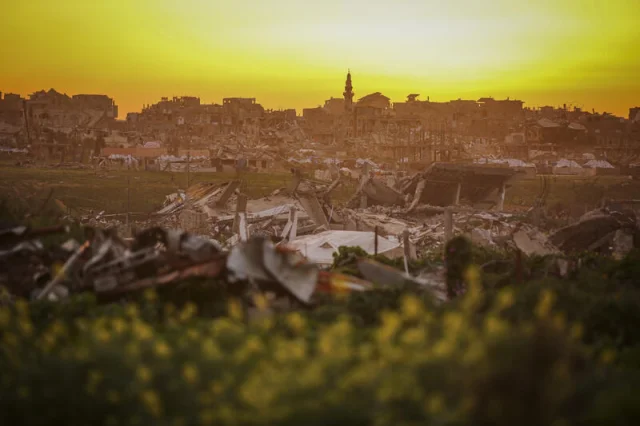
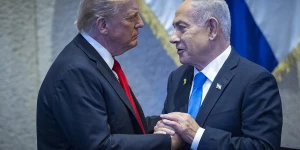
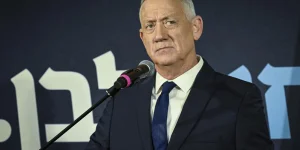
Prime Minister Benjamin Netanyahu pledged to advance partial reconstruction in the Gaza Strip in exchange for “complete and total endorsement” by U.S. President Donald Trump, Channel 13 reports.
The report, which cited “senior Israeli officials,” claimed that Netanyahu stated in closed-door discussions that Israel would approve reconstruction in a specific area of Gaza, near the buffer zone, in an area under IDF control.
The Trump administration has reportedly been pressuring Israel to allow some reconstruction efforts to begin, as Hamas continues to delay implementation of its promised disarmament.
If true, the pledge would stand in contrast to Trump’s 20-point peace plan, which stipulates that no reconstruction will take place until the Gaza Strip has been demilitarized.
The Prime Minister’s Office called the report “complete fake news.”
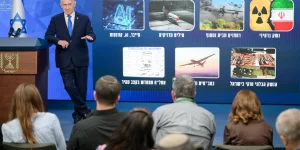
It is not clear if the reported reconstruction mentioned in the Channel 13 report is the same as the “Emirati enclave” mentioned by the prime minister in his recent press briefing to Israeli media regarding his new security doctrine for Israel.
In that briefing, Netanyahu said his government had approved an “Emirati enclave,” a designated area in Gaza where the United Arab Emirates (UAE) would help establish temporary housing and infrastructure for displaced Palestinians, in territory currently controlled by the IDF.
He also said the enclave would be located inside the Yellow Line, in area controlled by the IDF.
“We will not allow reconstruction in any part of Gaza before Hamas is disarmed,” Netanyahu said. “We agreed to an Emirati enclave adjacent to our security zone.”
If true, the statement by the PMO likely represents a rejection of the claim that Netanyahu agreed to the enclave in exchange for the endorsement.
Recent reports indicate that Israel has been resisting efforts to begin rehabilitation projects in the Strip, delaying authorization of the construction of a base for the International Stabilization Force in Gaza, over Hamas’ continued refusal to disarm, as required by the Gaza Peace Plan.
The Israeli government has frequently expressed doubts about the willingness of Hamas to disarm.
Shortly after President Trump announced the 15-point disarmament proposal, Netanyahu stated that Israel had not agreed to the document, and would only agree to its terms once Hamas was successfully disarmed.
Netanyahu later met with U.S. special envoy Jared Kushner, who confirmed that Israel would not be asked to withdraw from Gaza until after Hamas’ disarmament.
At the same time, the Israeli government has approved some efforts related to Hamas’ disarmament, such as allowing a team from the Gaza Board of Peace to conduct a survey of possible locations for the terror organization to surrender weapons.
A representative from the Board of Peace recently told the Times of Israel that up to 500 Moroccans have undergone training ahead of an expected deployment to Gaza with the ISF.
According to the report, the Moroccan personnel received the training in Morocco in August.
Morocco is one of four nations, including Albania, Kazakhstan, and Kosovo, that have committed to providing troops for the ISF, which is meant to provide internal security for Gaza after the disarmament of Hamas.
The official told the Times that, despite delays, it hopes to see progress after next week's elections.
“We need to move beyond constructive conversations to constructive implementation,” the official said. “We know that there are limitations on what can be done by anybody given the election pressure, but that is why we are working hard to advance efforts on a lot of the more technical things.”
“We’re still advancing the plan. We’re moving forward. But obviously, after the election, we’d hope to accelerate that at a much faster speed,” the official added.
The Israeli government has not approved efforts to rehabilitate critical infrastructure in Gaza, such as water, sewage, and other sanitation projects, until Hamas begins handing over its weapons.
Before the Oct. 7, 2023 Gaza War, Hamas shared videos of its operatives digging up water pipes in order to make rockets, which were then fired at Israeli communities.
Support our independent, on-the-ground reporting from Israel. Become a $5/month Ally.