Trump announces Hamas disarmament deal in Gaza Strip, Israel refuses withdrawal until full demilitarization
US officials warns Israel Trump would be 'very disappointed' if Jerusalem opposed agreement







The Gaza Board of Peace (BoP) and the terror organization Hamas reached an agreement for the disarmament of the group that would finally kickstart the ceasefire agreement, U.S. President Donald Trump announced overnight, though both Hamas and Israel quickly expressed skepticism.
Writing on Truth Social, Trump said that "a HISTORIC agreement for the COMPLETE DISARMAMENT of Hamas and all other armed groups in Gaza" was reached.
"The agreement will be carried out in carefully structured phases. As disarmament is completed, Israeli forces will withdraw, and the International Stabilization Force will work with a new Palestinian police force to take responsibility for Gaza being safe for its residents and its neighbors," he added.
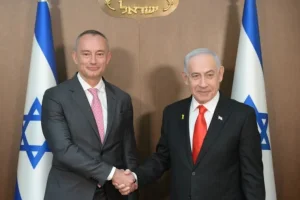
However, BoP High Representative Nickolay Mladenov's statement stipulated that the "withdrawal must move in lockstep with decommissioning," suggesting a phased approach that would demand Israeli withdrawals already in the first phase.
U.S. and Board of Peace officials told the news outlet Axios that the agreement would proceed through "reciprocal, independently verified steps," adding that it is expected to be implemented within weeks, although the timetable for an Israeli withdrawal has not yet been finalized.
There was no official Israeli response to Trump's statement at the time of publication.
In a first reaction from Hamas, senior official Ghazi Hamad told Al Jazeera that it would refuse to "take any step regarding disarmament before Israel withdraws from the Gaza Strip," which runs counter to all reported stipulations of the agreement.
Hamad added that the National Committee for the Administration of Gaza (NCAG), the technocratic government that is intended to take over control of Gaza, will reportedly handle the disarmament.
"Israel will not be involved in the issue," Hamad said, stressing, "We will not take any step if the occupation forces do not fulfill their commitments under the agreement."
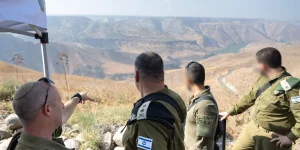
Israeli forces are currently positioned along the Yellow Line, which divides the Gaza Strip into an Israeli-controlled zone comprising some 70% of the enclave, with the rest controlled by Hamas. A ceasefire brokered by Washington in October 2025 stipulated that Hamas must be disarmed and Gaza demilitarized before reconstruction begins and Israeli forces withdraw.
Israeli officials argue that Hamas has repeatedly violated the agreement by refusing to disarm, and believe the original 15-point framework does not adequately address Gaza's long-term demilitarization.
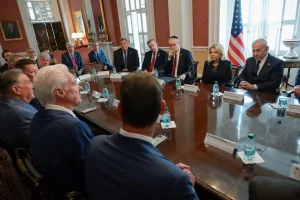
First reports of an impending agreement emerged earlier on Thursday. While there was no official Israeli reaction, a "political source" briefed several media outlets saying that the issue of Gaza "did not come up at all" during the recent meeting between Prime Minister Benjamin Netanyahu and President Trump.
The source stressed that Israel "is demanding the complete disarmament of Hamas, including the removal of all weapons from Gaza and the full demilitarization of the Strip as a prerequisite for any process. The reported 15-point document does not provide an adequate response to these demands, and Israel has conveyed its reservations on the matter to envoy Tony Blair."
Speaking to Axios, a senior U.S. official claimed the Trump administration coordinated closely with Israel throughout the negotiations, and warned that the president would be "very disappointed" if Israel opposed the agreement now.
"We are not asking Israel for anything other than to implement their commitments under the 20-point plan," the official said. "I do not think the Israelis would want to escalate things with us right now."
In another stipulation that is likely to draw Israeli opposition, the agreement calls for "all military activity in Gaza" to cease, including the frequent targeted killings of Hamas operatives, a BoP official said.
Yashar party leader Gadi Eisenkot, who has led most recent polls, commented on the agreement by noting that it "will be examined solely by the test of achieving the war's objectives – the destruction of Hamas's military-political power or its dismantling. Anything less than that is a total failure."
However, he also criticized the government’s failure to provide an official explanation more than 24 hours after initial reports of the agreement emerged.
"The fact that the Prime Minister chooses not to present the agreement to the Israeli public raises major question marks as to whether Israel is a partner to it or whether an agreement is once again being imposed on Israel without its involvement," Eisenkot said.
A source familiar with the discussions told Channel 12 that the idea of Hamas agreeing to its own disarmament "used to sound like a dream. Now we're hearing a different tone. They've moved from a position where they weren't even willing to hear about it to a position where they're talking about it. I don't rule it out outright."
However, he also urged caution: "It could happen – but there's still a long way from talk to action."
Please take a moment to join believers worldwide praying for Israel right now. Add your light to the live prayer map—and show the world one more watchman praying for the peace of Jerusalem.

You might also like to read this: