Netanyahu meets with Witkoff and Kushner in push to move forward with Gaza peace plan
Meeting comes following recent discussion of Gaza reconstruction plans, and build-up of US forces in the region




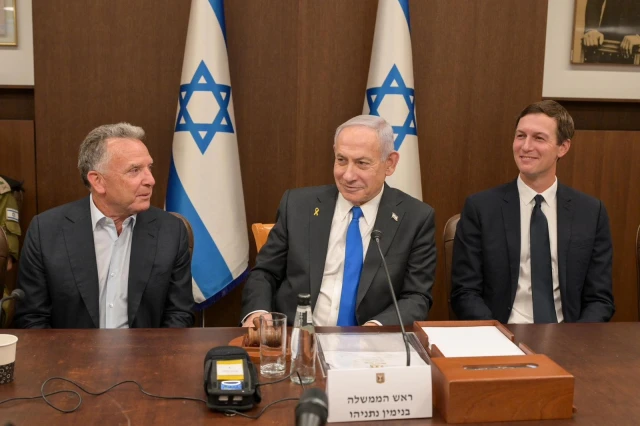
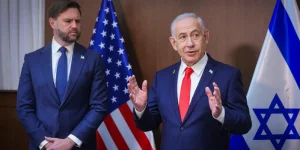
U.S. envoys Steve Witkoff and Jared Kushner arrived in Israel on Saturday to meet with Prime Minister Benjamin Netanyahu as part of efforts to convince the Israeli government to move forward with the second phase of the Gaza peace plan.
While the Prime Minister’s Office confirmed the meeting with several Israeli news outlets, it did not issue a formal statement regarding the meeting, or what was discussed.
Reports in Israeli media said that White House adviser Josh Greenbaum also attended the meeting.
An anonymous U.S. official told U.S. News And World Report that Witkoff and Kushner were working with Netanyahu on recovering the remains of Ran Gvili, the last hostage in Gaza, and on next steps for demilitarizing the enclave.
The main focus of the talks was the opening of the Rafah crossing with Egypt, the return of the remains of Gvili, and the disarmament of Hamas, Hebrew news site Walla reported.
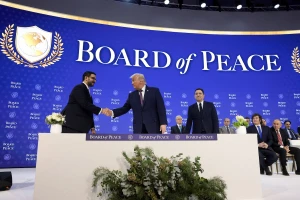
The meeting between Netanyahu, Wifkoff, and Kushner came after Kushner presented further details and plans for the reconstruction of the Gaza Strip at the World Economic Forum summit in Davos, Switzerland, on Thursday.
During his presentation, Kushner referred to the difficulty in getting Hamas to agree to disarm, as specified in the Gaza ceasefire agreement, saying, “If Hamas does not demilitarize, that will be what holds back Gaza and the people of Gaza from achieving their aspiration.”
He noted that a lack of security would prevent investors from committing to the reconstruction project in Gaza, saying, "Without security, no one will invest.”
Kushner’s presentation was shared online by Nickolay Mladenov, who is designated to serve as the Board of Peace’s envoy to Gaza. Mladenov said the BoP is committed to “transforming Gaza into a place of genuine hope; giving Palestinians and Israelis a chance to live in peace, security and dignity.”
Also on Thursday, Dr. Ali Shaath, head of a transitional Palestinian technocratic committee, announced that the Rafah border crossing between Gaza and Egypt would be opening within the next week. Prime Minister Netanyahu’s coalition partners are opposed to opening the border crossing without having secured the release of Gvili’s remains, and without a clear plan for the disarmament of Hamas, fearing that it could lead to increased weapons smuggling to Hamas.
The family of Ran Gvili also expressed concern with the increased pressure on Israel to move forward with the second phase, while Hamas has not kept its responsibilities under the ceasefire.
“President [Donald] Trump himself said this week in Davos that Hamas knows where our son is,” the Gvili family said in a statement. “We wonder why the pressure is being directed at the wrong place. The pressure should not be on the Israeli government to continue to fulfill its part of the agreement while Hamas is deceiving the entire world and refusing to return the last kidnapped person, in accordance with the agreement it signed.”
The family called on Netanyahu to refuse to move forward to the second phase until their son’s remains are returned to Israel for burial.
Reports in Hebrew media said that the issue of the opening of the Rafah border crossing would be addressed at the meeting of the security cabinet on Sunday evening.
The meeting also came as the U.S. continues to move military forces and equipment into the Middle Eastern theater in what could be preparation for a strike on Iran.
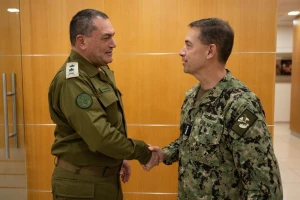
U.S. Central Command (CENTCOM) commander Admiral Brad Cooper, also arrived in Israel to meet with senior Israeli defense officials, reportedly to discuss possible military action against Iran. Over the weekend, reports of much higher death counts leaked out of Iran, as high as 22,000 people, killed by regime-affiliated forces during the widespread protests in Iran at the beginning of the month.
You might also like to read this: