Israeli scientists bring natural solution to Cyprus to fight invasive crop pest



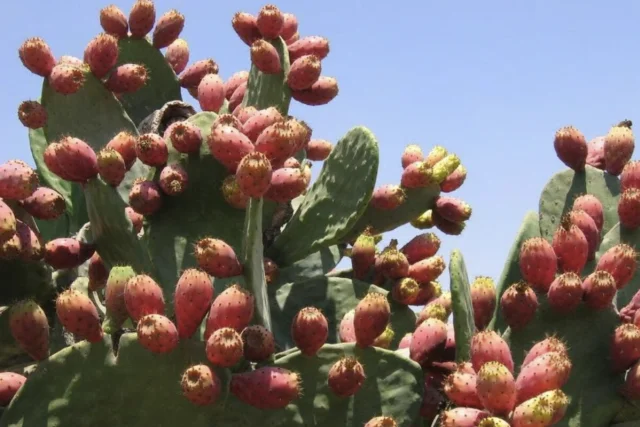
Cyprus has requested Israeli assistance after an invasive insect destroyed about 30% of the island's prickly pear fields. Israel agreed to provide help free of charge by deploying predatory beetles, the same biological control method that successfully curbed the pest in Israel a decade ago.
Prof. Zvi Mendel, an emeritus research expert from Israel’s Volcani Institute, is leading the effort by bringing 200 predatory beetles from Israel to Cyprus to counter the invasive insect.
“The Cypriots offered us a research budget to carry out the work here,” Mendel recalled. “I immediately told them: 'We will do everything for you free of charge, for the benefit of the people of Cyprus'". The two countries have developed close diplomatic ties, and Israel views the assistance project as an expression of green diplomacy.
Founded in 1921, the Volcani Center is Israel's national agricultural research institute. The invasive pest was first detected in Israel's Hula Valley in 2013 and is believed to have spread from neighboring Lebanon.
“A relative of this insect was historically used to produce dye, which is why prickly pear cactus was distributed around the world,” Mendel explained.
“Someone apparently brought the wrong insect to Lebanon, and from there it spread to us from north to south through wind, animals and, over larger distances, birds,” he said.
The pest caused significant damage in the Galilee and Golan Heights before Israeli authorities contained its spread by releasing predatory beetles imported from Mexico.
Cyprus, which has limited arable land, has about 1,500 dunams (roughly 370 acres) of prickly pear cultivation and has already lost about 30% of its crop, with the remaining plantations also at risk.
“This was not some large, elaborate delegation,” Mendel said. He and Dr. Shahar Samra, project manager at the Agricultural Ministry's Plant Protection and Inspection Services, collected about 200 adult beetles in Israel, packed them in specially prepared containers and screened them for other pests before transporting them to Cyprus. "I then flew to Cyprus with the cochineal insect's natural enemies in my bag and personally released them at the designated sites," he said.
Five weeks later, Mendel said he returned to Cyprus and discovered that the released beetles had successfully formed a natural defense against the invasive insects.
Israel has also provided the same assistance to farms in Morocco, an Abraham Accords partner. “The insect reached Morocco from Spain, probably through bird migration,” Mendel recalled.
“We told them Israel would provide the beetles free of charge,” he explained. “I had only one strict condition: The beetles they bred had to be distributed to local farmers free of charge.”
The project is one of several examples of Israeli agricultural expertise being shared internationally. Among them is the work of the Israeli nonprofit organization CultivAid, which is helping Tanzania's expanding wine industry increase exports and attract tourism.
You might also like to read this: