Israel faces growing mental health crisis as PTSD rates surge





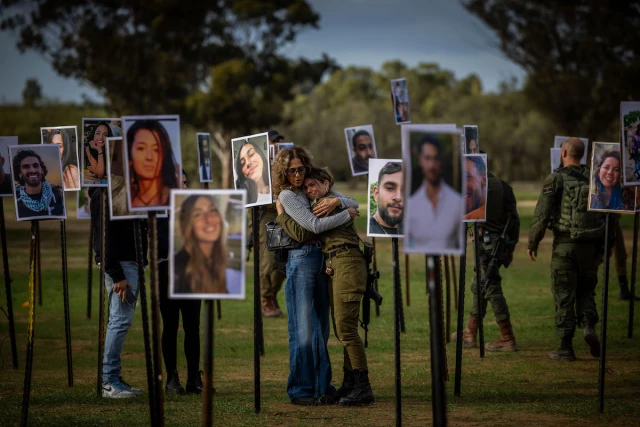
As Israel approaches the third anniversary of the Oct. 7, 2023 attack by Hamas terrorists, the country is facing a growing mental health crisis, with healthcare workers warning that trauma from the war is taking an increasing toll on both soldiers and civilians.
According to Clalit, Israel’s largest health care provider, diagnoses of post-traumatic stress disorder (PTSD) among the general public have increased by 70% over the past three years and now stand at roughly four times the level recorded in 2018, before the COVID-19 pandemic.
Data from other Israeli healthcare providers shows similar trends, while information on the mental health of active-duty IDF soldiers and reservists remains restricted. Experts warn that the levels among military personnel could be even higher.
A study published in mid-2025 by Tel Aviv University’s National Center for Traumatic Stress and Resilience found that over a six-year period, about 12% of soldiers who participated in active combat were later diagnosed with severe PTSD symptoms that rendered them unfit for duty.
In some cases, however, the psychological toll of the war has had even more devastating consequences.
So far in August, five soldiers have died by suicide, bringing the number of military suicides since the beginning of the year to 19 – the highest number in many years. Survivors of the Oct. 7 attack have also died by suicide, including 30-year-old Bar Asraf, who survived the Nova Music Festival massacre and recently took his own life next to the grave of his girlfriend, Liron Barda, who was killed in the attack.
Prof. Amir Krivoy, director of Clalit’s Geha Mental Health Center near Tel Aviv, recently told the British news portal The Telegraph that “The level (of PTSD) is high and is remaining high. Usually, you can see following a stressful event, there should be a decay, with resilience [building] and recovery processes taking place. But unfortunately, because of the continuous war situation, with repeated bursts of acute stress activity like the war with Iran, we don’t see that.”
Krivoy said the mental health crisis extends well beyond PTSD, with Israelis experiencing a range of conditions including depression, anxiety, eating disorders and psychosis.
He added that the picture is likely even more complicated, with different people suffering from different acute and specific forms of mental health stress, but he said he is “using the PTSD as a guide because we have that data, but actually the level of the mental health situation is much larger. Beyond PTSD, there could be double or three times the number of people in need of mental health services in Israel. The PTSD data shows the trend. It is likely to be the same for the other mental health issues like depression, anxiety, eating disorder, even psychosis.”
The surge in demand is also exposing a shortage of mental health professionals.
“We don’t have enough psychiatrists and trained psychologists, and because it takes 10 to 12 years to train people, we have had to improvise,” Krivoy told The Telegraph. “So we have given art therapists and other related occupations the tools to treat PTSD. We give them accredited training, and we have trained more than 1,000 people like that in the last two years.”
He added that "resilience coaches” are also being trained to treat less severe cases.
“Most are recent graduates with a related degree who are trained to give specific modules of support over one to three meetings with very specific and targeted goals,” Krivoy said. “As long as there is a fidelity to that advice, and that we know the target is very specific, it provides a good first level of engagement.”
Krivoy also warned that the psychological strain is contributing to increased substance use, with some Israelis turning to alcohol, medical cannabis and narcotic drugs to cope with their symptoms.
He also said that the use of alcohol and narcotic drugs has sharply increased in Israel in recent years, with some people self-medicating in order to deal with their mental health issues, leading to very bad results.
“For example, people are becoming more agitated. Sometimes even manic. Sometimes to an extreme level, even psychotic,” he said. “I have seen grandmothers, like 70 years old, come with psychosis or mania because they use medical cannabis. ... It’s not an innocent treatment.”
“The holy grail in PTSD is to find the correct treatment for the right person at the right time with the right caregiver,” he told The Telegraph.
But Krivoy cautioned that the psychological effects of the war are likely to remain with Israeli society for years to come, particularly as increasing numbers of children are being diagnosed with PTSD and other mental health conditions.
Furthermore, he said, “exposure to traumatic events at an early age is a risk factor for developing more severe forms of mental illness.”
Please take a moment to join believers worldwide praying for Israel right now. Add your light to the live prayer map—and show the world one more watchman praying for the peace of Jerusalem.

You might also like to read this: