Is Pope Leo XIV finally ready to confront Christian persecution?
.jpg "Maayan Hoffman")




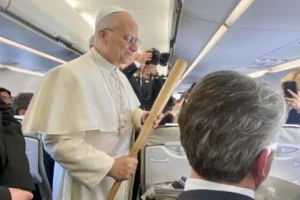
During his visit to Lebanon, Pope Leo XIV delivered a message of peace. However, his remarks might not only have been aimed at encouraging reconciliation between the Muslim and Jewish worlds, but also at quietly urging Muslim leaders to halt Christian persecution and protect vulnerable Christian minorities.
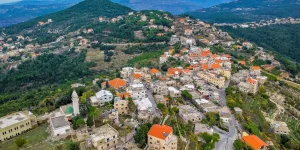
Although his visit was to Lebanon, one of the few Muslim-majority countries in the region not on the top-50 list of places where Christians face the most extreme persecution, according to Open Doors, the trip itself suggests that concern for persecuted Christians may have been part of his broader purpose.
The pope's reminder that "unity, reconciliation, and peace are possible," as he said in a speech at Martyrs' Square, Beirut, though wrapped in diplomatic and poetic language, can still be interpreted as a sign that he is paying closer attention to the Middle East and may now be open to encouraging real change on the ground for the people of his faith.
Christian persecution by Muslims is severe and under-addressed. According to Open Doors, more than 380 million Christians face high levels of persecution and discrimination for their faith, including millions who face extreme levels.
More than 4,400 Christians were killed for faith-related reasons last year.
Of the top 10 countries in which Christians are persecuted, eight are Muslim-majority, according to Open Doors. Yemen moved up to third place on the watch list due to an increase in anti-Christian violence.
"Pressure on Christians also remained at the maximum," the website said. "Within the context of civil war, Iran-backed Houthi rebels expanded their power, making more of the country increasingly dangerous for Christians. Coupled with further Islamic radicalization, this meant even secret house churches could no longer meet safely."
Despite these situations, global awareness and advocacy, even within the Christian world, remain remarkably weak. Moreover, the Catholic Church often tries to avoid angering Muslim-majority countries where Christians are especially vulnerable.
"The Catholic Church has been unwilling to call out Islamic terrorist groups who carry out massacres against Christians," explained Rabbi Pesach Wolicki, Executive Director of Israel365 Action. "It's shameful the Christian world worldwide does not have more of an outcry."
Wolicki cited several examples of the Church's reluctance to name Islamic groups like ISIS or Boko Haram while being equally willing to condemn Israel by name.
In July, after an Israeli rocket mistakenly hit a church in the Gaza Strip, Pope Leo XIV tweeted about it, expressing "my profound sadness regarding last Thursday's attack by the Israeli army on the Catholic parish of the Holy Family in Gaza City, which, as you know, killed three Christians and gravely wounded others."
He went on to name the victims and then added, "This act adds to the continuous military attacks against the civilian population and places of worship in Gaza. I again call for an immediate halt to the barbarism of the war and for a peaceful resolution of a conflict. I renew my appeal to the international community to observe humanitarian law and to respect the obligation to protect civilians."
As Wolicki pointed out, the pope stated quite clearly that Israel was intentionally attacking civilians, even though statements and an investigation by the IDF proved otherwise.
In comparison, about a week later, more than 40 Christians were killed in a church during a prayer vigil and in their own homes by an ISIS-affiliated group in the eastern part of the Democratic Republic of the Congo.
While Pope Leo XIV called the tragedy a terrorist attack and wrote on X "I entrust the victims to God's loving mercy, I pray for the injured and for Christians around the world who continue to suffer violence and persecution, urging all those with local and international responsibility to collaborate to prevent such tragedies," what he did not do was identify the Islamic terrorists or name them in any way.
"He doesn't say that it continues these brutal attacks by Islamic terrorists, as opposed to the mistaken rocket fired by the Israelis at a church where he referred to the IDF attacking Christian holy sites," Wolicki said in a video on the matter. "Here, there's no mention whatsoever of Jihadist Muslim fundamentalists who are chopping off the heads of Christians in the Congo. This is hypocrisy and cowardice."
There is little doubt that the pope is afraid to acknowledge that the perpetrators in the Congo were Muslims. There is a sense of pandering, fear, and moral inconsistency.
Similarly, Wolicki noted what he called the pope's "mealy-mouthed" response to massacres of Christians in Africa more broadly.
At the same time, the Vatican has taken steps and made gestures that appeared to be aligned with anti-Israel narratives, such as the nativity scene sculpture of baby Jesus swaddled in a Palestinian keffiyeh that was placed in the Paul VI Hall in 2024. The installation sparked tremendous controversy. Soon afterwards, the pope, then Pope Francis, withdrew the scene amid accusations of antisemitism and historical inaccuracy. He claimed it was meant to be a show of solidarity with the Palestinian people.
What the Church is failing to recognize is that the persecution of Christians and Jews by Muslim extremists is fundamentally linked. Extremist groups ideologically and operationally target both communities. And the communities should be working together.
In 2016, for example, ISIS stormed a church in France, murdering the priest and seriously injuring another elderly churchgoer. As Wolicki aptly said, if a rabbi had been standing next to the priest, he would have been murdered too.
On the one hand, Wolicki argued that just as Jews expect the world to speak out when Jews are attacked, Jews must stand up for persecuted Christians. On the other hand, the Christian world must do far more for itself.
The pope's visit to Lebanon may have been a first step toward a more direct approach.
The visit was meaningful for struggling Christian communities. But meaningful change requires several steps. The first one is that the Vatican explicitly names perpetrators and demands accountability.
Christian institutions worldwide must do the same.
In addition, the pope must speak from a place of moral clarity rather than political hedging.
Pope Leo XIV said that "for many years, and especially in recent times, the eyes of the world have been fixed on the Middle East, the cradle of the Abrahamic religions, observing the arduous journey and the unceasing quest for the precious gift of peace." He called on the people of Lebanon to be "builders of peace."
The pope’s visit and tone suggested a growing focus on protecting Christians in the Middle East.
If that was even partly why he went to Lebanon, the question now becomes whether he is finally prepared to take the steps needed to act fairly toward all monotheistic faiths and their countries. Equally important is whether he is willing to make the necessary, and at times difficult or even risky, efforts to pressure those governments that persecute their Christian minorities to finally bring such abuses to an end.
Want to help more people find our reporting from Israel? Leave a quick Google review of our website here.
You might also like to read this: