Escalation on the way? US issues Middle East travel warning, as Trump returns to White House early
Unresolved Iran conflict, Saudi-Houthi fighting, raises concerns in Israel of escalation during High Holidays




Concerns for a possible escalation have increased in Israel after the U.S. State Department issued a fresh set of travel warnings for the Middle East on Saturday.
In a warning issued to the Jerusalem and Amman embassy websites, the State Department warned, “Due to tensions in the Middle East, the security environment remains complex with the potential for unforeseen escalation. Americans currently in the Middle East should exercise heightened vigilance and be aware of potential flight cancellations, airspace closures, and travel disruptions.”
Specifically, the warning mentions the Houthi-Saudi Arabia conflict; however, social media reports indicate that Iranian officials have also raised the alert status in the country.
BREAKING: Iran has issued "Code 100," its highest alert level, for all armed forces in the past hour, covering the IRGC, the Army and security forces, per initial reports.
— Amjad Taha أمجد طه (@amjadt25) September 20, 2026
Trump cut short his weekend at Camp David to return to the White House tonight citing the potential for…
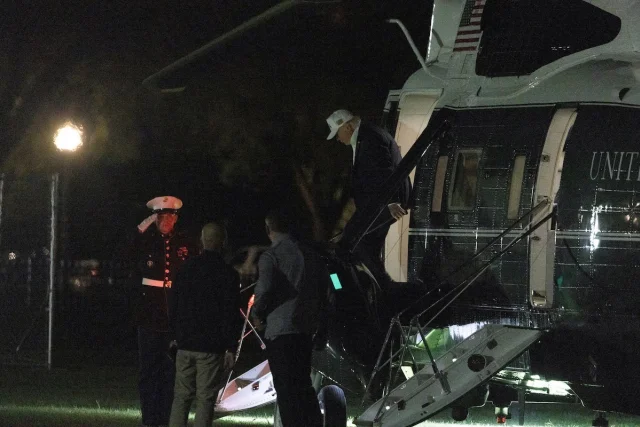
At the same time, U.S. President Donald Trump cut short a visit to the Camp David retreat over the weekend, returning to the White House on Saturday, a day earlier than expected. The White House did not provide any explanation for the early return.
While the State Department regularly issues travel warnings due to conflicts across the globe, several such warnings were given in the Middle East in the days prior to past strikes carried out by the U.S. or Israeli militaries in Iran.
Similar warnings were issued by U.S. embassies in the United Arab Emirates, Bahrain, Kuwait, Oman, Lebanon, Iraq, Qatar, and Saudi Arabia, which have all been affected by the Iran conflict.
Iranian parliament speaker Mohammad Bagher Ghalibaf said that Iran will not agree to open the Strait of Hormuz until the U.S. agrees to its terms and conditions, Iran’s Fars News agency reported.
Ghalibaf indicated that Iran would continue both to fight and to negotiate, as it seeks to secure its interests in the region.
Iran has demanded the U.S. pay reparations for the war, which began on Feb. 28 with combined Israeli-U.S. airstrikes, killing the Supreme Leader Ayatollah Ali Khamenei, as well as multiple top regime officials.
Iran’s Security Chief Mohsen Rezaei said his country has conveyed its conditions for resuming negotiations with the United States, according to a report by Al Jazeera over the weekend. Those conditions include an end to hostilities on all fronts, lifting the naval blockade, and releasing all frozen Iranian funds.
Rezaei also stated that the Islamic Republic continues to hold consultations with Qatar and Pakistan, which were mediators in past negotiations.
Meanwhile, the Saudi-Houthi conflict remains unsettled, as Saudi air defense intercepted a ballistic missile launched at the capital city of Riyadh on Saturday.
Reports also indicated heavy aerial bombardment of Houthi positions in Yemen by Saudi forces, aimed at preventing the rebels from seizing the critical port of Aden, on the Gulf of Aden.
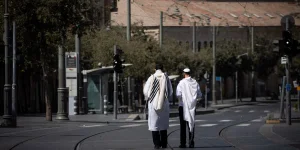
Israelis, who are preparing for the fast of Yom Kippur, considered the holiest day on the Jewish calendar, have been watching the developments for any signs of an escalation during the High Holidays.

Please take a moment to join believers worldwide praying for Israel right now. Add your light to the live prayer map—and show the world one more watchman praying for the peace of Jerusalem.
You might also like to read this: