Democrat Representative says he will oppose Trump's $2.8 billion weapons sale to Israel
Trump administration has options to overcome objection, which appears linked to midterm elections




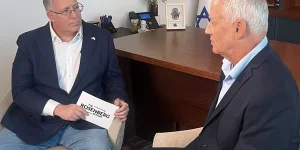
U.S. Representative Gregory Meeks, top Democrat on the House Foreign Affairs Committee, said Wednesday that he would oppose a planned $2.8 billion military aid package for Israel, over concerns about how the weapons would be used.
“The Trump administration has not provided sufficient assurances that these weapons will be used by the Netanyahu government in accordance with U.S. law and with appropriate protections for civilians,” Rep. Meeks said in a statement. “I therefore will not clear this sale at this time.”
Meeks said the move was not meant to hinder Israel’s “legitimate defense needs,” but to ensure that the weapons are “used lawfully.” He also reaffirmed his commitment to “Israel’s security and its ability to defend itself.”
“I remain firmly committed to Israel’s security and its ability to defend itself against serious regional threats,” Meeks continued. “But the Trump administration’s proposed sale of 40,000 2,000-pound bombs, some of the most destructive munitions in our arsenal, raises grave, unresolved concerns about how these munitions could be used in densely populated areas of Gaza and Lebanon.”
“The decision does not diminish Congressional support for Israel’s legitimate defense needs; it reflects Congress’s responsibility to ensure that U.S.-funded weapons are used lawfully, responsibly, and with meaningful safeguards for human life,” Meeks argued.
Meeks' opposition is unlikely to stop the transaction, as the Trump administration has other means of approving the deal; however, it shows Democrats trying to push back against the Trump administration during the politically charged election season.
In early 2025, the Trump administration made use of an emergency rule to override congressional review of the transfer of around 35,000 of the same type of bombs contained in the current deal.
That was necessary, as the previous administration of President Joe Biden had halted the transfer of 2,000-pound bombs to Israel, citing similar concerns about their use in the densely populated Gaza Strip.
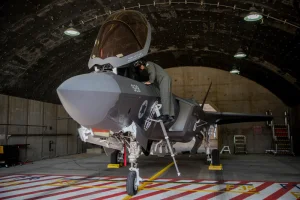
The Israeli military argues that it needs the weapons due to the unique tactics of Hamas and Hezbollah, who have created hundreds of kilometers of underground tunnels to house fighters and weapons. Conventional aerial bombs are insufficient to penetrate deep enough to destroy such structures.
The IDF has made limited use of 2,000-pound bombs in targeting high-profile Hamas targets, such as Mohammed Deif, even in areas with civilian populations. However, such strikes are rare, and mostly limited to top-level Hamas officials.
The IDF is also reported to be concerned about maintaining a long-term stockpile of such weapons, as the conflict with Hamas, Hezbollah and Iran remains unresolved. The military is also concerned that election wins by anti-Israel candidates could further undermine efforts to restock weapons needed for such conflicts.
John Spencer, a war scholar and the chair of urban warfare studies at the Modern War Institute (MWI) at West Point, notes that the U.S. military also made extensive use of the same munitions in its wars against ISIS and against Saddam Hussein in Iraq.
Some social media users have pointed to politics as a reason for the stance by Meeks, who has a history of pro-Israel voting. They note that Rep. Meeks is up for reelection this year and could be attempting to capitalize on increasing resistance to U.S. support for Israel’s military among younger voters.
You might also like to read this: