Board of Peace denies $400 million Hamas debt deal, says terror group will get ‘no access to funds’



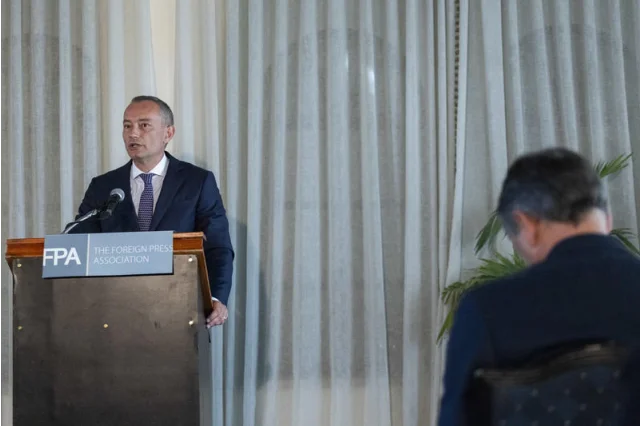
The American-backed Board of Peace (BoP) on Wednesday rejected allegations that it had reached a “financial agreement” with Hamas to cover as much as $400 million in the terrorist group’s external debts as part of a plan to disarm it.
“The claims that there is a financial agreement between the Board of Peace and Hamas are false,” Board of Peace Gaza envoy Nickolay Mladenov wrote on 𝕏. The statement was written in Hebrew for the Israeli audience.
“No such proposal was discussed, negotiated, or considered, and it will not be on the table in the future either,” he added.
“Hamas will have no role in the governance of Gaza and will have no access to funds,” Mladenov emphasized.
The BoP statement came after an Israeli broadcaster reported that the organization had agreed to cover Hamas’ external debt of $US400 million as part of efforts to persuade the terrorist group to disarm in accordance with the American-brokered October 2025 Gaza ceasefire agreement.
According to the report, mediators had reassured Hamas officials that the BoP would cover the group’s external debt if it agreed to disarm. Hamas, however, has reportedly continued to demand an Israeli military withdrawal from Gaza before surrendering its weapons.
Mladenov rejected the allegations and outlined the BoP’s procedures for distributing funds in Gaza.
“Board of Peace funds are not transferred through Hamas,” Mladenov argued. “Every contract undergoes review and approval, every project is verified before payment, and all accounts are fully open to audit by donor governments."
“There are more than enough genuine challenges in this effort. There is no need to invent additional ones,” the BoP envoy argued.
The dispute appears to center in part on Clause 5 of the BoP’s Gaza plan, which states that the new Gaza administration, known as the National Committee for the Administration of Gaza (NCAG), “shall seek to assess the legitimate commitments to suppliers, contractors and other parties – up to a total amount of no more than $400M – and address them.”
A BoP official said the provision should not be interpreted as an agreement to pay Hamas or assume its debts.
“It allows legitimate outstanding obligations, such as unpaid public servants or suppliers who provided genuine services to the population, to be assessed on their merits. That should not be confused with paying Hamas or covering obligations linked to terrorism, corruption or financial mismanagement,” the official told The Times of Israel.
Another unnamed source said the NCAG intends to conduct a comprehensive audit of Hamas’ finances. According to the source, the $400 million would be spent on contractors engaged in “legitimate” activities that were not financed by Hamas.
An Arab diplomat added that some of the funds could be used to provide severance packages to Hamas civil officials who will not be employed by the NCAG.
The controversy comes as Israel has formally rejected the BoP’s 15-point plan for Gaza’s reconstruction.
“As for the Gaza Strip: First and foremost, I wish to clarify the main point: As long as I am Prime Minister, a Palestinian state will not be established, neither in Gaza nor in Judea and Samaria. Neither 'Fatahstan' nor 'Hamastan,'” Israeli Prime Minister Netanyahu stated.
“Regarding specific matters surfacing in the news lately, I wish to be precise here: Israel does not accept the 15-point document,” he continued.
“I have heard people saying: 'You didn't say it.' So here I am saying it again: Israel does not accept the 15-point document,” Netanyahu clarified.
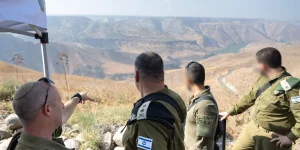
The Israeli leader also emphasized that IDF forces would not withdraw from Gaza until Hamas is “genuinely disarmed.”
Despite Israel’s formal rejection of the plan, Jerusalem has reportedly quietly agreed to reconstruction efforts in the parts of Gaza currently controlled by Israeli forces.
Speaking on condition of anonymity, a Board of Peace official told Reuters earlier this week that the organization is continuing discussions with the Israeli government over implementation of the Hamas disarmament plan.
Mladenov defended the disarmament plan, calling it Israel’s best option.
“Israel is not required to rely on trust or take irreversible steps before verified actions are taken on the ground,” Mladenov assessed. “The goal remains the complete dismantling of weapons and ensuring that Gaza can never again pose the kind of threat Israel experienced on October 7."
“The alternatives are for Hamas to remain in power and rebuild its military capabilities, or for Israel to resume control over Gaza’s entire population, at an enormous human, military and economic cost,” the envoy said.
“The Board of Peace offers a third option: full disarmament, civilian governance, an international security presence under American command, and oversight and verification mechanisms,” Mladenov concluded.
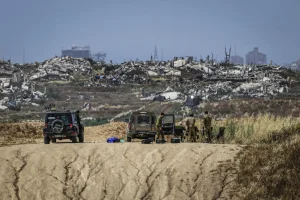
Meanwhile, despite the formal ceasefire, Hamas is reportedly entrenching itself along the Yellow Line, which currently divides Gaza into an Israeli-controlled sector and a segment still under Hamas rule. The IDF has stressed that its presence in Gaza is primarily intended to prevent Hamas terrorists from infiltrating Israeli border communities just across the border.
You might also like to read this: