The language of hatred: From Nazi propaganda to modern antisemitism




A week ago in Queens, New York, anti-Zionist protesters gathered outside a synagogue where a Jewish school was in session. Their chant pierced the air: “Say it loud, say it clear, we support Hamas here.” The words may have sounded rhythmic, but their message was deadly. Behind the rhyme was a call for violence, glorifying the massacre carried out by Hamas against Israel on October 7, 2023.
These voices of hate are not isolated. They are accompanied by actions. In Jackson, Mississippi, the historic Beth Israel synagogue was set ablaze, one of twenty-one synagogues around the world targeted or burned since October 7. The hateful words of the past have reignited into literal fires.
The language of hatred did not end in 1945 when the Nazi regime fell. It has simply evolved, adopting new slogans, new technology, and new disguises. The same vocabulary that once fueled genocide now echoes again in chants, graffiti, and social media posts.
When Hamas orchestrated the deadliest massacre of Jews since the Holocaust, the world’s reaction revealed how easily old hatreds can reawaken. The phrase “Never Again,” once a sacred vow after World War II, is being challenged by those who seek to make it happen again.
How could the Nazis have engineered the industrialized murder of six million Jews? How could they have convinced more than sixty-five million Germans to follow such evil? Understanding their methods provides insight into today’s dangerous rhetoric.
Before World War II, Jews made up less than one percent of Germany’s population. Yet their contributions to science, medicine, literature, and the arts were extraordinary. They were fully integrated citizens who spoke the same language and shared the same culture. Twenty-four percent of Germany’s Nobel Prize winners were Jewish. Despite this, Hitler considered Jews an inferior race that had to be eradicated.
The groundwork for genocide began early. In 1920, the National Socialist German Workers’ Party adopted a 25-point platform that formally segregated Jews from “Aryan” society. Hitler’s election as chancellor in 1933 unleashed the machinery of propaganda and persecution that would culminate in the Holocaust. The same spirit of deception and moral corruption that poisoned Germany now poisons parts of our world once again.
Hitler’s propaganda minister, Joseph Goebbels, perfected the weaponization of words. His job title, “Minister of Propaganda and Public Enlightenment,” masked the regime’s true goal: replacing truth with lies. Propaganda began not with violence, but with ideas, slogans, and symbols. Public book burnings became early rituals of purification, conducted by university students and soldiers who cast thousands of works by Jewish and “un-German” authors into the flames.
Goebbels’ lies spread through every available medium—radio, newspapers, magazines, and film. In a world without television or the internet, there was no competing voice. Repetition and manipulation slowly desensitized the German public. Neighbors turned against neighbors, convinced that Jews were parasites, subhumans, and enemies of the state. The Nazis used bureaucratic language to disguise atrocities, replacing “murder” with “final solution” and “deportation” with “relocation.” By the time the Holocaust began, consciences were dulled, and moral clarity had vanished.
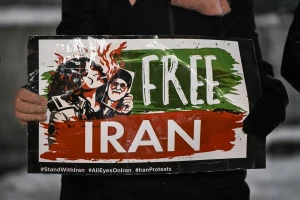
The parallel with today is sobering. The demonization of Jews is once again normalized. Protests that glorify terror are defended as “free speech.” Terms like “Zionist,” “colonizer,” and “occupier” are used as modern euphemisms for “Jew.” The phrases “globalize the intifada” and “resistance by any means” are shouted on college campuses and city streets. The internet amplifies this rhetoric faster than Goebbels could have imagined, spreading lies to millions within seconds.
After Hamas’s massacre on October 7, these ready-made slogans appeared almost immediately. Posters, chants, and scripts materialized in coordinated demonstrations across the world. Like the Nazis’ propaganda machine, today’s movements rely on repetition, manipulation, and intimidation. The result is the same: fear, division, and moral confusion.
It is worth remembering that the Nazis’ rise from ideology to power took only fourteen years, from their 1920 manifesto to Hitler’s 1933 election. Evil grows quickly when words are left unchallenged.
In today’s climate, a new “dictionary of rage” has emerged. Phrases once meant to promote justice are distorted into calls for violence. “Resistance” becomes justification for murder. “Liberation” becomes a banner for antisemitism. “Social justice” is twisted into a weapon that excludes Jews and silences truth.
This rhetoric is not confined to the Middle East. It has infected Western universities, newsrooms, and social media platforms. It fuels arson attacks, vandalism, and assaults on Jewish students. It also targets Christians and conservatives who refuse to surrender to the shifting language of hate.
Words shape reality. Proverbs 12:18 warns us, “The words of the reckless pierce like swords, but the tongue of the wise brings healing.” The challenge before us is to resist this verbal violence with truth, courage, and faith.
History teaches that silence in the face of evil is complicity. Today, the faithful are called to use words that honor God, speak truth with wisdom, and defend what is right without hysteria or hate. Each of us bears responsibility to restrain reckless speech and to train our hearts toward integrity and courage.
When words become weapons, silence becomes surrender. The moral clarity of the faithful must overcome the noise of rage.
This article originally appeared here and is reposted with permission.
You might also like to read this: