Can the Qur’an’s Jesus Be Israel’s Messiah?
A Messianic Jewish answer to Islam’s deepest objections about God, Scripture and Israel


Part one of two
The Qur’an gives Jesus a place no Christian should minimize: Messiah, God’s Word conveyed to Mary, a spirit from Him, born of Mary and empowered with signs. Yet it denies what the earliest Jewish followers confessed: that the crucified and risen Yeshua shares in the identity and honor of Israel’s one God. The dispute is not whether Jesus matters, but whose account of him is trustworthy. A Messianic Jewish answer begins with the Shema, then tests both claims against Israel’s Scriptures, the first Jewish testimony and the Qur’an’s own appeal to earlier revelation.
Begin with Islam’s real challenge
Surah 4:171 calls Jesus a messenger, God’s Word conveyed to Mary and a spirit from Him, while warning Christians not to say “Three.” Surah 5:72–75 rejects identifying the Messiah with God; Surah 5:116 asks whether Jesus told people to take him and Mary as deities. These passages express tawhid, Islam’s uncompromising confession of divine oneness. Christians should hear that concern. They should also answer plainly: Mary is not divine, and the Trinity does not include or worship her as God. The Qur’anic titles honor Jesus, but do not by themselves prove Christian doctrine; the question is how to account for the earlier Jewish witnesses who called him Lord.
The Christian claim is not three gods, a divine family, or physical begetting through Mary. The New Testament calls Jesus God’s Son, but not as biological generation. Israel is called God’s son (Exodus 4:22), as is David’s king (Psalm 2:7); the title alone does not prove deity. The Christian case rests on the whole New Testament portrait: the Word who was with God and was God became flesh, Jesus receives divine honor, and his first Jewish followers confess him as Lord while worshiping Israel’s God.
One God, not three
Messianic Jews begin where Israel begins: “The LORD is one” (Deuteronomy 6:4). The Trinity is not three gods or one God in contradictory senses. It confesses one divine being eternally existing as three distinct persons: Father, Son and Holy Spirit. Each is fully God, not one-third of God; their distinction does not divide the divine being into three. “One” and “three” answer different questions—what God is and who God eternally is. The terms “being” and “person” are later theological language for describing the claim, not proof of it. They clarify that Christians confess one God—not three—while the biblical case must stand on Scripture itself.
The biblical case is cumulative, not a trick hidden in one Hebrew word. Israel’s Scriptures speak of God creating by his Word and acting through his Spirit; they do not contain the finished Nicene formula. The New Testament takes a further step: John calls the Word both with God and God (John 1:1–18); Thomas addresses the risen Jesus as “my Lord and my God” (John 20:28); Paul places “one Lord, Jesus Christ” within the same confession as “one God, the Father” (1 Corinthians 8:6). These are first-century claims, voiced in a Jewish movement before later councils. New Testament scholar Richard Bauckham argues that this inclusion of Jesus in God’s unique identity did not require abandoning Jewish monotheism.
A Muslim may reject that reading. But calling it shirk—the association of partners with God—names the objection; it does not explain why the earliest Jewish followers spoke this way. Christianity claims not a second god, but that Israel’s one God made himself known in the Messiah. The question is whether the New Testament’s witness warrants that claim.
Does Scripture point to Muhammad instead?
Muslim interpreters appeal to Deuteronomy 18:15–18, Jesus’ promise of an Advocate in John 14–16, and the Qur’an’s claim that Jesus announced Ahmad (Surah 61:6). These are serious claims, but resemblance is not enough: Deuteronomy places the promised prophet within Israel’s own covenantal life, and the New Testament applies the passage to Jesus (Acts 3:22–26). John identifies the Advocate as the Holy Spirit, who remains with and in Jesus’ disciples and recalls his teaching (John 14:17, 26). A later scripture may reinterpret an earlier one; it must still account for the earlier text’s words, setting and first readers.
Was the Gospel corrupted?
The Qur’an calls the Torah and Gospel revelations from God (Surah 3:3), tells Gospel readers to judge by what God revealed in it (Surah 5:47), and urges the People of the Book to uphold both (Surah 5:68). Muslims also point to Surah 5:48, which calls the Qur’an a guardian or criterion over earlier Scripture, and distinguish the original Injil given to Jesus from the four Gospels. Muslim accounts of taḥrīf—distortion or falsification—vary: textual alteration, corrupted interpretation, concealment, or a mixture (scholarship on this debate). Any claim that the Christian text was replaced must specify what changed, when, and on what evidence.
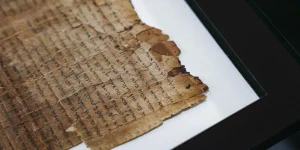
The manuscripts show real variants, which Christians should acknowledge and study. The first-century-BCE Great Isaiah Scroll differs in places yet remains close to the later Masoretic text (compare the witnesses); the Dead Sea Scrolls preserve multiple ancient textual traditions, not a single flawless copy. The New Testament record is likewise concrete: Papyrus 46, copied around the turn of the third century, preserves Paul’s letters; fourth-century Codex Sinaiticus contains a complete New Testament. Paul’s first-century letters already proclaim Jesus’ death and resurrection (1 Corinthians 15:3–8). These witnesses do not prove Christian theology or rule out every earlier alteration. They do show the cross was proclaimed centuries before Islam. A theory of wholesale corruption must explain this early record—and why the Qur’an directs Gospel readers to revelation in their possession.
A Jewish Messiah, not Israel’s replacement
Messianic Judaism does not leave Israel behind to find Jesus; it confesses Yeshua within Israel’s Scriptures and among Israel’s people. The Qur’an names Jesus “Messiah” but does not frame that title through David’s covenant or Israel’s royal hope. The Hebrew Scriptures do: Christians read the promised king, suffering servant and vindicated one in 2 Samuel 7, Isaiah 52:13–53:12, Psalm 22 and Zechariah 12:10. Jewish interpreters disagree; the Christian claim is that Israel’s first followers saw these hopes converge in Yeshua.
The first followers who confessed Yeshua as Messiah were Jews; faith in him did not cancel their peoplehood. Paul warns Gentile believers not to boast over Israel’s natural branches (Romans 11:17–29). A church that claims to honor Israel’s Scriptures must reject replacement theology—the claim that God displaced the Jewish people and transferred their promises elsewhere. The Qur’an’s title for Jesus leads back to Jerusalem: is Yeshua a Messiah detached from Israel’s story, or the Messiah through whom Israel’s God keeps faith with Israel and opens hope to the nations?

Support our independent, on-the-ground reporting from Israel. Become a $5/month Ally.
You might also like to read this: