The room that was locked for 3 years – Last Oct 7 victim of Moshav Lakhini laid to rest
ZAKA Search and Rescue Organization returns to help family bury loved one



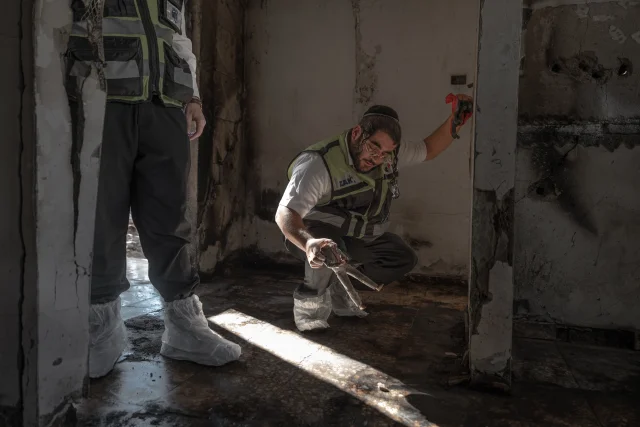
Three years after the Oct. 7, 2023, massacre, the Hajbi family finally found a measure of closure, as they buried Elitzur Hajbi, who was killed when Hamas terrorists invaded Moshav Yakhini.
On Oct. 7, 2026, ZAKA volunteers arrived at the home of the late Elitzur Hajbi to carry out a sacred task: collecting the remains left in Elitzur’s bedroom since that terrible morning.
When Hamas terrorists breached the fence of Moshav Yakhini, no IDF soldiers were there to fight them off. Residents of the moshav, along with Border Police officers and later soldiers from the Sayeret Matkal special forces, killed the eight terrorists who infiltrated the settlement.
However, four residents of the moshav, including Elitzur, were killed by the terrorists. Elitzur Hajbi was shot, but still managed to return to his home, dying in his bedroom.
For three years, the family had been unable to bring themselves to enter the room or do anything to it. The rest of the house had been cleaned following the massacre, but the bedroom remained closed, serving as a painful time capsule.
With the third anniversary of Oct. 7 approaching, the family contacted ZAKA, a nonprofit, volunteer organization in Israel that specializes in emergency response, search and rescue, and post-disaster recovery operations.
ZAKA volunteers from Sderot arrived at the home Wednesday morning, where they opened the room and began collecting all remains for burial. The team spent several hours working.
ZAKA Deputy Director of Operations Chaim Weingarten and Rabbi Avi Deri, ZAKA's Lachish region chief, accompanied the volunteers.
Weingarten described the heavy emotions at the scene, three years after the original tragedy.
“When we arrived this morning and carried out the same task we had performed back then, we experienced a chilling sense of closure,” he related. “On this very day, after the family had been unable to even touch the room for three years, we were privileged to complete the sacred duty of honoring the deceased and bringing the recovered remains to burial.”
ZAKA Search & Rescue CEO Dubi Weissenstern said, “Walking into that room this morning was a chilling closing of the circle.”
“For Elitzur’s family, this was a room they could not enter,” Weissen added. “For us, our responsibility was not complete until we could bring him to rest with the dignity and respect every person deserves.”
Rabbi Deri described the difference between those initial days after the massacre and the operation carried out Wednesday morning.
“Unlike three years ago, today we did not work alone amidst ruined homes; we worked alongside the son and brother of the late Elizur,” he said. “It is hard to put the emotions into words. We acted with deep reverence and solemnity, praying that our efforts brought the family a measure of comfort.”
While opening the room, gathering Elitzur’s remains, and preparing for renovation will not erase the family’s pain, the ZAKA workers hope it allows for a measure of closure.
You might also like to read this: