With Iran situation uncertain, Netanyahu again demonstrates ability to navigate Washington politics
Quiet meeting with Trump, talk of cooperation, show Netanyahu’s sensitivity to president’s considerations





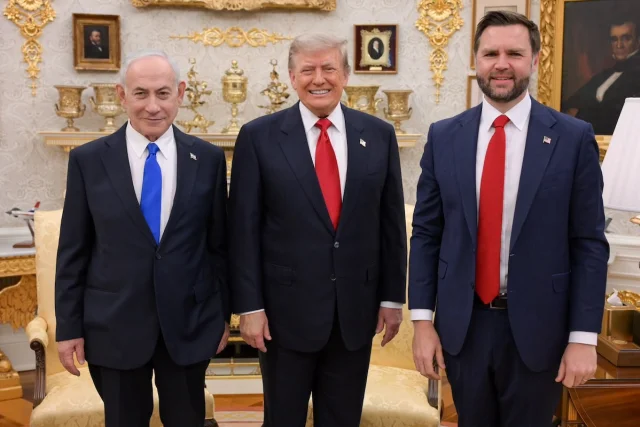
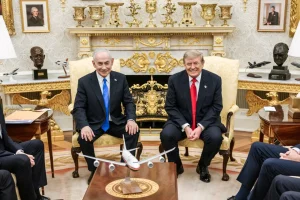
Prime Minister Benjamin Netanyahu recently met with U.S. President Donald Trump for their first meeting since the start of the Iran war on Feb. 28.
That February1 meeting happened days before the launch of joint aerial strikes on the Islamic Republic, which lasted for over a month, before Trump announced a ceasefire in mid-April, claiming the Iranian regime was willing to negotiate.
There were rumors of a significant difference of opinion between Trump and Netanyahu in the lead-up to that February meeting, and even in remarks to the press, both emphasized different points, with Trump stating the United States’ preference for pursuing diplomacy, while Netanyahu favored military action.
The launching of joint strikes just days later, in contrast to Trump’s statements, caused some political commentators in the U.S. to claim that Netanyahu pushed the U.S. president to start a conflict he didn’t want.
However, Trump’s own statements regarding the ongoing protests within Iran indicated a different stance, in which the president showed a clear preference for a diplomatic agreement, but publicly expressed a willingness to use force. At one point, Trump even told the Iranian protestors, “Help is on the way!”
Trump’s comments following the meeting with Netanyahu, while prioritizing diplomacy, also emphasized a real threat.
"We have to make a deal, otherwise it's going to be very traumatic, very traumatic. I don't want that to happen, but we have to make a deal," Trump told reporters.
"We'll see if we can get a deal with them, and if we can't, we'll have to go to phase two. Phase two will be very tough for them," Trump added.
While previous meetings between the two leaders had included a press briefing and a photo shoot, the meeting in February and the most recent meeting did not.
The rumors of disagreement between the two leaders are another common feature of both meetings. Similar articles have appeared several times over the past year and a half, since Trump returned to the White House.
In fact, there was a swell of such articles in both Israeli and U.S. media just ahead of the June 2025 Operation Rising Lion, in which the U.S. ultimately joined, striking three of Iran’s most prominent nuclear sites.
Ahead of the February meeting, several reports again claimed that relations between the two were becoming tense, only to have the two leaders surprise many by launching the attacks which took out most of the Iranian regime’s leadership.
However, the reduced optics of Netanyahu's Tuesday visit could indicate a new reality. The Israeli prime minister has repeatedly called Trump Israel's best friend, praising his support for Israel in both terms. But among some of Trump's political base, that support is no longer seen as a foundational part of America's foreign policy.
Several prominent voices among pundits who previously supported Trump have become critical of Israel, and of Netanyahu’s supposed influence on the U.S. leader.
Analyzing Netanyahu’s behavior and statements surrounding the meeting, there is a clear awareness of the change.
Netanyahu called the meeting “one of the best conversations I’ve had with our friend, U.S. President Trump,” in a video released in Hebrew, while at the same time emphasizing that it was “an opportunity to exchange ideas, and also to coordinate on things that are important for the security and for the future of Israel.”
There was no hint of demands or warnings of “red lines.”
“It was a meeting with full cooperation, with mutual support, with understanding on the joint goal that Iran won’t have nuclear weapons, and also other goals,” Netanyahu said.
In previous meetings, the prime minister has often released statements in English. This time, he allowed President Trump to release the first English statement about the meeting, in which Trump also called it “a very good meeting.”
This willingness to let Trump have the first comment in English could be a recognition by Netanyahu that the U.S. president is in a very different political situation than in February.
While the conflict has produced one of the lowest casualty counts of any U.S. conflict, the economic consequences of the military operations in Iran have been notably more severe in the United States than in Israel.
This, along with the apparent lack of any easy off-ramp for the war effort, adds to American frustration with another foreign conflict – especially given that Trump campaigned on a promise to end wars like this one.
Trump recently halted almost two weeks of daily strikes on infrastructure used by the Islamic Revolutionary Guard Corps to attack ships traversing the Strait of Hormuz, a critical waterway for the global energy market.
Reports say that Trump halted the strikes after U.S. military leaders presented him with the choice of ending such operations or engaging in a significant escalation meant to devastate the remaining Iranian infrastructure, potentially leading to significant damage to Iran’s civilian infrastructure.
Despite the month and a half of aerial strikes, which destroyed most of the regime’s conventional military capabilities, the IRGC has consistently focused on asymmetric capabilities: drones, ballistic missiles hidden in underground tunnels and naval fast boats hidden in rugged coastal terrain.
That has allowed the IRGC to continue to impose an outsize influence on traffic in the strait, frustrating U.S. attempts to restore shipping in the waterway, and calm a worried global energy sector.
With these economic concerns weighing on Trump ahead of the Fall election cycle, Netanyahu has no interest in giving the appearance of guiding Trump’s decision-making, leading to potential setbacks in the elections.
This was seen in the statements by National Public Diplomacy Directorate head Tzipi Hotovely, who told Israeli media following the meeting, “There is no truth in the claim that Israel is pushing the U.S. in a certain direction on the Iran issue.”
Yet, Netanyahu knows that neither Trump nor his own political base would respect him if he appeared to come groveling to Trump, begging for a favor.
For this reason, Netanyahu has resisted defending himself against accusations that Trump has grown tired of him. Instead, Netanyahu consistently speaks confidently of his relationship with Trump.
At the same time, Netanyahu handled himself equally confidently when speaking to high-ranking administration officials.
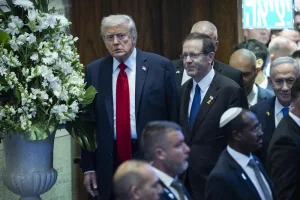
He was seen speaking openly with Secretary of State Marco Rubio and Secretary of War Pete Hegseth at the funeral ceremony for Senator Graham, conducting himself as someone whose opinions are respected.
Ultimately, this most recent visit shows that Netanyahu, the consummate politician, still understands how to make himself heard in Washington, while showing consideration for the political interests of President Trump.
It is likely this characteristic that has allowed him to be the world leader with the largest number of visits to the White House. He knows how to demonstrate respect for Trump’s considerations without backing down from his own.
Among those courting Trump’s favor, that is a rare ability.
You might also like to read this: