Why more countries are choosing Israeli air defense systems




At the start of September, a German shipyard sent the INS Drakon submarine on its way to Israel. Three more submarines of the next generation are already being built. The relationship runs in the other direction as well: Germany has purchased Israel’s Arrow 3 missile defense system, with the project’s total cost standing at €3.8 billion. Each country is supplying capabilities the other has chosen to build into its long term defense plans.
That makes the argument over German arms exports to Israel more complicated than a debate about a single shipment. Berlin approved close to €800 million in defense exports to Israel in the first half of 2026, with much of the value associated with a major naval project. The scale of that relationship shows why political pressure cannot quickly unravel it. It also captures an additional aspect of a larger shift: Israel is becoming a significant supplier of air defense to countries facing very different threats.
Germany’s purchase of Arrow 3 is one of Israel’s largest defense export successes. Yet a less familiar, but potentially more promising Israeli system demonstrates the breadth of demand: Rafael Advanced Defense Systems' SPYDER. The Czech Republic bought the system in 2021 and is now discussing an expansion. Romania signed a major deal in June, while Greece has made SPYDER part of a national air defense program. The significance lies in both the arrival of new customers and the prospect of an existing one buying more.
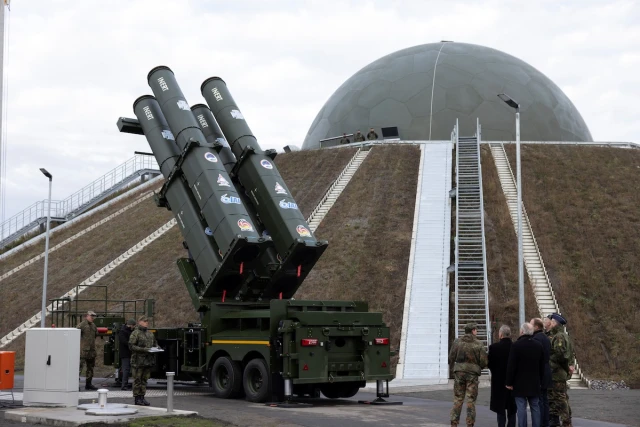
Prague is now in talks to add four SPYDER All-in-One systems in an agreement reportedly worth several billion shekels. These would not simply be another four batteries of the same configuration. The All-in-One version combines a radar, launcher, missiles and command equipment on a single vehicle. Rafael designed it to deploy quickly and protect forces on the move or specific sites. The proposed order remains under negotiation, but its commercial meaning is clear: the Czech military is looking to expand a system it has already chosen and begun to receive.
That sequence is more revealing than a list of prospective buyers. The first contract brought Rafael into a NATO country’s air defense network. Delivery gives the Czech military experience with the system. A further order would expand an existing capability rather than require Prague to choose an unfamiliar supplier from scratch. It is the kind of progression defense manufacturers value because training, maintenance and integration become part of the purchasing decision.
The threat helping drive that decision is plain. Russia’s war in Ukraine has pushed European governments to examine the protection available to their forces and infrastructure. The Czech Republic’s interest is therefore part of a wider effort to strengthen air defense and a specific response to the country’s own military needs.
The system behind the sales
SPYDER is designed to defend against a range of airborne threats, including drones and aircraft. It uses missiles from Rafael’s Python and Derby families and is offered in different configurations. The All-in-One vehicle carries the equipment needed to detect, manage and engage targets, allowing it to operate independently or connect with a wider command network. That flexibility helps explain why the system can serve customers with different terrain, force structures and priorities.
Romania’s agreement gives Rafael another substantial European customer. According to Globes, the SPYDER deal signed in June is worth approximately €2 billion. Greece, facing its own security concerns alongside its longstanding rivalry with Turkey, has gone further: it has asked Israel to help build an integrated national air defense network.
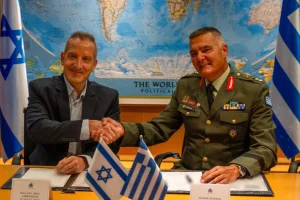
Under the approximately €3 billion Achilles Shield agreement signed in August, that network will combine Rafael’s SPYDER and David’s Sling with Barak MX and radar from Israel Aerospace Industries. Rafael will also lead development of the command and control system connecting them. The contract shows that Israel can win business both by supplying a system such as SPYDER and by bringing several of its defense companies together to protect an entire country.
SPYDER's reach extends beyond Europe. The Philippines and the United Arab Emirates have bought the systems. These countries do not share the same terrain, politics or military requirements. Their interest points to demand for air defense systems that can be fitted to different national plans, rather than to one regional spending surge.
Beyond its versatility, SPYDER has an export advantage that is easy to overlook. It is an Israeli system without the US partnership involved in programs such as Arrow 3 and David’s Sling. That gives Israel greater freedom in negotiating a sale.
That freedom could become increasingly valuable as Israel’s defense industry grows. There is no doubt that joint development with the United States has helped produce some of Israel’s most capable systems. However, SPYDER offers a different commercial model: technology Israel can market to a wider set of customers on terms it has more power to shape. For buyers seeking an air defense system that can fit their existing forces, that combination of capability and purchasing flexibility may prove as important as the system’s specifications.
Israel’s export figures show the scale and reach of the demand. According to the Ministry of Defense, Israeli companies signed a record $19.2 billion in defense export agreements in 2025. Missile, rocket and air defense systems accounted for 29% of the total. Europe represented 36% of agreements by value, Asia and the Pacific accounted for 32%, while North America stood at 13%.
The demand behind these figures comes from different threats. Across Europe, Russia’s war in Ukraine has made air defense a more urgent purchase. Greece has its own calculations, shaped in part by its longstanding security tensions with Turkey. In Asia and the Pacific, concern about China is pushing governments to strengthen their defenses. These countries are buying for different reasons, but all need ways to protect their territory and forces from potential attack.
That is the opportunity SPYDER puts within Israel’s reach. Its appeal spans different regions and military needs, while Rafael has greater freedom to sell it without a US partner’s approval. Germany’s Arrow 3 deal showed that Israel could win a landmark contract. SPYDER's wider reach suggests something more lasting: Israeli air defense is becoming a practical choice for countries facing very different threats.
You might also like to read this: