








ANALYSIS Why Israel’s existence is a theological crisis for fundamentalist Islam
The conflict is not ultimately about borders, but about Jewish sovereignty, Jerusalem, and the future of history.
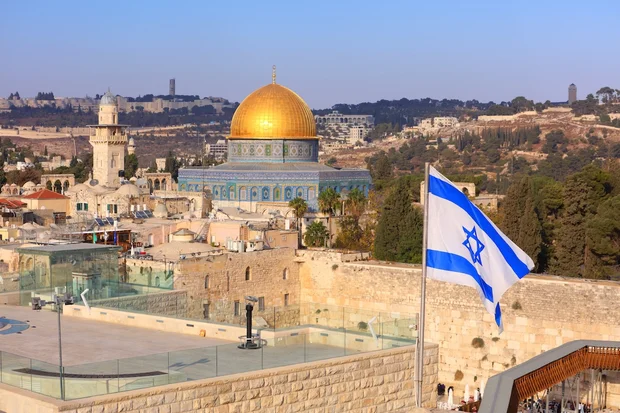
Israel presents militant fundamentalist Islam with a problem that no alteration of borders can finally resolve.
Territory can be divided. Security arrangements can be negotiated. Competing national claims can, at least theoretically, be compromised. But Israel represents something larger than territory. It represents the restoration of the Jewish people to sovereignty in their ancestral land, the revival of Jerusalem as the capital of a Jewish commonwealth, and the reappearance of biblical history in the modern world.
For Islamic movements that understand history as the progressive triumph of Islam, this restoration is not merely a political setback. It is a theological contradiction.
The problem was never simply that Jews lived in the Middle East. Jews lived throughout the Islamic world for centuries. The deeper problem is that Jews have become sovereign. They possess political power, command armies, govern Muslims and exercise authority in Jerusalem. A people formerly subordinated under Muslim rule has established an independent state in territory once governed by successive Islamic empires.
Israel therefore presents a unique theological challenge. Fundamentalist Islamic thought sees in the Jewish state an unbelieving people whose national restoration advances an entirely different account of history.
Fundamentalist movements insist that Islam’s authoritative sources should govern political life and that Islamic claims over land, sovereignty and sacred space cannot be permanently surrendered. These movements speak to a potential constituency numbering in the hundreds of millions.
For all practical purposes, therefore, the conflict cannot be understood without examining the war that Islam believes it is fighting against Israel.
The overturning of the Dhimmi order
Under Islamic rule, Jews were classified as dhimmis. Although the term is commonly translated as “protected people,” that protection existed within a system of legally enforced subordination. Jews were permitted to survive as a religious community on the condition that they accepted Muslim supremacy, paid the jizya (a tax on non-Muslims), and submitted to restrictions that distinguished them from Muslims and marked their inferior position.
The severity of those restrictions varied by ruler and period, but the hierarchy itself remained. Jews could live under Islamic authority; they were not supposed to possess authority over Muslims. They could be tolerated as a subordinate religious community; they were not supposed to become an independent political and military power.
Zionism overturned this order.
The establishment of Israel did not simply bring Jews back into the Middle East. It brought them back as rulers. The former dhimmi became sovereign. Jews commanded armies, governed Muslims, defeated surrounding Islamic powers and ultimately took political control of Jerusalem.
For fundamentalist Islamic thought, this reversal represents more than a military or territorial loss. It is an inversion of the divinely established hierarchy. The problem is not primarily the presence of Jews. The problem is Jewish power: Jews governing themselves, Jews ruling Muslims and Jews exercising sovereignty over territory that had entered the Islamic realm.
Israel is therefore uniquely offensive to this theological order. It does not merely exist outside Islamic authority. Its existence publicly overturns the Islamic order.
The humiliation of repeated defeat also matters. Islam presents itself not merely as one religion among others but as Allah’s final revelation—the true faith destined to prevail. How, then, can a Muslim world of nearly two billion people, possessing enormous territories, armies, wealth and natural resources, repeatedly fail to defeat one small Jewish nation? More fundamentally, how can the possessors of the 'true faith' be defeated by a people whose earlier revelation Islam claims to have superseded?
Israel’s survival therefore becomes a theological accusation. If Islam possesses the final truth and the sanction of Allah, why does Jewish sovereignty survive, strengthen and repeatedly defeat those seeking its destruction? Every Israeli victory deepens the contradiction between the expected triumph of Islam and the observable course of history.
The Jewish state appears to proclaim a different ending to history—one in which Jewish restoration, Jerusalem and the promises of the Hebrew Bible point not toward a restored Caliphate but toward the coming Messianic Kingdom.
Haj Amin al-Husseini and the defense of Al-Aqsa
This theological dimension was visible before the establishment of Israel.
Haj Amin al-Husseini, appointed Grand Mufti of Jerusalem under the British Mandate in 1921, understood the mobilizing power of Jerusalem’s Islamic holy places. He helped transform a conflict involving national aspirations, Jewish immigration and land into a struggle for the defense of Islam itself.
At the center of his campaign was the accusation that the Jews intended to seize the Temple Mount, destroy or displace al-Aqsa Mosque and rebuild their Temple. Jewish attachment to the Western Wall could consequently be presented not as prayer at Judaism’s holiest accessible site but as evidence of a conspiracy against Islam.
Tensions surrounding the Western Wall intensified during the 1920s. In August 1929, rumors that Jews intended to seize the Islamic sanctuaries helped ignite violence across Mandatory Palestine. In Hebron, an ancient Jewish community was attacked. Sixty-seven Jews were murdered, homes and synagogues were looted, and the surviving community was removed from the city.
The accusation that “al-Aqsa is in danger” transformed political anxiety into religious emergency. Once the struggle had been made sacred, violence against Jews could be understood as the defense of Islam.
This formula survived for nearly a century. On Oct. 7, 2023, Hamas invaded Israel, murdered approximately 1,200 people and abducted 251 hostages. Hamas named its operation Al-Aqsa Flood.
The name placed the attack within the same theological narrative: Islam’s sanctuary was endangered, the Jews were responsible, and Muslim violence represented the sacred response.
The Nazi fusion
Haj Amin al-Husseini also became an important bridge between Islamic hostility toward Jewish sovereignty and modern European antisemitism.
After fleeing British-controlled territory, he eventually reached Nazi Germany. He met Adolf Hitler in Berlin in November 1941, supported the Axis war effort, participated in German propaganda broadcasts directed toward Arab and Muslim audiences, and encouraged Muslims to fight the Allies and the Jews.
Al-Husseini embraced Nazi Germany because its war against the Jews and Britain intersected with his own determination to prevent the creation of a Jewish homeland in Palestine. His collaboration helped fuse older Islamic hostility with European racial antisemitism and conspiracy mythology.
The Jews could now be presented not only as a religiously rejected and subordinate people but as the secret authors of the modern world: the hidden power behind capitalism, communism, imperialism and Western domination.
This fusion outlived Nazi Germany. It provided a language through which the local struggle against Jewish restoration could become part of a worldwide war against an allegedly omnipresent Jewish conspiracy.
Hamas and the prophecy of the last hour
Hamas emerged from the Palestinian branch of the Muslim Brotherhood during the First Intifada. Its 1988 covenant did not describe Palestine merely as the homeland of the Palestinian Arabs. It declared Palestine an Islamic waqf—a sacred endowment entrusted to all Muslim generations until the Day of Resurrection. No ruler, organization or generation possessed the authority to surrender any part of it.
The covenant envisioned Jews and Christians living securely only beneath Islamic sovereignty. The issue was therefore not the physical presence of Jews. It was Jewish independence from Islam and Jewish sovereignty over land claimed for Islam.
Hamas then placed the conflict within an explicitly eschatological framework by quoting a tradition attributed to Muhammad:
“The Last Hour would not come unless the Muslims fight against the Jews, and the Muslims would kill them, until the Jews would hide themselves behind a stone or a tree, and a stone or a tree would say: Muslim, or servant of Allah, there is a Jew behind me; come and kill him.”
This interpretation was not imposed upon Hamas by its enemies. Hamas deliberately inserted the prophecy into the founding covenant of its movement.
By doing so, it placed the modern war against Israel within the events preceding the Last Hour. The destruction of Israel was no longer simply a Palestinian national objective. It became part of the anticipated completion of sacred history.
The prophecy identifies the combatants, describes the conflict and announces its outcome. Muslims fight the Jews. The Jews attempt to hide. Creation itself assists the Muslims by revealing them. Muslim victory is presented not as one possible political result but as the event toward which history is moving.
Hamas thereby transformed an eschatological tradition into a modern revolutionary program. Its fighters could understand themselves not merely as soldiers disputing territory but as participants in a struggle foretold by Muhammad.
In 2017, Hamas issued a more politically sophisticated document declaring that its conflict was with the “Zionist project” rather than with Jews because of their religion. Yet the document still defined all of Palestine—from the Jordan River to the Mediterranean Sea—as an indivisible land, refused to recognize Israel’s legitimacy and affirmed armed resistance as the means of liberation.
The external vocabulary changed. The prohibition against permanent Jewish sovereignty did not.
Khaybar as the blueprint
The invocation of Khaybar must be understood within this same conception of sacred history.
In 628, Muhammad and his army attacked and conquered the Jewish oasis of Khaybar. Jewish defenders were killed, the community’s political independence was destroyed, and the surviving population was placed under Muslim domination and was required to surrender part of its produce. The remaining Jews were later expelled under Caliph Umar.
For fundamentalist Muslims, Khaybar is not merely a symbol that can be detached from the events themselves. Muhammad's actions constitute a divinely guided precedent. Allah orchestrated the events of Muhammad’s life so that succeeding generations would possess a pattern to recognize and follow.
Khaybar therefore functions as a historical microcosm of the modern conflict. Muhammad’s confrontation with the Jewish tribes teaches the Muslim fighter how the renewed confrontation with Jewish power is to be understood. The Jews have again gathered in a fortified territory. They have again become a military and political power. The army of Islam must therefore return, follow the prophetic precedent and receive the same victory.
This is the meaning of the chant:
“Khaybar, Khaybar, O Jews, the army of Muhammad will return.”
The chant is not saying that Israelis are merely symbolic representations of ancient Jews. It announces that the history of Khaybar is to be reenacted. The actors have returned, the circumstances have reappeared and the precedent left by Muhammad supplies the blueprint for action.
The Islamic Republic of Iran has embodied this idea in one of its weapons. In 2022, the Islamic Revolutionary Guard Corps unveiled a medium-range ballistic missile named Kheibar Shekan—“Khaybar Breaker” or “Khaybar Buster.” The weapon can reach Israel and bears the name of Muhammad’s conquest of the Jewish stronghold.
The name joins seventh-century sacred history to twenty-first-century warfare. The missile itself declares Iran’s understanding of the conflict: Israel is the new Jewish fortress, the Islamic revolutionary army is the returning army of Muhammad, and Khaybar supplies the pattern of its defeat.
What began as sacred precedent has been transformed into revolutionary doctrine—and then forged into a weapon.
Surat al-Isra and the return of the Jews
Surat al-Isra, also called Surat Bani Isra’il, has become another important component in the modern Islamic interpretation of Israel. (A sura is a chapter of the Qur'an, thus the name translates as the chapter concerning the sons of Israel.)
Verses 4–8 (of the Sura) describe two occasions in which the Children of Israel spread corruption and were punished by powerful servants sent against them:
“You will surely cause corruption on the earth twice, and you will surely reach a degree of great arrogance.”
When the appointed punishment arrives, Allah sends servants of great military might against them. After the Children of Israel recover their strength, they return to corruption, and another judgment follows.
Fundamentalist interpreters apply this passage to contemporary Israel. In this reading, the Jewish people have been gathered again, have risen to power again and have committed corruption again. Allah will therefore raise another people to punish them.
Military victory over Israel ceases to be merely an aspiration. It becomes the anticipated fulfillment of divine judgment. Muslim fighters can imagine themselves as the servants raised by Allah to enter Jerusalem and punish the Children of Israel.
This interpretation creates a closed theological system. Israel’s success is evidence of Jewish arrogance and corruption. Violence against Israel is the instrument of judgment. Even Israeli victories can be interpreted as temporary stages preceding Israel’s divinely ordained destruction.
A negotiated settlement cannot resolve a worldview in which Israel’s existence is itself a rebellion against the proper order of history.
Iran and the Shi’a revolutionary front
The Islamic Republic of Iran adds a distinct Shi’a and imperial dimension.
The Iranian regime combines Persian strategic ambition with the revolutionary doctrines of 1979. Its constitution establishes a global mission, committing the Islamic Republic to support Islamic and revolutionary movements beyond Iran’s borders. Through the Islamic Revolutionary Guard Corps, Tehran built a network that included Hezbollah, Palestinian Islamic Jihad, Hamas, Iraqi militias and the Houthis.
Iran is Persian and predominantly Shi’a; Hamas is Arab and Sunni. Their differences are subordinated to a shared war against Israel and the Western order supporting it.
Twelver Shi’a theology anticipates the return of the hidden Imam, the Mahdi, who will establish divine justice at the end of the age. The Islamic Republic presents itself as the revolutionary state preparing the way for an Islamic future, while Israel is portrayed as an illegitimate “Zionist regime” destined to disappear.
Iranian strategy, imperial ambition and Shi’a eschatology consequently reinforce one another. The destruction of Israel would not be celebrated merely as a geopolitical victory. It would be proclaimed as evidence that the Islamic Revolution stands at the forefront of history.
The Soviet vocabulary of anti-Zionism
After the Second World War, another ideological layer was added.
Following Israel’s alignment with the West, and especially after the Six-Day War, the Soviet Union developed a vast anti-Zionist propaganda campaign. Zionism was depicted as racism, fascism, colonialism and an instrument of American imperialism. Soviet propagandists repackaged older antisemitic conspiracy theories in the language of revolutionary liberation.
According to accounts from former intelligence officials, KGB disinformation programs—including what became known as Operation SIG—were intended to inflame the Arab and Muslim worlds against Israel and the United States. The Soviet campaign helped transform Israel from the enemy of Islam into the enemy of every revolutionary movement opposing Western power.
Militant fundamentalist Islam could now communicate in two languages.
To its religious constituency, it spoke of jihad, Islamic land, al-Aqsa, Khaybar, divine judgment and the Last Hour. To Western audiences, it spoke of colonialism, apartheid, national liberation and resistance to imperialism.
The ancient demand that Jews remain beneath Islamic sovereignty could therefore enter Western institutions disguised as a secular campaign for liberation. The theological objection to Jewish power was translated into the political demand that the Jewish state be dismantled as a uniquely illegitimate form of national existence.
The red heifers and Al-Aqsa Flood
The controversy surrounding a small number of red heifers brought to Israel from Texas reveals how thoroughly biblical restoration and Islamic anxiety have become intertwined.
In the Hebrew Bible, the ashes of an unblemished red heifer are connected to ritual purification. Jewish Temple activists view such purification as necessary preparation for renewed Temple worship.
In January 2024, Hamas military spokesman Abu Ubaida referred to the arrival of the red heifers while explaining the background to Al-Aqsa Flood. He presented them as part of a religious project threatening al-Aqsa and the entire Muslim nation.
The theological meaning is clear. For Hamas, Jewish restoration does not end with immigration, statehood or political control of Jerusalem. It points toward the Temple. The Temple points toward the Messiah. The Messiah points toward a conclusion to history in which Jerusalem becomes the center of the Messianic Kingdom rather than the recovered capital of a restored Islamic order.
This is why the Temple Mount remains the most combustible place in the conflict. It is the physical location at which two incompatible accounts of history collide.
The sovereign infidel holding back the volcano
Israel is not merely one more enemy of militant fundamentalist Islam. It is the enemy whose defeat could be proclaimed as the vindication of an entire theological system.
If Israel were broken, Jerusalem reconquered and Jewish sovereignty brought to an end, the victory would not be presented as the liberation of one small territory. It would be proclaimed throughout the Muslim world as proof that Islam had defeated the Jews, expelled the West, recovered its sacred inheritance and resumed the interrupted march of Islamic history.
The effect would reach far beyond Israel.
A movement that accomplished what Arab armies, revolutionary governments and Jihadi organizations had sought for generations would acquire enormous religious and political legitimacy. It could claim that Allah had acted through it, that the age of Western ascendancy was ending and that the recovery of the wider Islamic realm had begun.
Israel is therefore holding back an ideological volcano.
Its existence frustrates the claim that Islamic conquest is historically inevitable. Its military power prevents militant fundamentalism from converting theology into conquest. Its possession of Jerusalem keeps open a rival account of history—one that begins with Abraham, continues through the prophets and the Hebrew Bible, and points toward the Messianic Kingdom.
Beneath the language of territory lies the question of sovereignty. Beneath sovereignty lies the question of sacred history. Beneath sacred history lies the question that neither diplomacy nor military deterrence can answer:
Who owns Jerusalem—and which story will define the next age of history?
Selected Sources
Report of the Commission on the Palestine Disturbances of August 1929, commonly known as the Shaw Commission Report.
United States Holocaust Memorial Museum, “Hajj Amin al-Husayni: Wartime Propagandist.”
Covenant of the Islamic Resistance Movement, 1988.
Hamas, A Document of General Principles and Policies, 2017.
Sahih Muslim, Book of Tribulations and Portents of the Last Hour, Hadith 2922.
Qur’an 17:4–8, Surat al-Isra or Surat Bani Isra’il.
Norman A. Stillman, The Jews of Arab Lands: A History and Source Book.
Bernard Lewis, The Jews of Islam.
Shaul Bartal, “Reading the Qur’an: How Hamas and the Islamic Jihad Explain Sura al-Isra (17),” Politics, Religion & Ideology 17, no. 4 (2016): 392–408.
Reuters, “Iran Unveils Missile with Range of 1,450 km,” February 9, 2022.
Popular article:
interview Easter message of resurrection hope amid war at Jerusalem's Garden Tomb

biblical commentary Let my people go: a Passover message for today
4 IDF soldiers killed, 2 wounded in fighting in southern Lebanon, as Israel eliminates dozens of Hezbollah terrorists

Receive latest news & updates
A message from All Israel News
Help us educate Christians on a daily basis about what is happening in Israel & the Middle East and why it matters.
For as little as $10, you can support ALL ISRAEL NEWS, a non-profit media organization that is supported by readers like you.
Latest articles:
ANALYSIS North American Jewish organizations to recruit 100 professionals to combat antisemitism

ANALYSIS ‘No need’ for pre-election Iran strike, IDF chief says as gov’t, opposition trade blame for potential escalation – report
terror attack 2 Israeli soldiers killed, 2 terrorists eliminated in Hebron shooting; IDF says much larger attack was prevented
analysis A people dwelling securely? Israel’s strategic standing, 3 years after Oct 7
ANALYSIS Hamas on wheels: What I found in Dearborn reveals a troubling history and a battle over Israel