US to transfer 7,000 ISIS terrorists from Syria to Iraq after breakout amid clashes between gov’t & Kurdish forces
Terrorists to be transferred quickly amid risk of renewed clashes between Kurds and gov't






The U.S. said it will transfer some 7,000 ISIS terrorists from prisons in northeast Syria to Iraq, after clashes between Kurdish troops and government forces in the region had enabled a breakout from al-Shaddadi prison and raised questions about the security of other detention facilities.
U.S. Central Command (CENTCOM) said on Wednesday that it launched the mission “to help ensure the terrorists remain in secure detention facilities,” adding that it began by taking “150 ISIS fighters held at a detention facility in Hasakah, Syria, to a secure location in Iraq.”
Thousands of ISIS fighters, as well as their wives and children, were left in prisons and detention camps under the control of the majority-Kurdish Syrian Defense Forces (SDF) after the “caliphate” was defeated by early 2019.
ISW/@criticalthreats Assessment: The process to move up to 7,000 ISIS fighters will require more than the 72 hours remaining in the interim ceasefire between the Syrian government and Kurdish SDF. ISIS breakouts will therefore remain a concern if the ceasefire fails.
— Institute for the Study of War (@TheStudyofWar) January 21, 2026
The United… https://t.co/c5Epej167h pic.twitter.com/LwvjCGRJ0s
Many of the terrorists are foreigners, whose governments have been reluctant to take them back over security concerns and political opposition.
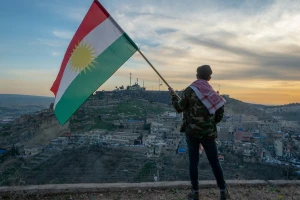
Over the past week, Syrian government forces overran SDF troops, capturing nearly the entire territory the Kurdish-led, quasi-autonomous administration had controlled for close to a decade. On Tuesday, both sides agreed to a ceasefire and a four-day deadline for the SDF to deliberate about ways to integrate its military and civilian institutions into the Damascus administration.
The transfer of some 7,000 terrorists would include most of the roughly 9,000 detainees still held in Syria, according to a U.S. military official who spoke to the New York Times (NYT).
He added that the transfer would be completed quickly, amid concerns about whether the government forces, some of whom were members of Islamist terror groups in the past, would be able or willing to take over the management of the prisons.
Aaron Zelin, a senior fellow at the Washington Institute, wrote on 𝕏 that the transfer “suggests they don’t think the situation is stable enough to keep them there with remnants of the YPG and/or Damascus not being able to secure yet + likely greater IS potential to try and breakout with [the] vacuum now.”
“The CENTCOM decision to remove high-profile third country national detainees was taken because (1) the SDF & Damascus have failed to coordinate the handover of detention facilities & (2) there's little confidence the current ceasefire will hold,” argued Charles Lister, a senior fellow at the Middle East Institute.
The announcement followed a lengthy post on 𝕏 by the White House Special Envoy to Syria, Tom Barrack, in which he urged the Kurds to integrate themselves with the administration in Damascus and noted that “the original purpose of the SDF as the primary anti-ISIS force on the ground has largely expired.”
Barrack stressed that “ensuring the security of prison facilities holding ISIS prisoners, currently guarded by the SDF” is one of the top priorities for the U.S. in Syria, along with facilitating talks with the government for the “peaceful integration of the SDF and the political inclusion of Syria’s Kurdish population.”
CENTCOM commander Adm. Brad Cooper said, “We are closely coordinating with regional partners, including the Iraqi government, and we sincerely appreciate their role in ensuring the enduring defeat of ISIS.”
“Facilitating the orderly and secure transfer of ISIS detainees is critical to preventing a breakout that would pose a direct threat to the United States and regional security,” Cooper added.
A U.S. official told Israel’s i24NEWS that Cooper arrived in the Middle East on Thursday to discuss the issue of the ISIS detainees as well as “efforts to stabilize the situation” in Syria.
Two senior Iraqi officials confirmed to the NYT that the transfer of the terrorists of various nationalities had already begun, adding that the U.S. would cover the cost of jailing and processing them for future trials.
The two Iraqi officials said they would receive prisoners from al-Shaddadi and at least two other jails in eastern Syria that had been under SDF control.
The SDF had claimed that over 1,000 prisoners escaped from al-Shaddadi, though the government said that it had recaptured 81 of around 150 escapees and continues searching for the others. A U.S. military official said as many as 200 might have escaped amid the clashes, according to the New York Times.
The Syrian government troops also took over the al-Hol detention camp this week, where tens of thousands of family members of the terrorists are being held.
You might also like to read this: