US probe links Gaza online funding campaign to alleged Hamas financing




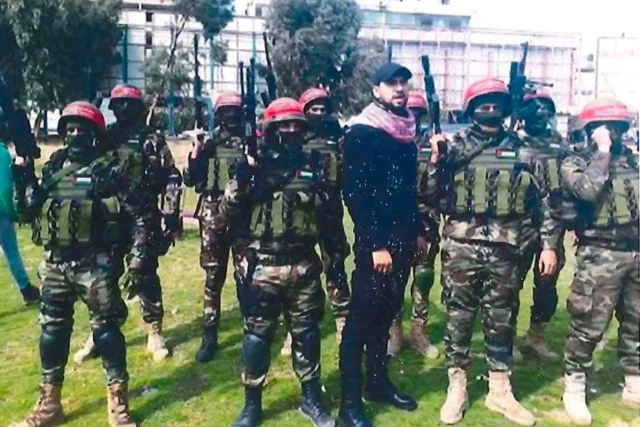
Three U.S. federal probes have revealed alleged links between online fundraising campaigns and the financing of terrorism, including through social media and cryptocurrencies.
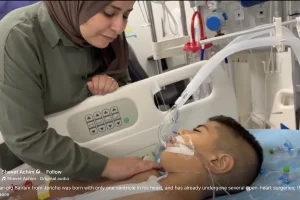
One case involves the Gazan woman Nieama al-Ghazzawi, who established a crowdfunding campaign on GoFundMe in January 2024 seeking donations to help reunite her family. “Rebuilding our lives: a journey from loss to hope,” she wrote below photos of a young family.
Al-Ghazzawi claimed that she and her two children had escaped Gaza while her husband remained there. She also said that their home and her husband’s burger stand had been destroyed during the war. “Your assistance means a lot to us. It will bring us back together,” she urged. The campaign circulating on local social media outlets secured hundreds of donations.
U.S. federal investigators are examining the campaign as part of a probe concerning Mahmoud Amin Ya’qub al-Muhtadi, who reportedly led a terrorist cell into Israel during the Oct. 7, 2023 attack before later moving to the United States.
A second investigation involves a New York-based anti-Zionist activist facing charges of sending funds to Palestinian Islamic Jihad (PIJ), an Iran-backed terrorist organization operating in Gaza.
The third probe involves a California-based man facing charges of using allegedly fraudulent charities to raise funds for Hamas.
The current investigations follow years of U.S. scrutiny of fundraising organizations accused of providing financial support to Hamas and other designated terrorist organizations.
In a 2008 landmark case, a federal court in Dallas convicted the Holy Land Foundation and five of its leaders of providing $12 million to Hamas.
Unlike larger NGOs, crowdfunding platforms allow individuals to launch campaigns and collect relatively small donations. While most campaigns are legitimate, experts have warned that such platforms can also be exploited.
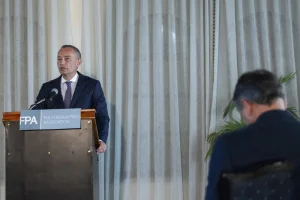
Hans-Jakob Schindler, senior director of the New York- and Berlin-based Counter Extremism Project, has experience examining crowdfunding campaigns linked to terrorism in Gaza and Afghanistan.
“You either pay [the ruling groups] or you don’t get access,” Schindler said. “The same as with all new technologies, it’s pretty naive. They always think they cannot be misused, and, ‘This is making the world a better place.’ So their internal controls are, as a general rule, super weak.”
According to Schindler, Hamas has multiple sources of income, including funding from Qatar and fees collected from smugglers bringing goods into Gaza.
“If you are not a big international organization, in my opinion, it needs to be really closely looked at precisely because of the controls that Israel has instilled on humanitarian operations,” Schindler said, adding, “You cannot just be an organization in Cologne or in New York and then begin operating in Gaza. How? How are you going to get access?”
The war in Gaza has generated widespread international sympathy for Palestinians, increasing attention on humanitarian fundraising campaigns.
In November 2024, 100 U.S. and Israeli victims of the Oct. 7 attack filed a multi-billion-dollar lawsuit against Binance Cryptocurrency Exchange, accusing the platform of facilitating funding for Hamas and its attacks on Israeli civilians.
You might also like to read this: