









Trump threatens to hit bridges and power plants as US continues strikes on Iran
With escalating rhetoric and increasing strikes, return to full-on conflict appears likely
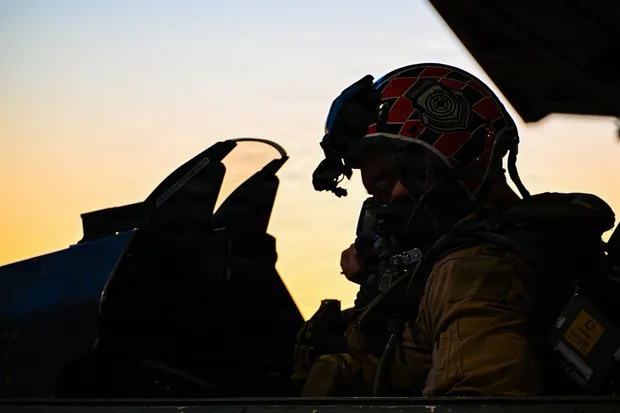
As the U.S. military continues strikes across Iran for the 12th consecutive day, President Donald Trump threatened to escalate the conflict by striking Iranian infrastructure.
In a post to his Truth Social account, President Trump threatened to bomb “one bridge or power plant” in Iran for every vessel targeted in the Strait of Hormuz.
“From this point forward, any time the Islamic Republic of Iran shoots at a ship in the Strait of Hormuz, whether it be by Missile, Rocket, Drone, or any other device or weapon, the United States will bomb and destroy ONE BRIDGE OR POWER PLANT, including those located next to, or in, the Capital City of Tehran. Thank you for your attention to this matter!” Trump posted to his Truth Social account Wednesday evening.
Shortly after that, the president also shared a screenshot from an article claiming that he had ordered CENTCOM to “open the gates of hell” on Iran, following the death of several U.S. soldiers in Iranian attacks.
Iranian Foreign Minister Abbas Araghchi responded to Trump’s threats with a post to social media, threatening Iranian retaliation for any U.S. escalation.
“Our defense doctrine is clear: eye for an eye,” Araghchi wrote. “Any aggression against Iran, including our infrastructure, will compel a powerful and decisive response.”
Araghchi also threatened any states that give aid or support to the U.S. in its actions, writing, “Those who contribute to such aggression, whatever the kind of support, will also be considered as legitimate targets.”
During the combined U.S.-Israeli military operations, Iran repeatedly threatened countries that allowed U.S. vessels and planes to use their territory for refueling or resupply.
President Trump said on Wednesday that the U.S. isn’t interested in making a deal with Iran at the moment and also repeated claims that Iran is eager to make a deal.
“They’re getting hit so hard, and they want to make a deal. But I say they’re not ready to make a deal. Because every time they make a deal they want to change it and everything,” Trump said, speaking at a rally in Georgia.
The president also hinted that an escalation in strikes could change Iran’s stance towards negotiations.
“They’re not ready. They’ll be ready very soon,” he said.
At the same time, according to reports in Hebrew media, the U.S. informed Israel it is increasing the deployment of heavy bombers to the region, in preparation for the possible escalation of military strikes.
The IDF remains on a higher level of alert amid the continued U.S. strikes, and the Iranian targeting of Israel’s neighbor, Jordan, in recent retaliatory attacks. According to Axios, newly appointed Mossad director Roman Gofman traveled to Washington for discussions regarding the conflict in Iran.
A report in the Wall Street Journal claimed that the U.S. has significantly increased its force presence in the area, including special forces, fighter squadrons, refueling planes and B-1 bombers. The U.S. reportedly used the B-1 bombers in a strike on Tuesday, the first use of the supersonic bomber since the April ceasefire declaration.
The bombers could also be used for strikes against infrastructure sites, as threatened by President Trump. However, strikes on Pickaxe Mountain, which Trump said the U.S. would be striking “very probably pretty soon,” would likely make use of the B-2 Spirit bomber, which is capable of carrying the larger bunker-buster ordinance necessary for targeting underground and hardened facilities.
Meanwhile, CENTCOM said its forces struck “Iranian military targets including maritime capabilities, missile and drone storage facilities, coastal surveillance sites, and air defense assets.”
Earlier tonight, U.S. military released this statement:
— Open Source Intel (@Osint613) July 23, 2026
"At 10:30 p.m. ET on July 22, U.S. Central Command (CENTCOM) forces completed another round of strikes against Iran for the 12th consecutive night.
U.S. forces struck Iranian military targets including maritime… pic.twitter.com/riUYgFaSSW
“The strikes further degrade Iran's ability to attack civilian mariners and commercial vessels,” CENTCOM said.
The military also denied the Islamic Revolutionary Guard Corps’ claim that the Strait of Hormuz is closed.
“Iran does not control the Strait of Hormuz,” CENTCOM said in a statement. “The international waterway remains open for transit regardless of IRGC threats and attacks. Commercial vessels continue to use the strait with U.S. military support. Since early May, American forces have helped more than 900 ships transit the strait.”
Meanwhile, Iran’s Yemen-based proxy, the Houthi rebels (also called Ansar Allah), claimed to have targeted two tankers carrying Saudi Arabian crude oil, the Encelia and the Layla, further raising the potential for escalation across the region.
"The Yemeni Armed Forces carried out a qualitative military operation targeting two Saudi oil tankers that violated the blockade imposed by the Armed Forces in the Red Sea," the group posted to its Telegram channel on Wednesday night.
The UK Trade Maritime Organisation (UKTMO) reported one vessel was hit by an unknown projectile, causing a fire onboard.
Saudi state news agency SPA reported the crew of the tanker is safe and that authorities are working to secure the vessel.
Iranian Parliament Speaker Mohammad Bagher Ghalibaf said on Wednesday that the U.S.-imposed blockade on Iran means that no one will be able to sell oil from the region.
“The equation of this war is clear: either all or none,” Ghalibaf wrote in a post to social media.
Popular article:
interview Easter message of resurrection hope amid war at Jerusalem's Garden Tomb
biblical commentary Let my people go: a Passover message for today
4 IDF soldiers killed, 2 wounded in fighting in southern Lebanon, as Israel eliminates dozens of Hezbollah terrorists

Receive latest news & updates
A message from All Israel News
Help us educate Christians on a daily basis about what is happening in Israel & the Middle East and why it matters.
For as little as $10, you can support ALL ISRAEL NEWS, a non-profit media organization that is supported by readers like you.
Latest articles:
Hamas openly threatens Israel with ‘more Oct 7 attacks’ as intelligence shows terror group is rearming
More than 1,300 antisemitic posts blame Israel, Jews for French riots – report
Thailand turns to Israeli anti-drone technology to counter growing battlefield threat
Israeli fighter jets flew to Iranian border in ‘power projection,’ deterrence exercise ahead of elections next week
Israel targets nuclear fusion leadership as AI drives soaring energy demand