Trump administration slaps new sanctions on ICC officials for targeting US, Israeli officials



The Trump administration on Tuesday imposed sanctions on the president of the International Criminal Court (ICC) and one of its senior trial lawyers, escalating its campaign against the Hague-based court over its investigations and arrest warrants involving American and Israeli officials.
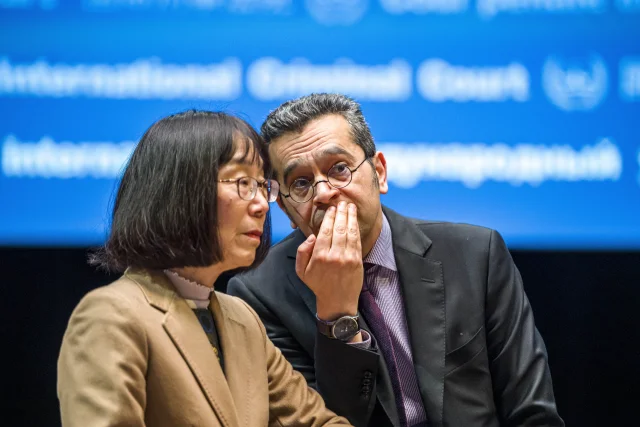
The State Department announced sanctions against ICC President Tomoko Akane, a Japanese national, and Abdoulaye Seye, a Senegalese national and senior trial lawyer at the court. The measures freeze any assets they hold in U.S. jurisdictions and restrict their access to the U.S. financial system.
“The Trump administration has been clear: the International Criminal Court is a corrupt and fatally politicized supranational court that has maliciously abused its authority and exceeded its mandate,” U.S. State Secretary Marco Rubio said in a statement. “We will not tolerate its assault on state sovereignty.”
The United States and Israel are not parties to the Rome Statute, the treaty that established the ICC. However, the court has asserted jurisdiction in certain circumstances involving nationals of non-member states and has pursued cases involving American and Israeli officials. It has also issued arrest warrants for Israeli Prime Minister Benjamin Netanyahu and former Defense Minister Yoav Gallant over alleged war crimes and crimes against humanity related to the conflict in Gaza.
Both Israel and the United States reject the court’s jurisdiction and the allegations against Israeli officials.
Netanyahu welcomed the latest U.S. sanctions, writing on 𝕏 that the ICC had become “a kangaroo court” and praising Rubio for what he described as his “determined efforts against the ICC’s illegitimate overreach.”
The U.S. administration has been pursuing measures against the ICC since U.S. President Donald Trump returned to office in January 2025, arguing that the court threatens U.S. sovereignty and could expose American personnel to prosecution. In July, the Justice Department formally rejected the ICC's jurisdiction over U.S. nationals, saying Washington had never consented to the court's authority.
The ICC condemned the latest sanctions, calling them “a flagrant attack against the independence of an impartial judicial institution.”
The court said that, following the latest designations, nine of its 18 judges, both deputy prosecutors, its former prosecutor and one staff member have been sanctioned by the United States. It warned that measures targeting judges, prosecutors and staff “undermine the rule of law” and could affect the ability of victims of alleged international crimes to seek justice.
The ICC nevertheless said it remained “undeterred” and would continue operating independently and in accordance with the Rome Statute.
The sanctions are the latest step in an escalating U.S. campaign against the ICC. In July, Rubio said five countries had announced plans to withdraw from the court following the administration's diplomatic campaign. Those countries are Chad, Venezuela, Burkina Faso, Mali and Niger. The withdrawals do not take effect immediately under the Rome Statute and require a formal notification process.
The Trump administration has said it intends to continue pressing other countries to reconsider their membership in the ICC, while the court and its supporters maintain that the U.S. measures threaten the independence of international judicial institutions.
You might also like to read this: