The enemy within the cockpit: Flydubai attack raises new US security concerns



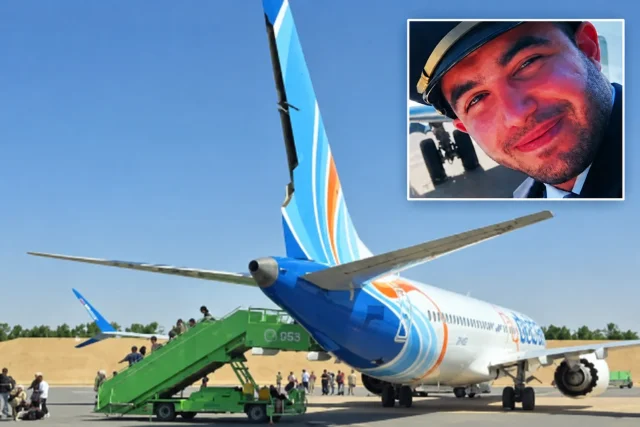
The attempted hijacking of a Flydubai passenger jet is now raising fresh homeland security questions in the United States. The Trump administration is examining both the potential terror connection and whether current American aviation safeguards are enough to prevent a similar insider attack in the U.S.
For now, the Department of Homeland Security (DHS) says there is no known related threat to the United States. “We have no credible threats to us right now,” Homeland Security Secretary Markwayne Mullin said after the attack, while saying U.S. aviation officials are reviewing existing procedures.
That review comes as U.S. President Donald Trump says he personally believes Iran may have been behind the attempted attack. Asked on Monday night whether he believes Tehran was responsible, Trump responded, “I do. I personally do.”
But Vice President JD Vance is urging more caution. Vance said on Monday that U.S. intelligence officials are still examining the possibility of Iranian involvement and that he has not seen conclusive evidence tying Tehran to the attack. “I wouldn’t say I’ve seen anything conclusive just yet,” Vance said. He said he would defer to CIA Director John Ratcliffe and other intelligence officials who are conducting the review.
That combination – no specific threat to America, an ongoing intelligence investigation and questions about whether a foreign government was involved – is now shaping the U.S. response.
At this point, DHS, the Transportation Department, FAA and TSA have not announced any new restrictions directly tied to the Flydubai incident. There have been no new requirements involving pilot screening, cockpit access or security procedures. In addition, there have been no Flydubai-related changes to commercial flights between the United States and Israel. Right now, federal officials are relying on layers of aviation security that are already in place while they monitor what investigators overseas uncover.
Most Americans see the protections involving the screening of passengers at airport checkpoints, but TSA already conducts security vetting of aviation workers who have access to sensitive airport areas. That includes terrorism-related screening and criminal-background monitoring. There is consistent monitoring of insider threats. Also, pilots face another layer of scrutiny through the FAA’s Pilot Records Database, which allows airlines to review training, employment, safety and disciplinary information before hiring a pilot.
It should be noted that after the 9/11 attack, America dramatically strengthened physical protection of the cockpit itself. Now, commercial aircraft have reinforced cockpit doors that are designed to prevent hijackers from forcing their way inside. The FAA has also required secondary physical barriers on many of the newly manufactured commercial aircraft to provide another layer of protection when cockpit doors are opened.
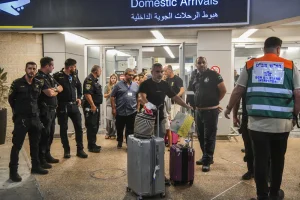
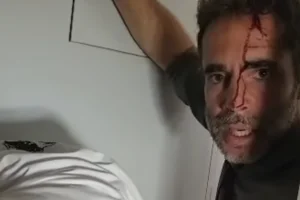
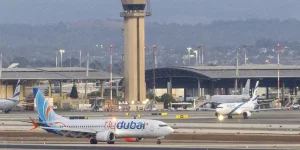
But the Flydubai incident exposed a different problem: the alleged attacker was already inside. Authorities say Flydubai co-pilot Hamam al-Hammami attacked the captain with an emergency crash axe while Flight 1073 was traveling from Dubai toward Tel Aviv.
A reinforced cockpit door can keep a terrorist passenger out, but it cannot stop a properly credentialed pilot who has already been cleared to sit behind it. This raises questions about international intelligence-sharing.
For example, if one government has information suggesting a pilot poses a terrorism threat, how quickly does that information reach another government? Furthermore, does it reach the airline considering hiring that pilot? And how fast exactly? Time is of the essence.
On the congressional front, Congress is also beginning to weigh in on the Flydubai attack discussion. On Monday, Democratic Representative Josh Gottheimer (NJ) joined Republican Congressman Michael McCaul (TX) and Congressman Don Bacon (NE) in introducing a bipartisan House resolution honoring Captain Smit Machchhar, along with the crew and passengers who helped stop the attack.
The resolution condemns what happened aboard Flight 1073 as “an act of terrorism” and an attack on international civil aviation. It also calls for a full and expedited investigation by Saudi Arabia and the United Arab Emirates – and specifically says the United States and Israel should be kept fully informed.
Congressman Gottheimer has also publicly praised the people who intervened aboard the flight, calling their actions “nothing short of heroic.”
“Israeli passengers rushed the cockpit and stopped the attack, saving almost 200 lives,” Gottheimer said. “Thank God everyone is safe, and I’m praying for the captain’s full recovery. Terror will never win.”
Florida Democratic Representative Jared Moskowitz called the episode a “clear act of terrorism” and praised the passengers who stepped in. Sen. Jacky Rosen (NV) also thanked the passengers for helping “avert a tragedy” and praised Saudi Arabia for its handling of the emergency landing.
Four Americans were aboard the flight, adding another direct U.S. connection to an incident already being closely watched by American security officials.
You might also like to read this: