Southern Israel’s Tkuma region grows by 10% as residents return, new families arrive




The Tkuma region of southern Israel has grown to nearly 66,000 residents, about 5,000 more than before the Oct. 7, 2023, Hamas massacre, according to a report published Thursday by the Tkuma Directorate.
The population increase represents growth of nearly 10% – about 2.5 times the national average – as communities along the Gaza border continue to recover from the attack and rebuild their homes, schools, businesses and infrastructure. More than 90% of residents who evacuated in the immediate aftermath of the attack have returned, while new residents have also moved to the region.
The Tkuma region includes communities near the Gaza Strip, including Sderot, Eshkol, Sha'ar HaNegev, Sdot Negev and Chof. Most residents who survived the Oct. 7 massacre were forced to evacuate to other parts of Israel for several months or longer.
Sderot, the largest community in the region and for years a frequent target of rocket fire from Gaza, has now grown to a population of 40,000. However, the Tkuma Directorate has set an even more ambitious goal: doubling the region’s population by 2033.
That effort includes rebuilding communities that were among the hardest hit on Oct. 7, including Kibbutz Be’eri.
Be’eri has been allocated a reconstruction budget of NIS 473 million ($155 million), with the first returning residents scheduled to begin arriving in December. More families are expected to return through July 2027.
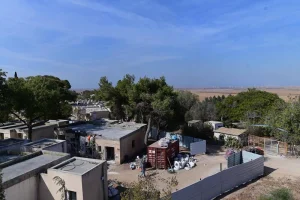
Hundreds of housing units are currently being renovated or constructed in the community, which suffered extensive damage during the attack and subsequent rocket barrages during the war.
Nearby Kibbutz Nir Oz has a reconstruction budget of NIS 232 million ($76 million). Several new housing units have already been completed, with more in the pipeline. Residents are expected to begin returning next year, while some new residents have also expressed interest in purchasing housing units there.
Roughly NIS 57 million ($18.7 million) has been budgeted for the reconstruction of Holit, where more than 100 residential and public buildings require renovation. Water, sewage and electricity infrastructure is also being repaired after the community suffered extensive damage during the war.
In Kfar Aza, another community severely affected on October 7, the reconstruction budget stands at roughly NIS 211 million ($69.1 million). The funds will go toward renovating around 280 buildings and constructing 98 new housing units.
Overall, the government’s budget for rebuilding the Tkuma region stands at around NIS 17 billion ($5.6 billion). Of that amount, NIS 11.6 billion ($3.8 billion) has already been committed to various projects, while another NIS 2.8 billion (approximately $918 million) was budgeted in 2026. An additional NIS 3.18 billion ($1.04 billion) has been allocated for reconstruction and the return of residents, including temporary housing.
Additional funding has been allocated for security, education and healthcare, including the construction of new schools, daycare facilities and clinics, as well as security infrastructure such as fences, cameras, protective systems and defense teams.
Jewish and Christian supporters of Israel from around the world have also donated significant amounts toward rebuilding projects in the region.
"Our mission is to create the conditions that will allow the region to continue rehabilitating, growing, and attracting new residents," said Tkuma Directorate head Aviad Friedman.
You might also like to read this: