Saudi textbooks show 'significant' progress on antisemitism, tolerance & religious minorities
Study finds greater emphasis on moderation, critical thinking, tolerance



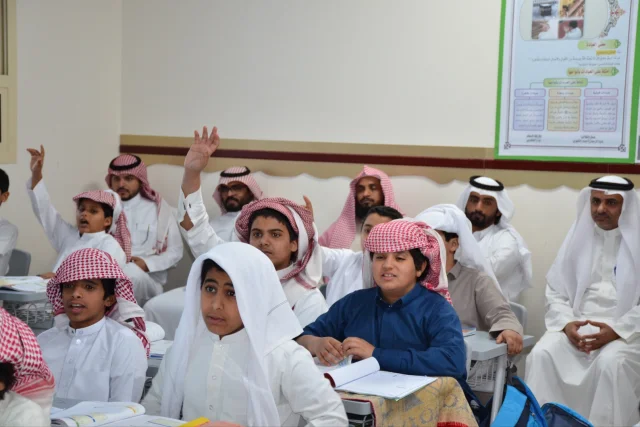
A new report from the Institute for Monitoring Peace and Cultural Tolerance in School Education (IMPACT-se) has found significant improvements in Saudi Arabia’s school curriculum, including the removal of previously documented antisemitic content and more positive portrayals of religious minorities, women and other cultures.
The report, published this week, examined 136 textbooks used in Saudi schools and found that the changes broadly align with the modernization agenda of Crown Prince Mohammed bin Salman’s Vision 2030 initiative.
The study found greater emphasis on moderation, critical thinking, tolerance and peaceful relations between communities, while also identifying areas where the curriculum continues to fall short.
The latest IMPACT-se study found that the Saudi textbooks it reviewed no longer contain the antisemitic content documented in earlier editions. Islamic instruction textbooks now include references to historical periods when Muslims and non-Muslims lived together peacefully and worked together for mutual benefit.
Historical narratives that portrayed Jews, Shi’ite Muslims and others as eternal enemies of Sunni Muslims in previous editions have also been altered or removed, according to the report.
This includes traditional teachings that portrayed friendly relations between Sunni Muslims and Jews or Christians as impossible because Jews and Christians were considered enemies of God.
The treatment of “jihad” has also been significantly toned down in the latest textbooks, according to the report. At the same time, some textbooks place greater emphasis on obedience to kings and rulers in carrying out jihad.
The textbooks continue to strongly reject extremism and violence, specifically identifying groups including ISIS, al-Qaeda, Hezbollah, the Houthis and the Muslim Brotherhood as purveyors of terrorism and extremism.
Despite the progress, the report identified several areas of concern. History textbooks intended to teach students about World War II are completely silent about the Holocaust, according to the study.
The report also found some positive changes in the way Israel is discussed, including the replacement of descriptions of Israel as “the Zionist enemy” with “the Israeli occupation.”
At the same time, the textbooks use deeply critical and hostile language to describe Iran’s ruling regime and its terrorist proxy forces in Lebanon, Iraq and Yemen. The textbooks also refer to the body of water commonly known internationally as the “Persian Gulf” as “The Arabian Gulf.”
The report noted additional changes in the portrayal of women, who are increasingly described as partners in Saudi Arabia’s social and economic development. At the same time, many traditional cultural tropes and stereotypes that demeaned women’s roles in society have been removed.
IMPACT-se CEO Marcus Sheff said that “the continuous reforms demonstrate an encouraging path forward,” noting that the curriculum has “never been more positive in its portrayal of religious minorities or more encouraging of peace and tolerance.”
You might also like to read this: