Private companies fielding surveillance drones, raising privacy concerns




Israeli companies and municipalities are increasingly turning to autonomous surveillance drones to provide rapid aerial responses to emergencies, but the technology is raising concerns among privacy advocates about how it could be used to monitor people in public spaces.
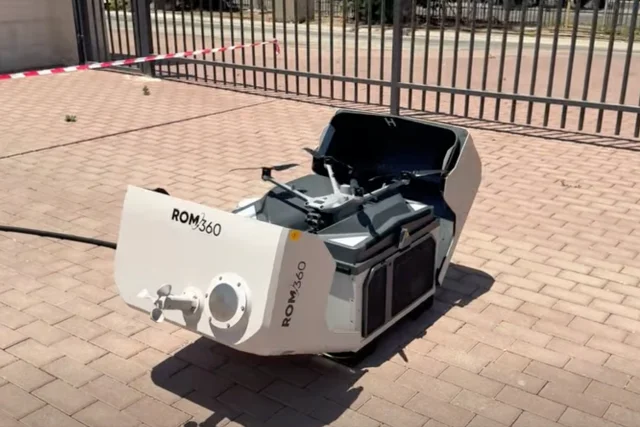
The Israeli company Cando is offering its ROM360 program, which allows private companies and municipalities to launch a surveillance drone within 15 seconds of an emergency. The system is designed to provide rescuers and law enforcement with near-real-time information so they can assess situations and respond more effectively.
Ghil Harly, VP of Sales at Cando and the ROM360 initiative, said the company wants to give first responders and security teams the ability to “see more, understand faster and respond sooner.”
The ROM360 kits have already been deployed at several strategic sites across Israel, as well as in a growing number of municipalities. The technology is designed to assist in responding to street crime, natural disasters, terrorist attacks, and accidents.
However, suggestions that the drones could also be used for routine patrolling traditionally carried out by police on the ground have prompted concerns that they could eventually be used to monitor lawful street protests or the everyday activities of private citizens.
Industry leaders acknowledge that, like any surveillance technology, autonomous drones have the potential to be abused. However, they argue that the systems are intended to improve public safety and benefit ordinary citizens rather than threaten their privacy.
Yoely Or, Founder and CEO of Cando, recently explained in an article for the Israel Hayom media portal why autonomous drones could become an important tool for emergency responders:
"As emergency events unfold simultaneously across multiple locations, the traditional 'one pilot per drone' model breaks down. During an emergency, rescue services and local authorities need eyes on the ground within seconds."
He pointed to the growing missile threat from Iran as one example of why municipalities need rapid access to aerial intelligence.
"In a world where the missile threat from Iran is becoming tangible, the question is not only whether the interceptors will work, but what happens in the local municipality at the moment of impact. The ability to launch an autonomous drone array within just 15 seconds from urban docking stations provides decision-makers with a critical live situational picture, even before security forces have started their vehicles," he said.
Or said the technology could help responders quickly assess damage and determine where resources are most urgently needed.
"This means eliminating the 'fog of urban war.' The drone reaches the site of impact or fire before rescue forces have even set out, streaming information that allows for understanding of the damage intensity and resource prioritization," he explained.
He also described the drones as more than simply remotely operated cameras, noting that artificial intelligence can analyze information while the drone is in flight.
"When a DFR drone operates autonomously, it transforms from a flying camera into a smart edge sensor connected to Artificial Intelligence. It is capable of performing advanced analytics during flight, analyzing findings, and transmitting a dynamic situational picture – all without endangering operators under the threat of missiles or collapsing buildings," Or said.
He pointed to Israel's existing efforts to integrate drones into civilian and security operations as evidence of the technology's potential.
“Projects like Israel's 'National Drone Initiative' have already proven the feasibility of delivering medical equipment and securing critical infrastructure (such as refineries and ports) via a managed aerial network," Or stressed.
He said local authorities investing in aerial surveillance systems are also finding that autonomous drones can provide a less expensive alternative to some traditional security measures.
"Local authorities currently investing in a 'civilian aerial dome' to secure border-seam areas are discovering that the autonomous drone is, in fact, a budgetary and operational force multiplier. It eliminates the need for expensive vehicle patrols and provides a perimeter response that physical fences can never offer," he stressed.
At the same time, Or acknowledged that the growing use of autonomous surveillance technology will require regulation, particularly to address privacy concerns and other potential risks.
He concluded by arguing that Israel will need to strike a balance among technological innovation, public safety, and individual privacy.
“The skies above Israel's cities must become a managed, digital space, not only for technological innovation but also for the preservation of security and human life," Or said.
You might also like to read this: