








Netanyahu warned by UAE leader about Hamas threat before Oct 7 - report
UAE president warned Netanyahu of coming 'earthquake,' based on threats by Yahya Sinwar
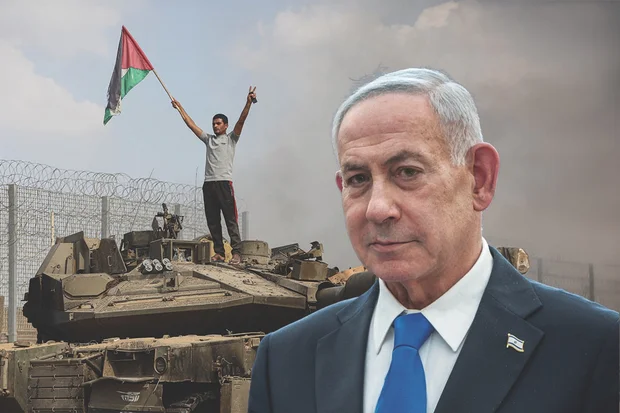
Prime Minister Benjamin Netanyahu received an explicit warning about a planned military operation by Hamas in Gaza from United Arab Emirates President Mohammed bin Zayed (MBZ) over one week before the Oct. 7 attacks, according to a report in Ha'aretz.
The report showed that about a week and a half before the Oct. 7, 2023, Hamas attacks, a representative from the UAE embassy came to Netanyahu’s office with a special device enabling a secure phone call between the two leaders.
In the 45-minute conversation, bin Zayed warned that Hamas’ Gaza leader, Yahya Sinwar, was planning a major attack against Israel, which would not only lead to bloodshed, but also shake the entire region, potentially harming the Abraham Accords.
The Ha'aretz report is based on “extensive research” for a book, “Hostages: 843 Days of Abandonment,” involving “dozens of sources in Israel and worldwide, including very senior officials, as well as recordings, internal documents and correspondence.”
The phone call came about after the collapse of secret negotiations between Netanyahu’s office and Hamas leaders in Gaza, similar to the reported contacts in 2014, in which the prime minister conducted secret talks with Hamas without the knowledge of security officials.
The secret talks in 2023 began earlier in the year, as Netanyahu tried to negotiate a hudna (an Arabic word for a temporary truce) and set conditions for a long-term arrangement for the Gaza Strip.
As in the 2014 talks, Hamas chose Ghazi Hamad to represent its interests. Hamad had already negotiated with Israelis, and he is also fluent in Hebrew.
A senior Fatah official, also fluent in Hebrew, whom Ha'aretz referred to as 'Coal Eyes,' was also brought in as a go-between because he is known to both Hamas and Shin Bet, to avoid giving the impression of a direct connection between Hamas and Israel.
The talks were reportedly going well, reaching a tentative agreement, until Netanyahu delayed bringing the matter before the ministerial committee, which would need to approve it.
A Shin Bet source who spoke with Ha'aretz said Netanyahu feared the reaction of coalition partners.
Hamas leader Sinwar, who was simultaneously conducting talks with Hezbollah and Iran, attempting to convince them to join the upcoming invasion, became upset at Netanyahu’s reluctance to move forward with the deal, and cut off contact with the negotiating team.
“He simply vanished from our radar, evaporated,” a senior Shin Bet official told Ha'aretz.
However, in September 2023, Sinwar contacted 'Coal Eyes' and told him to pass a message to the Israeli government.
“Tell the Israelis that if they don't make progress, I'm preparing a huge surprise for them,” Sinwar was reported as saying. “Tell them to expect a 'zilzal' [earthquake].”
This comment shook 'Coal Eyes', who suspected that Sinwar was threatening a military operation. He contacted a Palestinian official who had since moved to the UAE and was serving as an advisor to bin Zayed.
“'Coal Eyes' was agitated,” the advisor told Ha'aretz. “It was clear to him that the operation Sinwar was talking about could affect the entire Middle East, but he was afraid to report the information directly to the Shin Bet. On the other hand, he was even more afraid that if he didn't update the Shin Bet, the Israelis might accuse him of collaborating with Sinwar. He genuinely feared for his life. Therefore, he decided to convey the message to bin Zayed.”
The advisor told bin Zayed that if Sinwar used the word “zilzal,” he meant war.
After several days, Sinwar contacted 'Coal Eyes' to ask whether the message had been delivered. When the Fatah official admitted that he had not transmitted the statement, Sinwar repeated his warning.
“Convey a message to them that I am preparing the mother of all surprises,” Sinwar reportedly said, again using the word zilzal. “A terrifying operation. Something extraordinary.”
“Please convey to the Israelis what I am saying word for word,” he demanded.
'Coal Eyes' contacted bin Zayed’s advisor and relayed Sinwar’s message.
“I asked him for all the details," the advisor recalled, "including Sinwar's body language, his precise tone of voice, and the context in which the words were spoken, especially regarding the 'zilzal' warning.”
“I suggested he leave the Gaza Strip quickly and meet me at my home for a private conversation. By the end of the meeting, I understood that neither 'Coal Eyes' nor I had erred in understanding the message: Sinwar intended to go to war.”
Convinced of the earnestness of the matter, bin Zayed determined to contact Netanyahu directly, while 'Coal Eyes' and the advisor conveyed the warning to the Shin Bet.
Shin Bet head Ronen Bar arranged a call with Netanyahu through the military secretary Avi Gil. During the call, Bar told the prime minister about the “earthquake” threat, after which they decided to hold a meeting with the security agencies.
However, the warning was not clear and the security agencies were undecided on how to proceed.
Seeing a lack of action from Israel, the UAE president arranged a phone call with Netanyahu a few days later. During the call, bin Zayed warned that Sinwar was planning a major operation, intended to destabilize the region.
However, after hearing bin Zayed’s message, Netanyahu reacted calmly, sharing his assessment that Hamas was planning to escalate affairs in Judea and Samaria, and that the IDF was well prepared to counter that threat.
The UAE leader later told then CIA Director William J. Burns that he had tried to warn Netanyahu that “something there is about to explode.”
However, despite the Shin Bet having received a separate warning from 'Coal Eyes', the agency was unaware of bin Zayed’s call to Netanyahu, as were the IDF and Mossad.
The Prime Minister's Office denied the Ha'aretz report, calling it “a complete lie. Prime Minister Netanyahu did not speak with the president of the United Arab Emirates during the period in question and did not receive any warning from him.”
A similar call, around the same time, came from Egyptian intelligence chief, Gen. Abbas Kamel, who warned the prime minister’s office that Hamas was about to launch “something unusual, a terrifying operation.”
Ynet correspondent Smadar Perry published details about the conversation in the days after the Oct. 7 attacks. According to that report, Netanyahu told Kamel a similar message, “In Gaza, we are in the picture, we are in control. Our problem is with the West Bank, and that's where we are also diverting forces.”
At that time, Netanyahu denied the reported conversation; however, an Egyptian intelligence source affirmed that the conversation did take place.
After the Ha'aretz story was published, former Prime Minister Naftali Bennett posted on 𝕏, claiming the report as true.
“The report this morning stating that Netanyahu was warned ten days before the October 7 massacre about Sinwar's intentions - true,” Bennett wrote.
“Netanyahu bears personal and direct responsibility for the failure that led to the deaths of thousands of Israelis on his watch,” Bennet added. “His ignoring of the warnings is criminal negligence, and therefore he is doing everything to prevent the establishment of a state commission of inquiry that will expose the truth.”
Prime Minister hopeful and former IDF Chief of Staff Gadi Eisenkot also slammed Netanyahu following the report.
“More and more signs indicate: Netanyahu led Israel blindly into the October 7 debacle,” Eisenkot wrote to his 𝕏 account. “Netanyahu received dozens of warnings before October 7 and ignored them all. He is unfit.”
Popular article:
interview Easter message of resurrection hope amid war at Jerusalem's Garden Tomb

biblical commentary Let my people go: a Passover message for today
4 IDF soldiers killed, 2 wounded in fighting in southern Lebanon, as Israel eliminates dozens of Hezbollah terrorists

Receive latest news & updates
A message from All Israel News
Help us educate Christians on a daily basis about what is happening in Israel & the Middle East and why it matters.
For as little as $10, you can support ALL ISRAEL NEWS, a non-profit media organization that is supported by readers like you.
Latest articles:

North American Jewish organizations to recruit 100 professionals to combat antisemitism
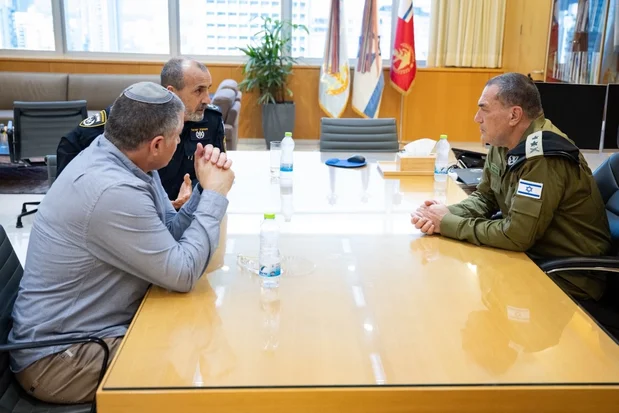
‘No need’ for pre-election Iran strike, IDF chief says as gov’t, opposition trade blame for potential escalation – report
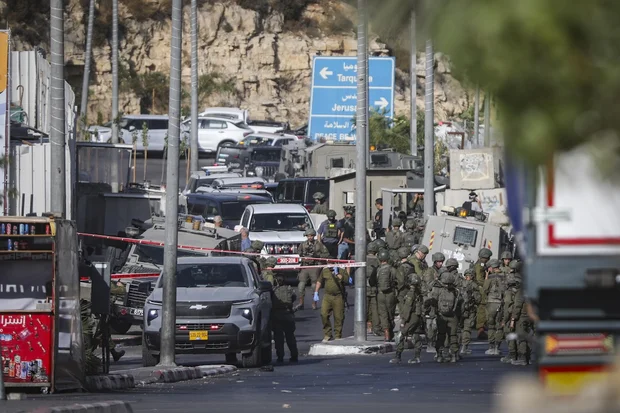
terror attack 2 Israeli soldiers killed, 2 terrorists eliminated in Hebron shooting; IDF says much larger attack was prevented
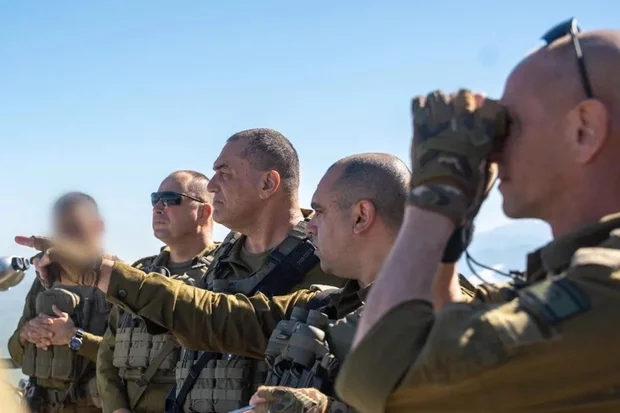
analysis A people dwelling securely? Israel’s strategic standing, 3 years after Oct 7

Hamas on wheels: What I found in Dearborn reveals a troubling history and a battle over Israel