Jerusalem hospital reports success with new treatment for recurrent brain tumors





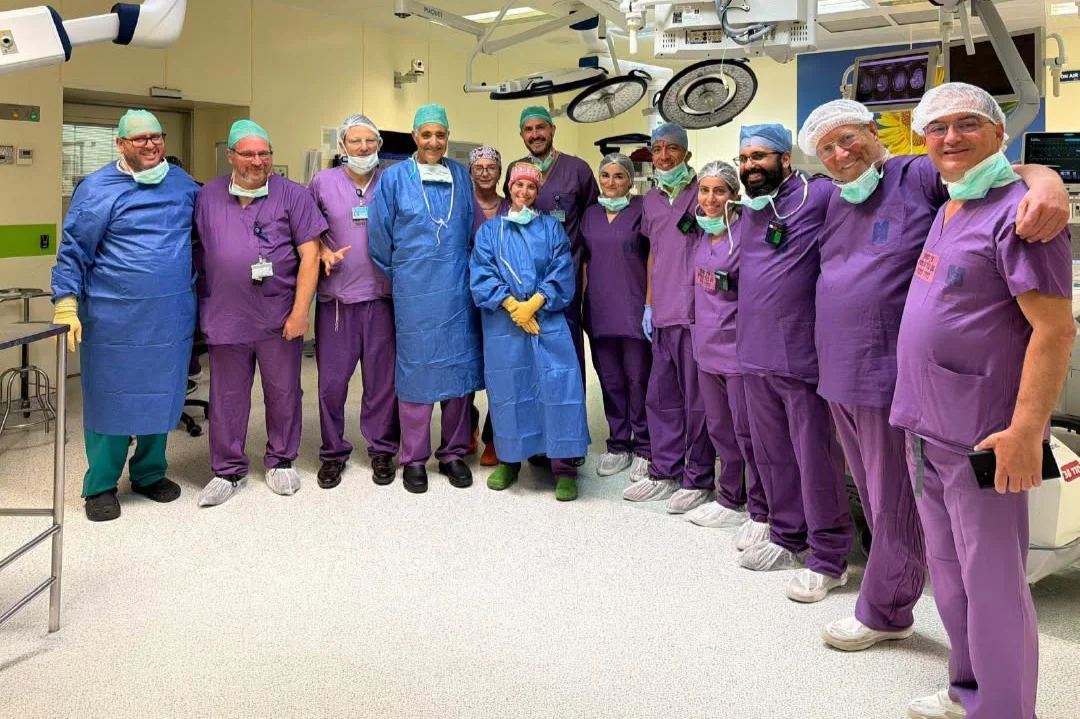
Hadassah-University Medical Center in Jerusalem’s Ein Kerem neighborhood recently announced success in applying a new treatment for recurrent, aggressive brain tumors using Alpha DaRT, an Israeli-developed radiation technology invented by the late Professor Itzhak Kelson, a former chairman of the Physics Department at Tel Aviv University.
The treatment was developed in collaboration with the Sharett Institute of Oncology and AlphaTAU. It uses highly bio-efficient alpha particles to deliver concentrated radiation to the tumor while minimizing damage to surrounding brain tissue.
The radiation sources are placed near the brain tumor from two different vectors, increasing the likelihood that the tumor will be adequately covered. Preclinical studies showed that the method may also stimulate the body’s natural immune response in other parts of the brain.
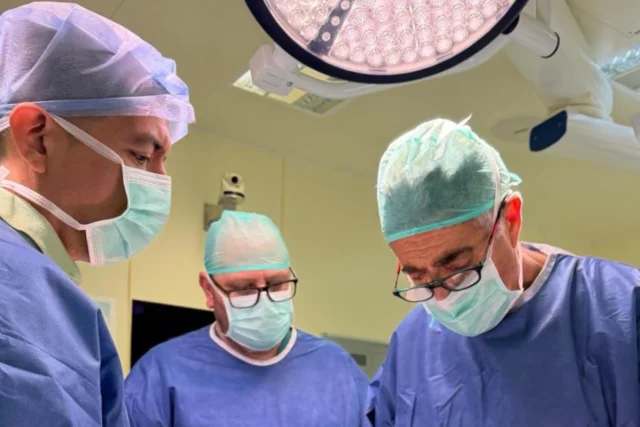
"One of the great advantages of the technology is that it integrates naturally with the neurosurgical navigation systems we use every day," said Prof. Yigal Shoshan, director of the Neurosurgery, Oncology, and Stereotactic Radiosurgery Unit at Hadassah. "The same system that allows us to perform brain biopsies with millimeter accuracy also allows us to insert the alpha sources into the center of the tumor with similar precision.”
“Adapting the technology to existing navigation systems has been a key part of the development we have carried out in recent years,” Shoshan continued. “After taking a sample from the tumor to confirm active disease, we used the same system to precisely insert the alpha sources into the tumor. We thus performed local, precise, minimally invasive treatment, without the need for extensive brain surgery."
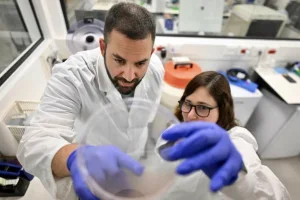
The procedure performed at Hadassah marks not only the first use of the treatment in Israel, but also the culmination of years of research. In collaboration with AlphaTAU, the team adapted the technology for treating brain tumors through laboratory and preclinical studies, including work with a large-animal model, the development of specialized applicators, their integration into the neurosurgical navigation system, and extensive testing using operating-room models.
"Every step was designed to ensure that the transition to clinical research was carried out with the highest level of accuracy and safety. Seeing the technology reach a patient in Israel for the first time today is an exciting moment for everyone who has been part of this journey," Shoshan said.
Prof. Aron Popovtzer, director of the Sharett Institute of Oncology, explained, "Patients with recurrent disease currently have very limited treatment options,” and added “Therefore, any innovative technology that can be tested in a controlled clinical study is of great importance. A combination of research, clinical experience, and multidisciplinary collaboration is the only way to advance new treatments for these patients."
Hospitals in Israel diagnose an estimated 150 to 250 new cases of glioblastoma each year. Even when treated with surgery, radiation and chemotherapy, the disease has a high rate of recurrence. The five-year mortality rate is approximately 90%.
The new treatments developed at Hadassah Ein Karem have already produced promising results.
Shoshan said, "The current study focuses on recurrent glioblastoma, but we are already preparing to expand the clinical program to patients with targeted brain metastases, especially in cases where stereotactic surgery or radiosurgery has not achieved control of the disease.”
“We believe that the ability to inject alpha sources directly into the tumor focus and provide accurate, bio-efficient local radiation makes the technology particularly suitable for this indication as well.”
"We are an Israeli company that currently operates in medical centers around the world, but our hearts remain here,” added AlphaTAU CEO Uzi Sofer.
“For us, it is especially significant that technology developed in Israel also reaches patients in Israel. This is not just a scientific or business success. It is also a Zionist mission. It is important to us that the innovation that was born here will also be available to patients in Israel.”
Support our independent, on-the-ground reporting from Israel. Become a $5/month Ally.
You might also like to read this: