Israel’s UNRWA raid looks tough, but does it miss the real fight?
.jpg "Maayan Hoffman")




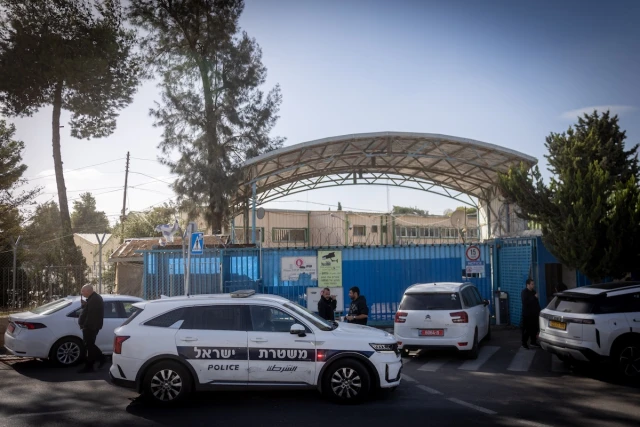
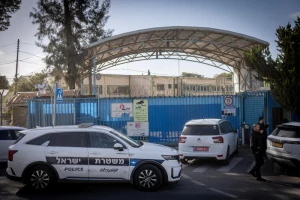
Israel’s raid on the UNRWA facility in Ma'alot Dafna as part of a "debt-collection procedure" is not the move Israel needs right now. It looks like a show of force but falls short of the strength Israel needs to demonstrate now.
At a moment when Israel must confront UNRWA’s systemic failures, the country should be cracking down on the agency’s operations across the region and shaping a plan to ensure that money from people of goodwill is invested in rebuilding Gaza with a better long-term vision, a vision focused on ending the Gazans’ refugee status and helping them build sustainable lives.
“We want to make sure that this time, they actually build for themselves, rather than for the purpose of destroying the Jewish state,” said Einat Wilf, head of the newly founded Oz Party and a well-known Zionist author. “Refugeehood and the right of return are the fueling pillars of the ideology of destroying the Jewish state. Only by ending the fuel to that ideology do we even begin to have a prospect of anything positive.”
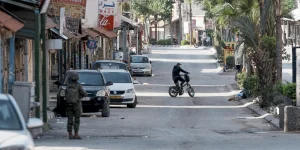
On Monday, Israeli authorities raided the UNRWA facility, taking down the UN flag and replacing it with an Israeli one, according to UNRWA Commissioner-General Philippe Lazzarini. He described the move as illegal and a “blatant disregard" for Israel’s obligations as a UN member state.
Lazzarini said Israeli police and Jerusalem municipal officials entered the compound with “trucks and forklifts,” seizing information technology equipment, furniture and other property. A spokesman for the Jerusalem Municipality was quoted as saying the operation was a “standard procedure” used against those who do not pay property tax after repeated reminders. He said the UN had accumulated a property tax debt of approximately NIS 11 million.
The UN argued that Israel, as a party to the Convention on the Privileges and Immunities of the UN, must uphold the UN’s immunity from searches and seizures of its assets.
However, Shosh Bedrosian, a spokesperson for Israeli Prime Minister Benjamin Netanyahu, said the raid was carried out with the understanding that “UNRWA has proven its enormous failures, and it’s time for it to be dismantled.”
UNRWA educates around 500,000 Palestinian students, helps provide food to nearly 2 million people and employs thousands of medical professionals in five locations across the Middle East, including Gaza and the West Bank. Israel has long argued that UNRWA perpetuates a false refugee narrative and that it educates Palestinians against Jews and Israel.
Since October 7, those concerns have intensified.
Israel has said that some UNRWA employees participated in the October 7 attack and claimed that more than 10% of the agency’s staff in Gaza have ties to terrorist factions. Last year, the IDF revealed a Hamas data center housed in a tunnel directly under UNRWA’s Gaza headquarters. Freed hostages have also said they were held in UNRWA schools or other facilities.
The raid occurred more than a year after the Knesset passed two laws banning UNRWA from operating within Israeli territory and prohibiting Israeli officials from contact with the agency. Although these laws were meant to take effect in January 2025, some UNRWA operations, including certain schools, are still functioning. A security team was working out of the UNRWA headquarters in Ma'alot Dafna, according to Knesset Member Yulia Malinovsky.
“We’ve been lazy, blind and stupid,” Wilf said of the government, which has justified UNRWA’s continued education services, despite that “they’re merely educating the next generation of our butchers.”
Wilf explained that Israel did not need new legislation to stop cooperating with UNRWA.
“It could have been a simple government decision announcing that this voluntary cooperation is over,” she told ALL ISRAEL NEWS. “Because the government kept dragging its feet, the members of Knesset, in a remarkable moment, actually did their job and realized that in Israel's parliamentary system, they are more powerful than the government, and that they can force the government's hands. And this is how the law ultimately went through.”
Wilf argued that the government continues to look the other way, comparing its dependence on UNRWA to an addiction. She said the government failed to fully implement the law because some legal interpretations allegedly prevented it from taking complete control of the Ma'alot Dafna building and from halting the supply of water and electricity to UNRWA facilities in Jerusalem.
“The law has not been applied 100% yet,” MK Dan Illouz, who co-wrote the laws, told ALL ISRAEL NEWS. “That’s why [we] established a caucus to oversee the application of the law. We are at about 95%, which is great. But we still need to close the final gaps.”
Malinovsky has also been deeply involved. She told AIN that she pushed the government to update the law to make the next steps more straightforward. When the government took too long, she adapted the bill herself and resubmitted it. Two weeks ago, it passed a first reading, with the second and third readings expected in the coming weeks.
If the bill passes, she said, UNRWA will not be operating in Israel at all. However, UNRWA will continue to function in Gaza and the West Bank. On Friday, the UN General Assembly voted to extend UNRWA’s mandate until June 30, 2029.
Wilf said even the new legislation falls short of the actions the government should take.
For years, she explained, Israel allowed Qatar to fund Hamas in Gaza, enabling the terrorist organization to build hundreds of kilometers of tunnels and stockpile weapons used against Israel, including on October 7.
Allowing money to flow into Gaza to support UNRWA is no different, she argued. While Israel does not fund the agency, dozens of international NGOs and foreign governments continue to sustain it.
“There is this bizarre notion that we can buy quiet from the Palestinians,” Wilf said. “It's something that, in my view, shows a deep disrespect for the Palestinian ideology. Because, to their credit, they have repeatedly, in each and every way, made it clear to us what their intentions are, what they want to do, and we have convinced ourselves that if we pump billions to them, that will somehow get us quiet.”
She continued, “They're telling you that their intention is to butcher you. They will use those billions for that purpose.”
Although UNRWA has existed since 1949, it was only after Israel’s victory in the 1967 Six-Day War that the country came to control areas in which the agency operated. At that point, Israel voluntarily agreed to allow UNRWA to continue its work. For decades, despite repeated criticism from Israeli leaders and growing evidence from scholars and policy experts that UNRWA’s textbooks glorify martyrdom and teach anti-Zionism and antisemitism, the agency remained largely untouched. But after October 7, public sentiment toward UNRWA shifted dramatically, and it became increasingly clear to many Israelis that the organization’s role in the region could no longer be ignored.
As Wilf stressed, this moment represents a rare opportunity for Israel to act.
“We have a very short window of opportunity, and we seem to be dropping the ball,” she bemoaned.
Wilf argued that Israel must take the lead and make clear that it is the only actor with actual control on the ground in both the West Bank and Gaza. This, she said, gives Israel the authority to ensure that outside materials, including UNRWA textbooks, are not reintroduced into these communities.
“As far as we're concerned, we need to ensure that nothing gets rebuilt in Gaza until all of Gaza's residents are erased from UNRWA’s records as Palestine refugees, because, with all due respect, no one in Gaza and no one in the West Bank is a Palestine refugee,” Wilf said. “Whatever your politics, certainly by their vision, they're in Palestine. They were born there. It's the fifth generation by now. They're not Palestinian refugees by any stretch of the imagination and by any international standard.”
She added that any Gaza resident who fled during the last two years of war should only be allowed to re-enter if they agree to relinquish their refugee status and commit to building a permanent life in the coastal enclave.
Israel’s raid on UNRWA’s Jerusalem office may project strength. Still, Wilf argued that true strength will come only when Israel decisively ends its reliance on an agency whose refugee mandate reinforces a vision of Israel diminished or erased.
In other words, absolute security will be achieved not through symbolic actions but by removing the infrastructure that keeps the conflict alive.
You might also like to read this: