Israeli study projects ultra-Orthodox first-graders to outnumber secular Jewish peers by 2030


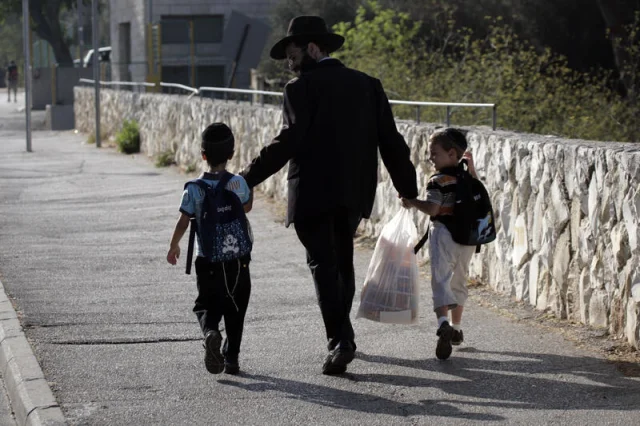
Ultra-Orthodox, or Haredi, first-graders in Israel are projected to outnumber their secular Hebrew-language peers by 2030, according to a new study led by public policy expert Eli Morgenstern and based on Israeli Education Ministry data.
The projection reflects a broader demographic shift in Israel’s education system, driven in part by persistently high birth rates among Haredi families and declining birth rates among the wider Jewish population. Between 2023 and 2026, enrollment in secular Hebrew-language first-grade classes fell by 12%, while enrollment in Haredi schools rose by 11%.
Morgenstern’s study projects that Haredi and Arab education systems together will account for more than half of Israeli first-graders by 2030. The shift is already evident in preschools, where the combined share of Haredi and Arab children rose from 43.8% in 2019 to 48.9% in 2026 and is projected to reach 50.4% in 2028.
"We examined the number of first-grade students over recent years in each educational stream, as well as each stream's share of all students in Israel," Morgenstern said. "Based on the trends we identified, we projected enrollment in the coming years, assuming those trends continue."
The projected shift could have significant implications for Israel’s education system and economy. Arab and Haredi schools generally underperform compared with mainstream state schools, while both communities remain underrepresented in Israel’s workforce.
The new study suggests the demographic changes are unfolding faster than earlier forecasts anticipated. In 2017, Israel’s Central Bureau of Statistics projected that Haredim would make up one-third of the country’s population and half of its Jewish children only by 2065.
A February study by the Israel Democracy Institute (IDI) similarly projected that around one-quarter of Israelis would be Haredim by 2050.
"The changes in the education system are happening much faster than we thought," Morgenstern explained. The researchers attributed the shift to declining birth rates among Israel’s mainstream Jewish population and continued high fertility rates among Haredi families.
Morgenstern, who grew up in the Haredi world before earning academic degrees in economics and public policy, also brings personal experience to the debate over integrating the community into Israeli society and the economy.
"As a graduate of Haredi education, I know and appreciate the values and way of life that this education system provides," he argued. "And as someone who personally went through the process of integrating into Israeli society and the economy, I know how difficult that path is."
Morgenstern warned that gaps in Haredi education leave many students struggling to obtain matriculation certificates, which can limit their access to higher education and future employment.
He proposed that the government take greater responsibility for school admissions, curricula and teacher qualifications, including transforming existing Haredi institutions into state schools.
The recommendations aim to improve Haredi integration into the economy and increase participation in military or national service. Morgenstern warned that the coming years will be critical in determining Israel’s socioeconomic future.
Economist Professor Dan Ben-David and other experts have also called for major education reforms to help integrate the country’s growing Haredi population into the modern economy.
You might also like to read this: