Israel strikes Hezbollah weapon depots with bunker-busting bombs amid looming threat of Iran escalation
US continues pressure for Beirut and Jerusalem to find security arrangement




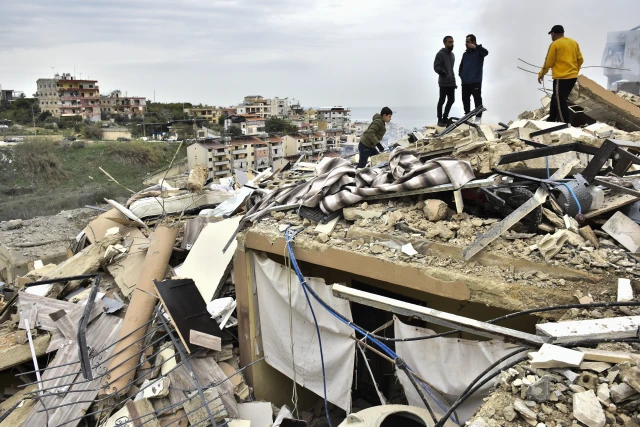
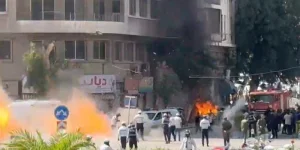
The Israel Defense Forces (IDF) carried out an intense wave of airstrikes against weapon depots and the terror infrastructure of Hezbollah in several sites in Lebanon on Sunday.
Lebanese reports said that in addition to the larger volume of strikes, the IDF also used heavy, bunker-busting munitions, indicating that fortified or underground depots were hit.
The strikes came amid ongoing preparations on all sides for an escalation with Iran, which could potentially be triggered by U.S. strikes against the regime.
Hezbollah has long been seen as the regime’s most potent weapon in a potential showdown with Israel, making it possible that the intensified Israeli strikes are meant to further degrade the Lebanese group’s abilities to assist its Iranian patrons in an escalation.
Its leader, Naim Qassem, praised the Iranian regime and vowed to support it in a speech over the weekend.
However, Israel’s strikes also came days after the Lebanese government declared southern Lebanon to be free of Hezbollah’s presence after the deployment of its army, which Israel has disputed. Beirut and Israel are currently holding political talks under the auspices of the U.S., intending to find a security arrangement.
Israeli jets conducted 14 airstrikes “using heavy munitions”, 10 of them in the hills of Meidoun and Jabour, two in Wadi Berghoz and two in the Rihan heights, Lebanese media report.
— Ariel Oseran أريئل أوسيران (@ariel_oseran) January 25, 2026
These areas are known to have launch and storage sites for long-range rockets & missiles, as… https://t.co/6OhD0S6e2k
The IDF said it struck “terror infrastructure sites in several areas in Lebanon” on Sunday. According to Lebanese reports, at least two people were killed in southern Lebanon, while another person was killed in a strike in the eastern Bekaa Valley.
The IDF said it struck “weapon storage facilities and military infrastructure” as well as “a military structure located in a base used by Hezbollah's 'Radwan Force' to advance terror attacks against IDF troops and the State of Israel.”
Earlier on Sunday, an Israeli strike killed “Hezbollah’s Head of Artillery in the Arzoun village in southern Lebanon,” according to the military.
The Israeli Air Force launched strikes on Hezbollah targets in Lebanon. Is this just about Lebanon? Or preparation for another round with Iran? pic.twitter.com/xx18NkIFJn
— Mike (@Doranimated) January 25, 2026
“Simultaneously to his involvement in terrorist activity, al-Husseini worked as a school teacher. Al-Husseini advanced numerous terror attacks against the State of Israel and IDF troops during the war, and recently took part in attempts to restore Hezbollah’s artillery abilities in southern Lebanon,” the IDF said.
In another strike in the Bir al-Sansal area, “the IDF eliminated the terrorist Jawad Basma, a Hezbollah terrorist who operated at a weapons manufacturing site.”
In the Bekaa Valley, the IDF struck more “military infrastructure sites belonging to Hezbollah.”
בתקיפה מדויקת בדרום לבנון: צה"ל חיסל את אחראי הארטילריה של ארגון הטרור חיזבאללה בכפר ארזון
— צבא ההגנה לישראל (@idfonline) January 25, 2026
צה"ל תקף מוקדם יותר היום במרחב אל בזוריה וחיסל את המחבל מוחמד אלחסיני, אחראי הארטילריה של ארגון הטרור חיזבאללה בכפר ארזון שבדרום לבנון. במקביל לפעילותו בארגון הטרור חיזבאללה, עבד המחבל… pic.twitter.com/T1JnOomO00
Contrary to the ceasefire terms, the terror group has worked to rebuild its infrastructure and replace the weapons Israel destroyed in recent years. Israeli officials have warned that the terror group has outpaced the Lebanese government’s ostensible efforts to disarm it, and the IDF has conducted near-daily strikes against the group’s operatives and infrastructure for the production and storage of weapons.
Only last week, the IDF launched an unusually broad wave of air strikes targeting four crossings on the Syria-Lebanon border used for the transfer of weapons, as well as key terror operatives and other targets in Lebanon.
The next meeting of the ceasefire oversight committee, with the participation of Israeli and Lebanese civilian officials, could take place on February 25, Lebanon’s representative, former ambassador Simon Karam, said on Sunday.
Notably, he said that if he were given the mandate “by Lebanon’s president, Joseph Aoun, Parliament Speaker Nabih Berri, and Prime Minister Nawaf Salam, I would go to political negotiations with Israel – not in Ras al-Naqoura, but in Tel Aviv.”
The Lebanese al-Akhbar newspaper, which is seen as affiliated with Hezbollah, reported on Sunday that the U.S. is pushing to raise the meetings to a political level in order to advance toward reaching long-term security arrangements between the sides.
The U.S. proposed to hold the next meeting, which includes representatives from Israel, Lebanon, and the United States, at an American military base in Miami, the report said.
However, official circles in Lebanon said that President Aoun rejected the proposal and insisted that the meeting be held in Ras al-Naqoura, with the same participants as before. The Lebanese government had to be forced into sending Karam as a civilian representative, fearing backlash from Hezbollah and its allies against raising contacts with Israel to a political level.
Karam also repeated arguments made by Hezbollah’s political rivals in Lebanon, saying that Hezbollah’s vocal insistence on keeping its weapons provides Israel with an additional pretext to launch strikes in the country.
Meanwhile, Hezbollah leader Naim Qassem doubled down on the terror group’s demands, which include the full withdrawal of Israeli troops from Lebanese territory, as well as the release of all the prisoners taken by the IDF during the fighting.
“There will be no stability unless all prisoners held in Israel are released and the fate of the missing is revealed,” Qassem threatened in a message sent to the families of the prisoners, most of them being terrorists who were captured during active fighting.
He also criticized the Lebanese government for failing to exert pressure on friendly countries regarding the prisoners, whose release, Qassem said, “is part of sovereignty and liberation.”
You might also like to read this: