Israel still lacks a serious communications strategy, former Jerusalem deputy mayor says




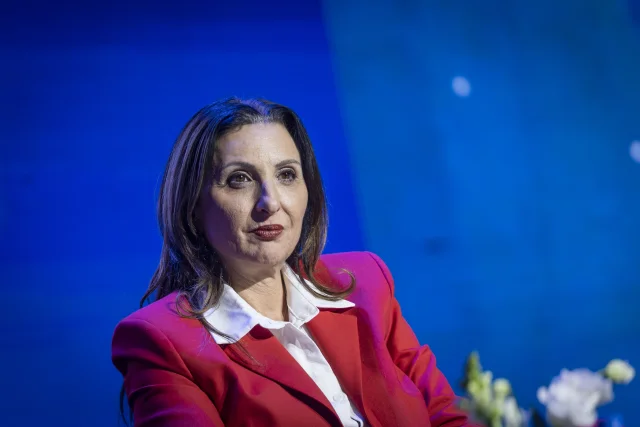
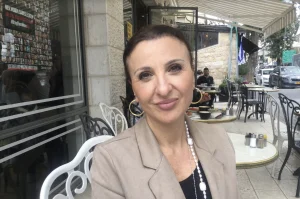
Israeli media commentator and former Jerusalem deputy mayor Fleur Hassan-Nahoum says Israel still lacks a serious communications strategy after almost three years of war with the Iranian-led Islamist axis.
While Israeli soldiers and fighter pilots have fought successfully in Tehran, Gaza and Lebanon, she argues that Israel has been far less effective on the media front, where the Jewish state has repeatedly struggled to counter hostile narratives.
Hassan-Nahoum, who is religiously observant and usually offline during the Jewish Sabbath, was initially unaware of the Hamas Oct. 7 attack. She recalled opening her phone after receiving urgent messages from Arab journalist friends. She eventually turned on the television and realized the scale of the Hamas assault on Israel.
At the time, Hassan-Nahoum was serving as Jerusalem’s deputy mayor. She was surprised when the BBC contacted her for comments on the Hamas atrocities.
“We’re at war,” she recalled thinking. “I’m not a soldier, but I can do this,” she assessed.
Hassan-Nahoum quickly became an unofficial Israeli spokesperson, and her media skills eventually prompted the Israeli foreign minister to ask her for professional assistance.
She remains highly critical of the Israeli government’s handling of the communications front.
“The Israeli government still haven’t woken up to the fact that we’re fighting a narrative,” Hasan-Nahoum told the Algemeiner “J100” podcast, referring to the widespread anti-Israel narrative in global media outlets.
David Cohen, the Algemeiner CEO and host of the podcast, asked Hassan-Nahoum how Israel, a country led by experienced and skilled communicators like Prime Minister Benjamin Netanyahu, still failed to grasp the importance of media communication.
Hassan-Nahoum assessed that Israel’s core communications problem has been its overreliance on a handful of skilled communicators rather than establishing a comprehensive strategy. She argued that a country cannot afford to outsource its vital communications to a single individual or a small group of skilled communicators.
She also stressed that effective communication begins with listening and understanding the audience.
“It’s not about what you want to say,” she told Cohen. “It’s about the audience you’re talking to."
“In other words,” Hassan-Nahoum explained, adding, “it’s not about you. It’s about them.”
She drew on her own experience during her campaign for the Jerusalem City Council, where she said she learned how to communicate effectively by listening to voters.
“I listened to them,” she said. “I didn’t pretend to listen to them. I actually listened to them.”
Traditional Israeli public relations has relied heavily on presenting facts. Hassan-Nahoum, however, believes an effective communications strategy requires a deeper understanding of how Israel’s critics think, what they distrust and what moral vocabulary they use.
A case in point is Israel’s ongoing uphill media battle against the charges of “genocide” in Gaza.
While Israel has focused heavily on presenting statistical facts, often with limited success, Hassan-Nahoum argues that the anti-Israel side has been more effective at using emotion and language that resonates with its audience.
The result, she argues, is that many Westerners, particularly young people, are more inclined to believe Hamas propaganda than Israeli claims.
Hassan-Nahoum has also discussed Israel’s communications challenges in previous interviews. In January 2024, Christian journalist Paul Calvert interviewed Hassan-Nahoum about Jerusalem’s wartime response and its efforts to support Israeli communities affected by the Hamas Oct. 7 atrocities.
Please take a moment to join believers worldwide praying for Israel right now. Add your light to the live prayer map—and show the world one more watchman praying for the peace of Jerusalem.

You might also like to read this: