Israel condemns deadly Houthi attack on Saudi airport amid reports US wants Israel to strike in Yemen
Saudi Crown Prince MBS reportedly shuttling between bunkers amid Houthi strikes, scrambles for options to respond



Amid the escalating conflict between Yemen's Houthi terrorists and Saudi Arabia, the White House has reportedly asked Israel to assist the kingdom with airstrikes against the Iranian-backed group, having reportedly declined to join the Saudi campaign over concerns about the upcoming midterm elections.
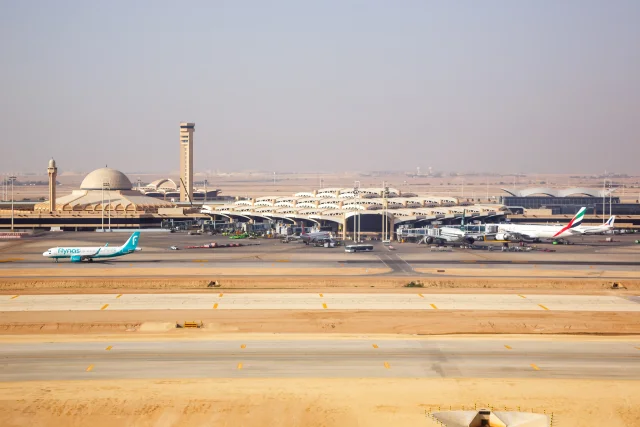
On Sunday, Israeli Prime Minister Benjamin Netanyahu condemned a Houthi strike on King Khalid International Airport in Riyadh in which 13 people were killed, marking the deadliest strike in the kingdom so far.
“On behalf of the people of Israel, I extend our deepest condolences to the families of those murdered and our wishes for a full recovery to the injured,” Netanyahu said, calling for a Middle East that “stands united against threats, protects its people, and builds a future of security, cooperation, and prosperity for all the peoples of our region.”
The 13 victims of the ballistic missile strike included an American citizen and a Palestinian. Over 300 others were wounded. The Houthis have continued their attacks since then, including another strike on the airport.
Yemen’s Houthis have again attacked Passenger Hall No. 4 at King Khalid International Airport in Riyadh, Saudi Arabia, sparking a fire. The second strike came less than 24 hours after a devastating Houthi missile attack on Saturday at the same complex, which houses domestic terminals 3 and 4. Saturday’s attack killed 12 people and injured 309, the deadliest strike on Saudi soil in more than a decade. https://t.co/TFas7h2bGE
— Visegrád 24 (@visegrad24) October 11, 2026
U.S. President Donald Trump told reporters that the United States was considering joining the Saudi campaign. Trump, who reportedly rebuffed two requests for military support from Saudi Arabia last month, said, “We may. We’re going to look at it. We just found out about the recent attack, so we’ll make a decision. We move very quickly.”
However, Ynet News reported on Monday that U.S. officials are discussing the possibility that Israel could help the Saudis, contrary to recent reports suggesting the U.S. wanted Israel to launch another strike against the Iranian regime.
The White House reportedly wants to avoid new military engagements ahead of the midterm elections at the start of November.
According to the report, IDF Chief of Staff Lt. Gen. Eyal Zamir warned his U.S. counterparts that an Israeli operation could trigger further escalation, both in Yemen and potentially with the Houthis’ Iranian patrons.
Al Arabiya shows footage of the moment yesterday’s Houthi attack struck King Khalid International Airport in Riyadh, including Umrah pilgrims preparing to board their flights before the strike. https://t.co/Gp2xPdmkuK
— Al Arabiya English (@AlArabiya_Eng) October 11, 2026
He also repeated his warning that this could lead to an indefinite postponement of Israel's own upcoming elections, currently scheduled for Oct. 27.
Israeli opposition leaders have accused Netanyahu of seeking a military escalation in an effort to influence or prevent the elections. For example, "The Democrats" party chairman Yair Golan said on Tuesday, “There is no doubt that [Netanyahu] will try to disrupt the democratic process before the election and on election day.”
“What happened in the United States on January 6, 2021, could certainly happen here too,” Golan warned.
Netanyahu himself has warned that Israel’s enemies might seek to disrupt the elections with large-scale attacks, and the defense system remains on constant alert for new escalations, particularly with Iran, according to Ynet News.
The report also noted that the IDF's Military Intelligence Directorate is continuously working to build up an extensive target bank in Iran, focusing on missile capabilities, strike systems, military buildup and facilities connected to the Iranian nuclear program.
Meanwhile, some voices in Israel continue to urge the government to use the Saudis’ precarious situation to re-energize the normalization process by offering them military support.
According to a detailed Wall Street Journal report, the newly escalated conflict on its southern border is significantly impacting the kingdom's economic outlook, threatening to push its economy into contraction.
Amid evident struggles of the air defense system to combat Houthi ballistic and cruise missile attacks, Crown Prince Mohammed bin Salman (MBS) is moving between palaces equipped with bunkers while being guarded by a handpicked security team, officials told the newspaper.
MBS’ ambitious economic plans for the future of the kingdom now appear to be shattered, as many marquee projects were downsized or canceled amid rounds of conflict with Iran, and now the Houthis.
Saudi Arabia abandoned plans to host the 2029 Asian Winter Games, while the World Expo in 2030 and the FIFA World Cup in 2034 remain on the schedule. Meanwhile, the country’s non-oil economy contracted in the second quarter of 2026, according to Capital Economics. Foreign investment also fell in the first half of the year, and the Saudi Finance Ministry expects GDP to shrink by 3.6% in 2026.
Now, the Houthis latest attacks are threatening to shut down aviation across the kingdom, with King Khalid Airport having already been struck four times.
The mounting pressure helps explain Saudi Arabia’s appeals for help from the United States, its Mecca alliance partners Turkey and Pakistan, and other regional partners. Riyadh has also reached out to regional countries about deploying troops, however, analysts believe that seeking military support carries its own risks.
Kristian Ulrichsen, a Persian Gulf expert and fellow at Rice University’s Baker Institute, told The Wall Street Journal, “Any military response risks getting drawn in deeper to an asymmetric conflict in which the Houthis have shown they have the ability to inflict significant and symbolic damage.”

Support our independent, on-the-ground reporting from Israel. Become a $5/month Ally.
You might also like to read this: