Israel announces NIS 2.6 billion in ministry cuts nine days before election




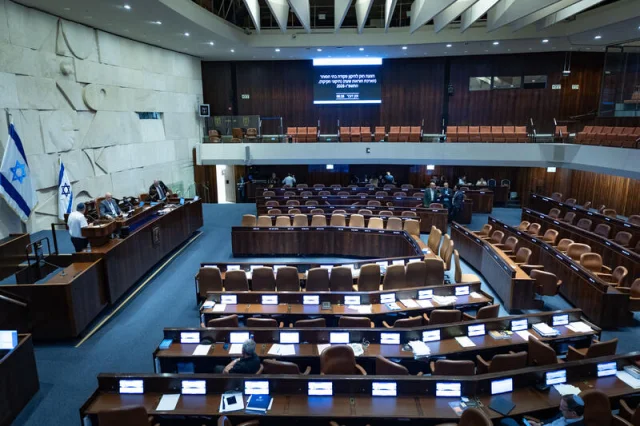
Israeli government ministries are facing approximately NIS 2.6 billion (around $835 million) in budget cuts, with health, welfare and education among the sectors affected, just nine days before the election.
The cuts are intended to free up funds for defense procurement and military training exercises, prompting alarm among ministry leaders and criticism from opposition lawmakers.
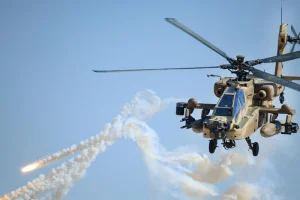
The latest cuts follow last week’s announcement that NIS 1 billion ($320 million) would be diverted from a multiyear development budget for Israel's Arab communities to help fund the purchase of 12 new Apache helicopters from American defense giant Boeing.
Opposition lawmakers have also criticized the government for protecting funds earmarked for special projects under coalition agreements while reducing budgets intended to support vulnerable Israelis. Finance Ministry economists reportedly recommended drawing the necessary funds from coalition allocations, but the government rejected that proposal.
Under the latest plan, the Education Ministry will absorb a NIS 285 million cut, the National Security Ministry will lose NIS 225 million ($72 million), the Health Ministry will lose NIS 150 million ($48 million) and the Welfare Ministry will lose NIS 140 million ($44.8 million).
The cuts represent roughly 5% of each ministry's development and procurement budget, limiting the ability of ministries to hire additional workers, introduce new programs and maintain supplemental services, particularly in education. Established programs are not currently expected to be cut, and widespread staff furloughs are not anticipated.
However, some government analysts have warned that further cuts to civilian ministries may follow.
Senior Finance Ministry officials issued a statement Saturday evening saying, "Several government ministries asked to avoid cuts to budget items they considered urgent. The government therefore decided on an equal, across-the-board reduction for all ministries. We have already warned that enormous budget increases for the defense establishment would come at the expense of citizens, and that is exactly what is happening."
Health Ministry Director General Moshe Bar Siman Tov responded in a letter to Finance Ministry Director General Israel Malachi and Budget Commissioner Maharan Frozenfar, warning that his ministry has absorbed more than NIS 600 million ($192 million) in cuts since the beginning of the year.
He also highlighted the pressure on the healthcare system as it treats thousands of people wounded in the ongoing seven-front war and tens of thousands of Israelis seeking mental health counseling for trauma suffered in recent years.
He added that the system had not fully recovered from the COVID-19 pandemic when the Swords of Iron War began and that the prolonged strain has already reduced the quality of services available to the public:
"The notion that security needs can continue to be financed through the systematic and relentless erosion of Israel's civilian systems and public services, by imposing indiscriminate across-the-board cuts, fails to take account of all the components of national resilience," he wrote. "Israel's resilience does not rest on military strength alone, but also on the ability of all its civilian systems to function, provide support and serve citizens in routine times and during emergencies."
Leaders of other affected ministries have echoed these concerns, warning that their departments are already struggling to meet public needs and will find it even harder to do so with reduced budgets.
Meanwhile, Christian Zionist organizations and Israeli believers are working to help fill some of the gaps in public services:
“Our Lifeline for Israel’s Needy offers critical support to Israel’s most vulnerable populations,” said Daniel Kirchhevel, Chief Operating Officer of Bridges for Peace. “Through practical help like home repairs, dental treatment and food, we strive to ensure that no one is forgotten and that dignity and hope are restored to Israel’s most at-risk citizens.”
Vision for Israel, an Israeli believer-run nonprofit organization, has also expanded its educational programs to assist children who need additional support amid government program cuts and the ongoing security crisis.
You might also like to read this: