Iranian regime torn over talks with US as oil prices surge amid fears of new escalation
Foreign Minister Araghchi under fire over indirect contacts with US envoy Witkoff



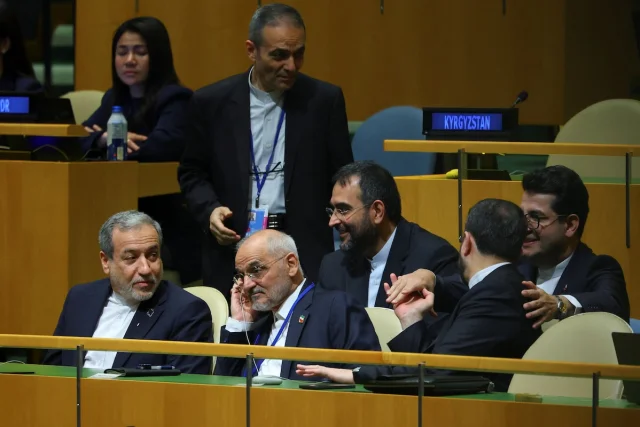
An Iranian regime-affiliated newspaper openly criticized the foreign minister for indirectly communicating with U.S. officials, highlighting reported tensions within the regime as talks remain deadlocked amid continued U.S. sanctions and the blockade.
Oil prices rose again on Thursday, with Brent crude futures, the global benchmark, rising 2.3% to $105.44 in European trading amid a warning from an advisor to Iran’s supreme leader, Mojtaba Khamenei.
“Since the conflict has spread from the Persian Gulf and Strait of Hormuz to the Red Sea, it is possible that, in response to more war, the front will expand even further, reaching the Indian Ocean and perhaps beyond,” warned Yahya Rahim Safavi in a video released by Iran's Fars news agency.
Safavi was apparently referring to the ongoing fighting between Saudi-backed forces in Yemen and the Iran-backed Houthis, who have taken control of the Bab el-Mandeb Strait in the Red Sea.
Also on Thursday, the Saudi newspaper Al-Hadath cited an unnamed Israeli source who said that Israel is identifying Iranian efforts to reinforce and expand its nuclear and ballistic missile capabilities, warning that another round of fighting appeared to be “a matter of time.”
“We will move to strike Iran’s nuclear facilities again if Tehran crosses the red lines, with US participation or without it,” the source asserted, estimating that the chances of a U.S.-Iran agreement are small.
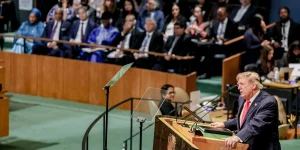
Iranian Foreign Minister Abbas Araghchi and President Masoud Pezeshkian, who are often described as relatively moderate, though powerless figures within the regime, apparently attempted to exploit the ongoing UN General Assembly in New York to signal willingness to restart talks.
Reports on Tuesday suggested that Araghchi exchanged messages with U.S. Special Envoy Steve Witkoff via mediators.
🚨 BREAKING: Sen. Marco Rubio just had the MIC DROP OF A LIFETIME against Iran's President lecturing America at the United Nations
— Eric Daugherty (@EricLDaugh) September 23, 2026
"I don't know what standing Iran has to lecture **ANYONE** on human rights or the international system when they habitually violate it."
"Yeah. I… https://t.co/aienfmkD8p pic.twitter.com/Lfe3rSnqc3
The new outletTasnim, which is closely linked to the Islamic Revolutionary Guard Corps (IRGC), sharply criticized the move, citing comments by Supreme National Security Council (SNCS) Secretary Mohsen Rezaei that Araghchi had been tasked with conveying the regime’s seven conditions to mediators. Tasnim argued that the comments indicated Araghchi had exceeded his authority.
The outlet described Araghchi’s actions as a “major mistake” and demanded that he explain himself to the relevant authorities and the Iranian public.
The dispute comes amid numerous reports of ongoing tensions and power struggles within the regime, with hardliners affiliated with the IRGC and seen as close to Khamenei reportedly seeking to consolidate power. Khamenei has yet to make a public appearance.
The foreign ministry, the SNCS, the IRGC and the Pezeshkian government each have a say regarding contacts with Washington.
In his speech at the United Nations, President Pezeshkian struck a defiant tone while emphasizing the regime’s readiness for negotiations.
“It must be understood by Mr. Trump and those who seek to bully us that we are ready for dialogue, diplomacy and negotiations without accepting the language of force,” he said.
Pezeshkian also warned: “Iran must be powerful to avoid being threatened, to avoid its future being threatened… Our defensive systems have been built so that no one can think that bombing Iranian cities will go unanswered.”
He also reiterated, “For our country, peaceful nuclear technology is part of our inherent progress,” potentially dimming prospects for a negotiated end to the conflict with the United States.
As of Sept. 23, CENTCOM forces have redirected 115 commercial vessels to maintain strict enforcement of America's 🇺🇸 steel wall blockade. pic.twitter.com/6CW8sljNFt
— U.S. Central Command (@CENTCOM) September 23, 2026
Meanwhile, global oil prices, which U.S. President Donald Trump has repeatedly cited as an important measure of the success of his policies, have remained high.
The Wall Street Journal cited analysts at Mitsubishi UFJ Financial Group (MUFG), who assessed that the continued, though relatively low, flow of oil through the Strait of Hormuz, as well as the restart of Saudi Arabia’s East-West pipeline, are positive signs.
However, the lack of diplomatic progress and ongoing Iranian attacks on tankers could keep oil-market volatility high.
U.S. Secretary of State Marco Rubio on Wednesday confirmed that the Saudi pipeline had restarted after being damaged in attacks carried out by Iranian-backed militias from Iraq.
Rubio also said that the U.S. Navy is keeping the southern shipping lane through the Hormuz Strait open, despite continued Iranian attacks. On Wednesday, a vessel sailing under the flag of Antigua and Barbuda was struck near Oman’s Musandam governorate.
The strike killed one crew member, and the remaining crew members were evacuated after a fire broke out in the engine room.
You might also like to read this: