Iran-Oman meeting on Hormuz traffic postponed and oil prices jump after Houthi capture of key waterway
Israeli officials: Divisions Iran’s leadership are widening, hardliners ascendant



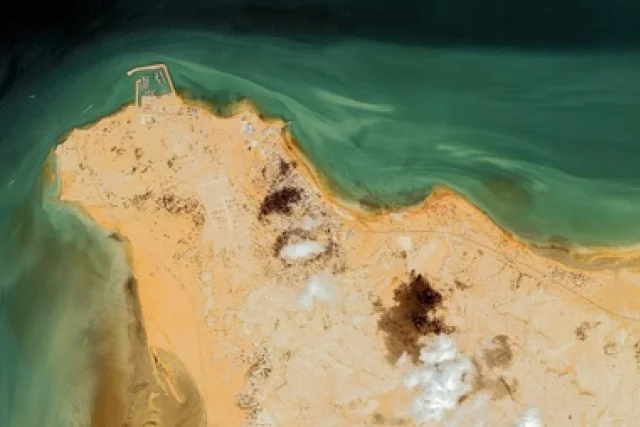
Global oil prices are on the rise again, as the Islamic Republic of Iran has gained significant sway over traffic through two of the world’s most important waterways.
On Monday, a meeting intended to regulate traffic through the Strait of Hormuz was suddenly postponed after Saudi Arabia announced that its East-West oil pipeline, designed to provide an alternative export route, had been shut down by drone strikes from Iranian-backed terror groups in Iraq.
Oil prices jumped above $100 last week for the first time since July and continued rising when markets opened on Monday. Diesel fuel, a particularly politically sensitive benchmark, reached an all-time high of $6.20 per gallon on Sunday.
According to Reuters, Saudi Arabia has enough oil stored to maintain its export rate for five to seven days if the pipeline remains shut, but after that, up to 4% of the global oil supply could be jeopardized, on top of the millions of barrels that normally flow through the Strait of Hormuz.
It seems most people don't understand how severe the energy situation is right now in the Middle East.
— The Kobeissi Letter (@KobeissiLetter) September 13, 2026
As of Friday, Saudi Arabia's East-West pipeline has officially been shut down after recent attacks, putting -4 million barrels of daily oil exports at risk.
Meanwhile, the Bab… pic.twitter.com/S71vSoFand
A Gulf official told the Axios news outlet that the postponement came after Saudi Arabia submitted amendments to the Omani-Iranian proposal, fearing the proposed framework could establish a new status quo that would be unacceptable to Riyadh or other Gulf Cooperation Council (GCC) states.
When asked about the situation over the weekend, U.S. President Donald Trump said he expected the Iran war to end this year, possibly as soon as after US midterm elections in November. Then, gasoline prices will “drop like a rock,” Trump vowed.
He also dismissed the delay in talks between Oman and Iran on a framework to regulate traffic through the Hormuz Strait saying, “I don’t care. That’s up to them.”
Trump added, “I will tell you this: Iran wants to make a deal so bad. They are calling constantly. They want to make a deal. They’ve got to make the right deal. I’m not going to make a deal that’s no good.”
The Oman News Agency said the meeting was postponed “to create conditions conducive to a constructive dialogue,” while Omani Foreign Minister Badr Albusaidi wrote on 𝕏, “We remain determined to promote dialogue that contributes to stability and lasting cooperation in our region.”
🔴 BREAKING: A meeting in Oman between Gulf countries and Iran to discuss possible agreements on the Strait of Hormuz, which had been scheduled for Monday, has been postponed, Omani Foreign Minister Badr al-Busaidi says. pic.twitter.com/ICoYi7dRcR
— Al Arabiya English (@AlArabiya_Eng) September 13, 2026
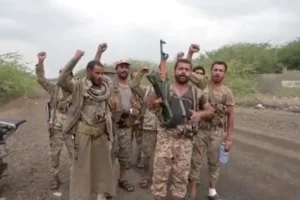
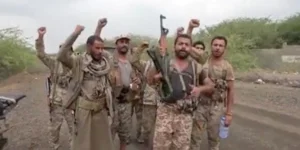
The Saudi announcement came within days of the Yemeni Houthi terrorists, who are backed by the Iranian regime, capturing the Bab el-Mandeb strait, the southern outlet of the Red Sea. Houthi control over the strait effectively cuts off Saudi Arabia's alternative route for oil exports and gives the Iranian regime significant additional leverage.
Against this backdrop, Israeli officials told Ynet News they believe relatively moderate voices have been increasingly sidelined within the regime.
Iranian Supreme Leader Mojtaba Khamenei, whose exact condition remains unclear but who is believed to still be suffering from physical and psychological injuries, has relied on hardline figures in the Revolutionary Guard Corps (IRGC) and the Basij militia, the officials said.
“Their thinking is still rooted in the Iran-Iraq War,” they added. “They are taking an extremely hard-line approach, and it will eventually lead them into disaster.”
“People are barely managing to survive, and the Iranian economy is in free fall,” they continued. “How long can they keep going? It’s difficult to know. The regime will not collapse overnight. It will be a process, and we believe that process is already underway. There are many people inside Iran who oppose the direction the leadership is taking.”
A recent New York Times report highlighted the lack of central control within the regime, as the strikes on commercial vessels in July were reportedly launched without approval from the regime.
President Masoud Pezeshkian, seen as a relative moderate, reportedly angrily called the IRGC chief, Gen. Ahmad Vahidi, to demand an explanation for the “reckless” strikes. However, Vahidi said neither he nor the Supreme National Security Council knew of the attack beforehand.
According to the New York Times, citing Iranian officials and an IRGC member, the incident reportedly triggered an intense confrontation within the leadership, with officials shouting accusations of betrayal and senior generals threatening to resign.
“If this is true, this piece shows how Iran's regime is not as cohesive as many commentators like to portray. But a word of caution: this narrative absolving Pezeshkian and others sounds very familiar,” commented Jason Brodsky, policy director at the United Against Nuclear Iran (UANI) think tank.
“Just like how Hassan Rouhani was allegedly in the dark over the IRGC's downing of the Ukrainian jetliner in 2020, Pezeshkian and others too are portrayed by Iran regime sourcing as being out of the loop. The deniability helps protect them,” he warned.
A subsequent investigation reportedly led to Hossein Taeb, the shadowy former spy master and cleric who was recently put in charge of the paramilitary Basij militia.
Three Iranian sources told the newspaper that Taeb had warned Khamenei that agreeing to the MOU and ending the war had been a mistake.
You might also like to read this: